The Dawn of AI
Ancient AI Concepts
Minds Made of Myth
The dream of creating artificial life is much older than computers. Long before we had silicon chips, we had stories. Ancient myths and legends are filled with beings crafted by gods or clever inventors, creatures that blurred the line between the living and the artificial.
In Greek mythology, Hephaestus, the god of invention, was a master craftsman. He built golden mechanical handmaidens to assist him in his forge. He also constructed Talos, a colossal bronze giant, to patrol the shores of Crete and protect it from invaders. These weren't just simple machines; they were imagined as autonomous beings with a purpose.
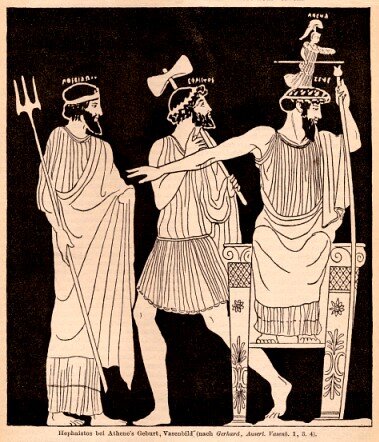
These stories show a deep-seated human desire to replicate ourselves and our abilities. While myths explored the creation of artificial bodies, early philosophers began to tackle a more complex question: could we create an artificial mind?
The Logic of Thought
The shift from myth to philosophy moved the conversation from physical creation to the mechanics of reasoning. Ancient Greek thinkers started to wonder if thought itself could be broken down into a structured, repeatable process—a kind of mental machinery.
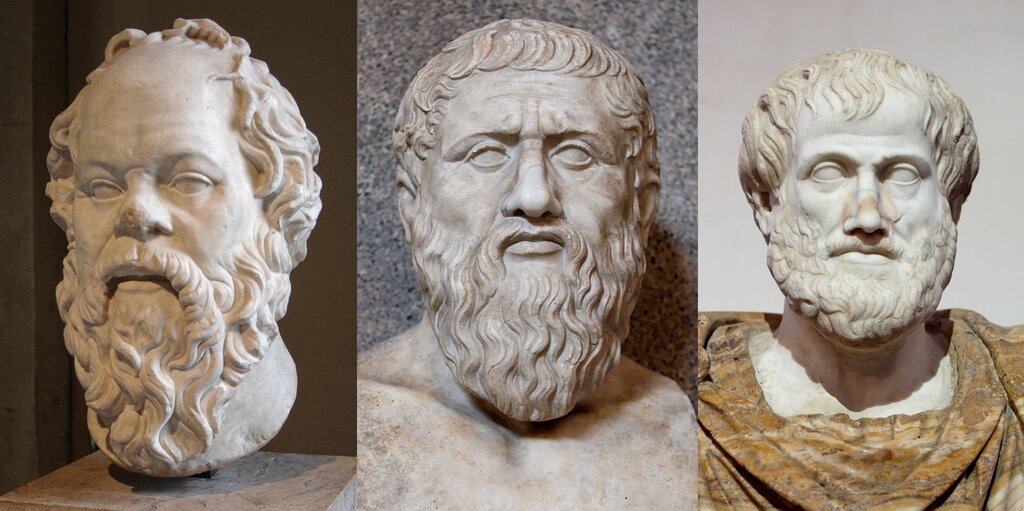
Aristotle was central to this shift. He developed a system of formal logic based on the syllogism. A syllogism is a simple, three-part argument that uses deductive reasoning to arrive at a conclusion. For example:
- All humans are mortal.
- Socrates is a human.
- Therefore, Socrates is mortal.
This might seem straightforward, but it was a revolutionary idea. Aristotle showed that reasoning could follow clear, predictable rules, independent of the person doing the thinking. It was the first attempt to mechanize thought.
By breaking reasoning down into rules, Aristotle provided the first glimpse of how thinking could be treated as a form of computation.
A Global Dream
The fascination with artificial beings wasn't limited to ancient Greece. Around the world, different cultures told their own stories of human-made creations.
In Jewish folklore, there are tales of the Golem, a figure sculpted from clay and brought to life through mystical means to protect a community. In China, the ancient text of the Liezi tells of a skilled mechanist named Yan Shi who presented an incredibly lifelike automaton to King Mu of Zhou. The mechanical man could walk, sing, and act so realistically it was nearly indistinguishable from a human.
These ancient concepts—from mythological automata to the logical structures of philosophers—planted the first seeds for artificial intelligence. They raised fundamental questions we still grapple with today: What is the nature of intelligence? Can consciousness be created? And what is our responsibility for the things we make?
These early ideas planted the seeds for modern artificial intelligence.
Before any real progress could be made, centuries of mathematical and technological development were needed. But the foundation was laid not in laboratories, but in stories and philosophical debates that imagined the possibility of minds other than our own.