The Dawn of AI
Origins of AI
Ancient Dreams of Artificial Life
The idea of creating artificial beings isn't new. It didn't start with computers or robots. For thousands of years, humans have told stories about inanimate objects brought to life. Ancient Greek myths spoke of Talos, a giant bronze automaton who guarded the island of Crete, and Pandora, a woman sculpted from clay by the gods.
Jewish folklore tells of the Golem, a humanoid figure magically animated from mud to protect a community. These stories weren't scientific blueprints, but they reveal a timeless fascination. They show our deep-seated desire to understand and replicate the spark of life and intelligence.
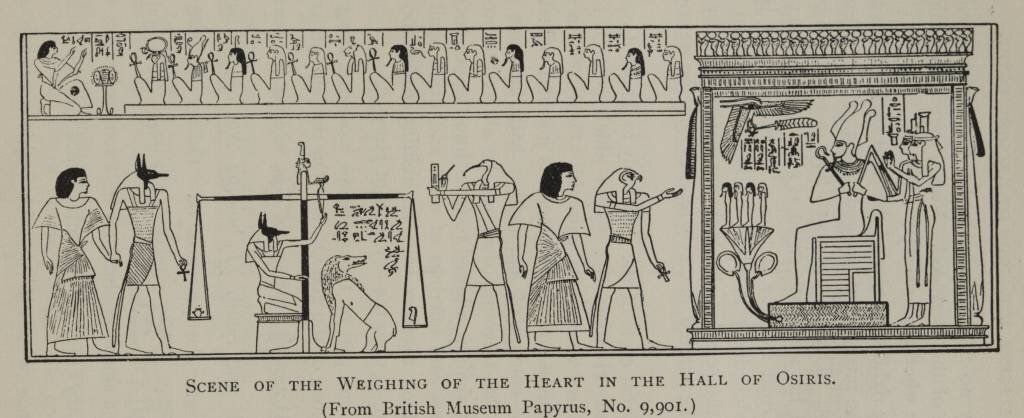
These early myths explored the what of artificial life—what if we could create a being? It took many centuries for thinkers to begin tackling the how—how could a mind, even a simple one, actually work?
Reasoning as a Machine
The shift from myth to mechanics began with attempts to systematize reason itself. In the 13th century, the philosopher Ramon Llull had a radical idea. He believed that reasoning could be performed by a machine. He designed the Ars Magna, a device made of rotating paper discs.
Each disc contained words representing basic concepts. By turning the discs, a user could generate combinations of these concepts, supposedly revealing all possible truths. It was a primitive form of a search algorithm, an attempt to mechanize the process of discovery and argument.
Four hundred years later, the philosopher and mathematician Gottfried Leibniz took this idea much further. He dreamed of creating a universal language of thought, the calculus ratiocinator. He imagined a system where all human ideas could be reduced to a set of core concepts, much like prime numbers. Arguments could then be settled by calculation, not debate.
To make this calculation possible, Leibniz perfected the binary system—a way of representing all numbers using only 1s and 0s. This was a critical breakthrough. It provided a simple, universal system that a machine could, in theory, use to operate on complex ideas.
Logic Becomes Math
The final piece of the pre-computing puzzle was to formalize human logic in the language of mathematics. This was the work of George Boole in the mid-19th century. In his book The Laws of Thought, Boole showed that logical statements could be treated like algebraic equations.
He created a system where variables could have one of two values: true or false. Logical operations like AND, OR, and NOT became simple mathematical functions. This system, now called Boolean algebra, was revolutionary. It turned the messy, subjective world of human reason into a clean, predictable system of 1s and 0s. It was the essential foundation upon which all digital computers, and therefore all modern AI, would be built.
These early explorations, from myths to mechanical calculators to mathematical logic, didn't create artificial intelligence. But they built the intellectual runway. They established the core idea that thinking wasn't just a mysterious spiritual process, but a form of computation that could be understood, systematized, and perhaps, one day, replicated.
Let's test your knowledge of these foundational ideas.
What fundamental shift in thinking occurred between ancient myths about artificial beings and the work of early philosophers like Ramon Llull and Gottfried Leibniz?
Which philosopher perfected the binary system and dreamed of a universal language of thought called the calculus ratiocinator?
The journey from myths like Talos to the formal logic of Boole shows a slow but steady progression. Humans moved from simply imagining artificial beings to building the conceptual tools needed to one day make them a reality.