The Currents of Psychology
Introduction to Psychology
What Is Psychology?
At its heart, psychology is the scientific study of the mind and behavior. It's a field dedicated to understanding what makes us tick. Why do we think the way we do? Why do we feel certain emotions? What drives our actions, from the simplest reflexes to the most complex decisions?
Psychology
noun
The scientific study of the mind and behavior, which includes the study of conscious and unconscious phenomena, as well as feeling and thought.
The scope is vast. Psychologists explore everything from the biological processes in our brains to the social pressures that shape our communities. They study how we learn and remember, how we develop from infancy to old age, and how we interact with one another. It's a discipline that seeks to describe, explain, predict, and sometimes change behavior and mental processes for the better.
From Big Questions to a Science
Humans have always been curious about the mind. Ancient philosophers like Plato and Aristotle wrestled with questions about memory, learning, and what it means to be conscious. For centuries, these topics were explored through logic and personal observation.
But psychology as we know it today took a crucial step forward. It moved from being a subject of philosophical debate to a field of scientific inquiry. The turning point is often marked as 1879, when Wilhelm Wundt established the first psychology laboratory at the University of Leipzig, Germany. Wundt's goal was to study the components of consciousness in a structured, experimental way.
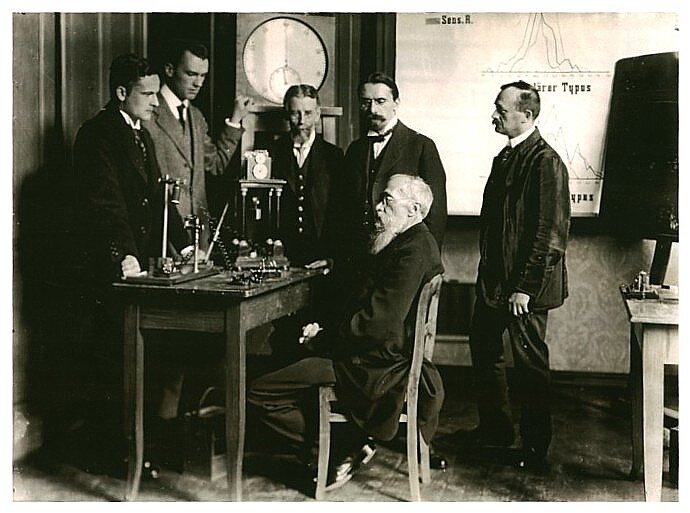
This shift was revolutionary. It meant that questions about the mind could be tested through systematic observation and measurement, just like in physics or chemistry. This commitment to the scientific method is what separates modern psychology from its philosophical ancestors.
How Psychologists Investigate
Because psychology is a science, it relies on structured research methods to gather evidence. This ensures that findings are objective and reliable, not just based on opinion or intuition. While there are many techniques, most fall into a few key categories.
Key research approaches include:
- Experiments: To test cause-and-effect relationships by manipulating one variable to see its effect on another.
- Surveys: To gather information from large groups of people through questionnaires or interviews.
- Case Studies: To conduct in-depth investigations of a single person or group.
- Observation: To watch and record behavior in a natural or controlled setting.
Each method has its strengths and is chosen based on the question being asked. For instance, an experiment might be perfect for testing a new therapy, while a survey would be better for understanding national political attitudes.
Why Psychology Matters
Psychology isn't just an academic subject; its principles are all around us. Understanding psychology can help improve communication in relationships, create more effective teaching strategies in schools, and design products that are easier for people to use.
It plays a critical role in mental health, providing therapies and treatments that help people overcome challenges like anxiety and depression. In the workplace, it informs hiring practices and helps build more productive teams. It even influences advertising, public health campaigns, and the legal system. By understanding the mind and behavior, we gain powerful tools for improving both our own lives and the world around us.
Time to check your understanding of these core ideas.