The Cosmic Question Why We Exist
Historical Metaphysical Perspectives
The Quest for a Reason
Why is there a universe at all? Why is there something rather than absolute nothingness? This question isn't a modern invention; it's one of the oldest and most profound puzzles in philosophy. For centuries, thinkers have tried to answer it not with telescopes or experiments, but with the power of pure reason. They sought a logical foundation for existence itself.
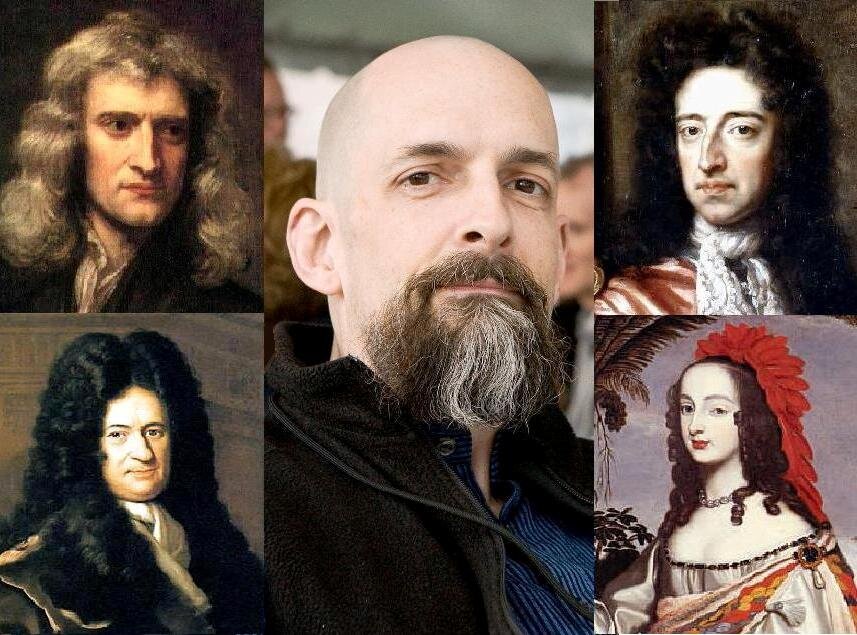
One of the most influential figures in this quest was the German philosopher and mathematician Gottfried Wilhelm Leibniz. He wasn't satisfied with simply accepting that the universe is. He wanted to know why.
Leibniz formulated a powerful idea to guide his inquiry: the Principle of Sufficient Reason (PSR). This principle states that for anything that exists, and for any event that occurs, there must be a reason why it is the way it is and not some other way.
The Principle of Sufficient Reason argues that nothing is without a reason. Every fact has an explanation, even if we don't know what it is.
Applying this to the entire cosmos, Leibniz reasoned that the universe couldn't be its own explanation. Every state of the universe is caused by a prior state, stretching back in a chain of causes. But what explains the entire chain? Why this specific chain of events and not another? And why a chain at all?
For Leibniz, the sufficient reason for the universe must lie outside the universe itself. It must be a being that is not contingent—that is, not dependent on anything else for its existence. This ultimate reason, he concluded, is a necessary being whose very nature is to exist. This being, which he identified as God, is the final answer to the question of why there is something rather than nothing. It exists by its own necessity and is the foundation for all other things.
Arguing for Existence
Leibniz's idea of a necessary being connects to a type of argument that attempts to prove existence from logic alone. These are called ontological arguments, and they have a long history in philosophy. The goal is to show that the existence of a supreme being is a logical necessity, not just a possibility.
Ontology
noun
The branch of metaphysics dealing with the nature of being and existence.
The first and most famous ontological argument came from Anselm of Canterbury in the 11th century. Anselm started with a definition of God as "that than which nothing greater can be conceived." In other words, imagine the greatest, most perfect being possible.
Anselm then posed a question: does this being exist only in the imagination, or does it also exist in reality? He argued that a being that exists in reality is necessarily greater than a being that exists only as an idea. If the greatest conceivable being existed only in the mind, you could then conceive of something even greater: that same being, but existing in reality. This would be a contradiction. Therefore, the greatest being that can be conceived must necessarily exist in reality.
Philosophers have debated Anselm's argument for a thousand years. Critics, like the monk Gaunilo and later Immanuel Kant, questioned whether "existence" is a property that makes something "greater" in the same way that being wise or powerful does. Still, the ontological argument remains a classic attempt to show that the universe has a necessary foundation—that something must exist, and that nothingness is a logical impossibility.
The Idea of Nothing
Historically, the very concept of "nothing" was a major philosophical hurdle. For ancient Greek thinkers like Parmenides, nothingness was simply unthinkable. He famously argued, "that which is, is, and that which is not, is not." You cannot speak of or think about what-is-not, because the moment you do, you are thinking about something. From this perspective, a state of true nothingness is a logical contradiction, an impossibility.
This view implies that something has always existed because non-existence is not a real possibility. The question "Why something rather than nothing?" becomes misguided, because "nothing" was never an option to begin with. Being, or existence, is the eternal, unchanging default state.
These classical perspectives, from Leibniz's demand for a reason to Anselm's logical proofs and Parmenides's denial of nothingness, all tried to establish a firm, rational ground for existence. They sought to prove that the universe isn't a random accident but rests on a foundation of necessity. While they didn't end the debate, they framed the questions that continue to shape the conversation today.
Ready to test your understanding of these foundational arguments?
What is the core idea of Gottfried Wilhelm Leibniz's Principle of Sufficient Reason (PSR)?
According to Leibniz, the sufficient reason for the entire universe must be a being that is...
These historical arguments provide a powerful glimpse into the philosophical quest to understand the ultimate nature of reality.