The Congress of Vienna Deep-Dive
Napoleonic Settlement Challenges
Building a New European Order
With Napoleon defeated, Europe's great powers faced a monumental task: filling the power vacuum he left behind. The goal of the 1814 Congress of Vienna was not just to celebrate victory, but to architect a lasting peace. The diplomats from Great Britain, Austria, Prussia, and Russia were guided by a primary objective: to prevent any single nation, especially France, from ever again achieving continental hegemony. They sought to create a durable balance of power, a concept refined since the days of Westphalia, but now applied with a new sense of urgency.
The initial approach was surprisingly moderate. Guided by the Treaty of Paris (1814), the allies decided against a punitive peace. Instead, they pushed for the restoration of what they considered rightful rulers. This was the in action, a doctrine championed by France’s own clever diplomat, Talleyrand. The idea was to turn back the clock, reinstating the monarchies that existed before the French Revolution upended the old order. The most significant outcome was the return of the Bourbon monarchy to France in the person of Louis XVIII. France was allowed to keep its 1792 borders, a territory larger than what it held before the revolution began.
The Buffer State Strategy
Restoring legitimacy was only half the solution. The allies also needed a physical barrier against potential future French expansion. This marked a strategic shift from relying on dynastic ties to creating strong, consolidated states along France’s eastern frontier. These were designed to be militarily capable of absorbing an initial attack and slowing any French advance, giving the other great powers time to mobilize.
Two major buffer states were engineered. To the north, the former Austrian Netherlands (modern-day Belgium) was merged with the Dutch Republic to create the United Kingdom of the Netherlands. This new, stronger entity was intended to secure the low countries. To the southeast, the Kingdom of Piedmont-Sardinia was bolstered by the addition of Genoa, strengthening the Alpine frontier.
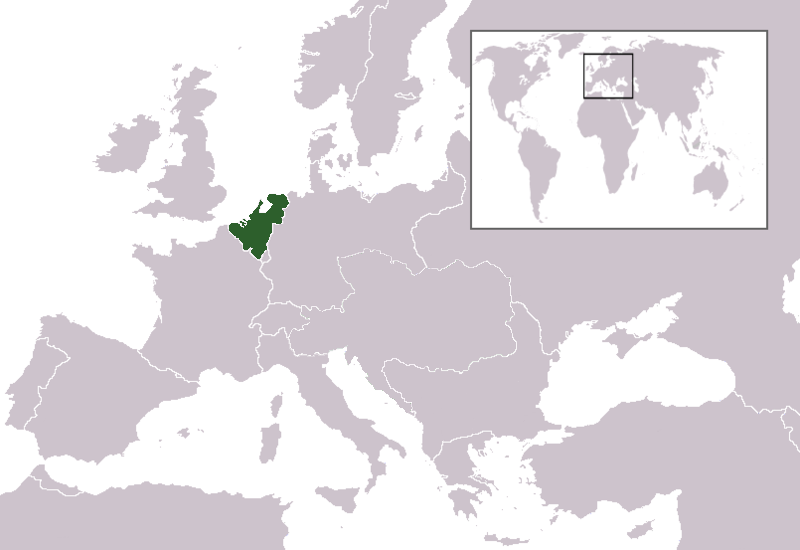
Organizing Central Europe
The most complex challenge was Germany. Napoleon had dissolved the centuries-old Holy Roman Empire, leaving a fragmented collection of states. A power vacuum in the heart of Europe was dangerous, but a fully unified, powerful Germany was equally threatening to its neighbors. The solution was a compromise: the (Deutscher Bund).
The German Confederation was created to be strong enough to defend against France, but not strong enough to threaten its neighbors.
This confederation replaced the old empire, streamlining the nearly 300 statelets into a more manageable 39. It was led by Austria and included Prussia. While it provided a collective security mechanism against external threats, its structure was deliberately designed to prevent the emergence of a single, dominant German nation-state. This careful calibration of power in Central Europe was essential to the Vienna settlement's long-term goal of stability.
What was the primary objective of the great powers (Great Britain, Austria, Prussia, and Russia) at the Congress of Vienna in 1814?
The "Principle of Legitimacy," a key idea at the Congress, referred to the restoration of...
The settlement of 1814 laid the groundwork, balancing the restoration of old monarchies with the pragmatic need for new security structures. It was an attempt to create a system that could manage Europe's complex rivalries and prevent another catastrophic war.