The Complexities of Palestine
Historical Background
Palestine in the Late Ottoman Era
Before World War I, the land we now call Palestine was part of the Ottoman Empire. It wasn't a single, unified country but a collection of administrative districts, or sanjaks. For centuries, this region was home to a diverse population, overwhelmingly Arab, with a majority of Muslims and significant Christian and Jewish minorities living alongside one another, mostly in cities like Jerusalem, Hebron, and Safed.
The late 19th century brought change. The Ottoman Empire was weakening, and new ideas about identity and nationhood were taking hold across the world. At the same time, waves of Jewish immigrants, primarily from Eastern Europe, began arriving. This movement, known as the First Aliyah (1882-1903), was driven by rising antisemitism in Europe and a desire to re-establish a Jewish presence in their ancestral homeland. They established new agricultural settlements, often purchasing land from absentee landlords.
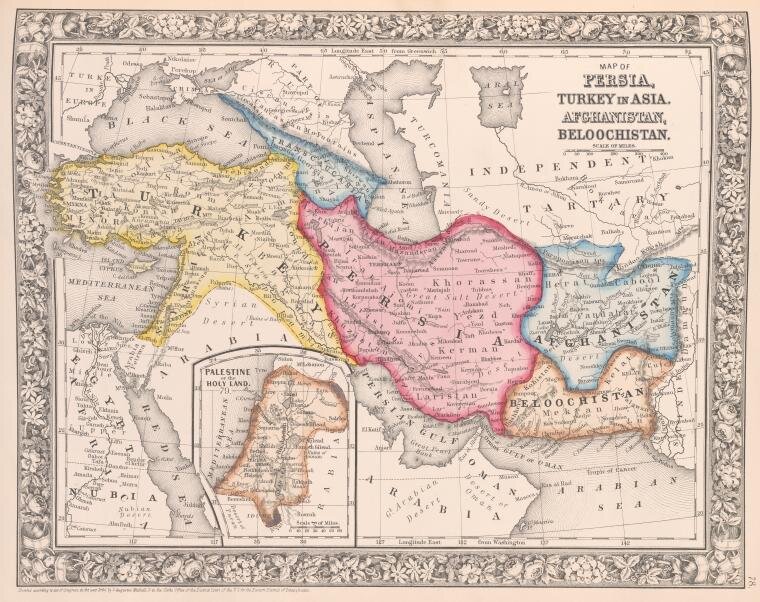
This period set the stage for future conflict. The social fabric began to shift as new communities were established with distinct political goals. For the local Arab population, these changes were often viewed with apprehension, sparking concerns over land ownership and demographic shifts. The seeds of two distinct national movements were being sown in the same soil.
The Rise of Two Nationalisms
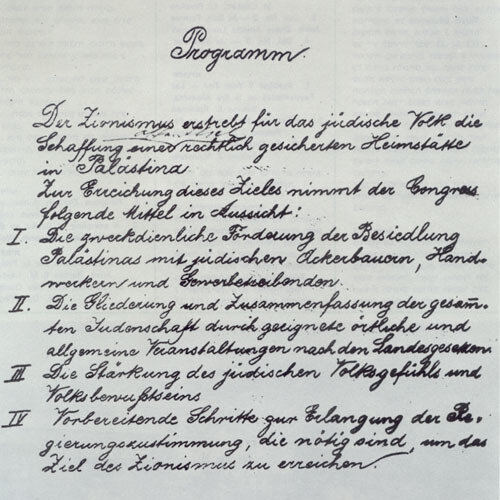
In Europe, Zionism emerged as a formal political movement. Its central goal was to establish a national home for the Jewish people in Palestine. Theodor Herzl, an Austro-Hungarian journalist, was a key architect of this idea, organizing the First Zionist Congress in 1897. This congress laid the groundwork for a political program to achieve its aims, creating institutions to fund land purchases and facilitate immigration.
At the same time, a distinct Palestinian Arab nationalism began to form. It grew from a broader Arab nationalist movement that sought independence from the Ottoman Empire. For Palestinians, their identity was tied to the land they inhabited. The growing Zionist presence and its explicit political goals accelerated the development of their own national consciousness, focused on establishing an independent Arab state in Palestine.
Two burgeoning national movements found themselves on a collision course, both claiming the same territory as their rightful homeland.
The British Mandate
World War I shattered the Ottoman Empire. Britain, after defeating Ottoman forces in the Middle East, took control of Palestine. During the war, Britain made several conflicting promises to different groups to secure support. The most consequential for Palestine was the Balfour Declaration of 1917. In a letter to a leader of the British Jewish community, the British government declared its support for the establishment of a "national home for the Jewish people" in Palestine.
Crucially, the declaration also stated that "nothing shall be done which may prejudice the civil and religious rights of existing non-Jewish communities in Palestine." This vague and contradictory language created a framework for future conflict, as both sides felt their claims were legitimized by a major world power.
After the war, the League of Nations formalized British rule under a system called the Mandate for Palestine. The British were tasked with governing the territory while preparing it for eventual self-rule. Throughout the Mandate period (1920-1948), Jewish immigration increased dramatically, especially as Nazism rose in Europe. Land purchases continued, and separate Jewish political, economic, and military institutions developed under the wing of the Mandate.
This rapid transformation fueled intense friction. The Arab population felt increasingly marginalized, fearing they would be displaced and lose their homeland. Tensions erupted into violence, including the 1929 riots and a major Arab revolt from 1936 to 1939, which was brutally suppressed by the British. By the end of World War II, the situation was untenable. Britain, exhausted and unable to reconcile the two communities, decided to hand the problem over to the newly formed United Nations.
The 1948 War
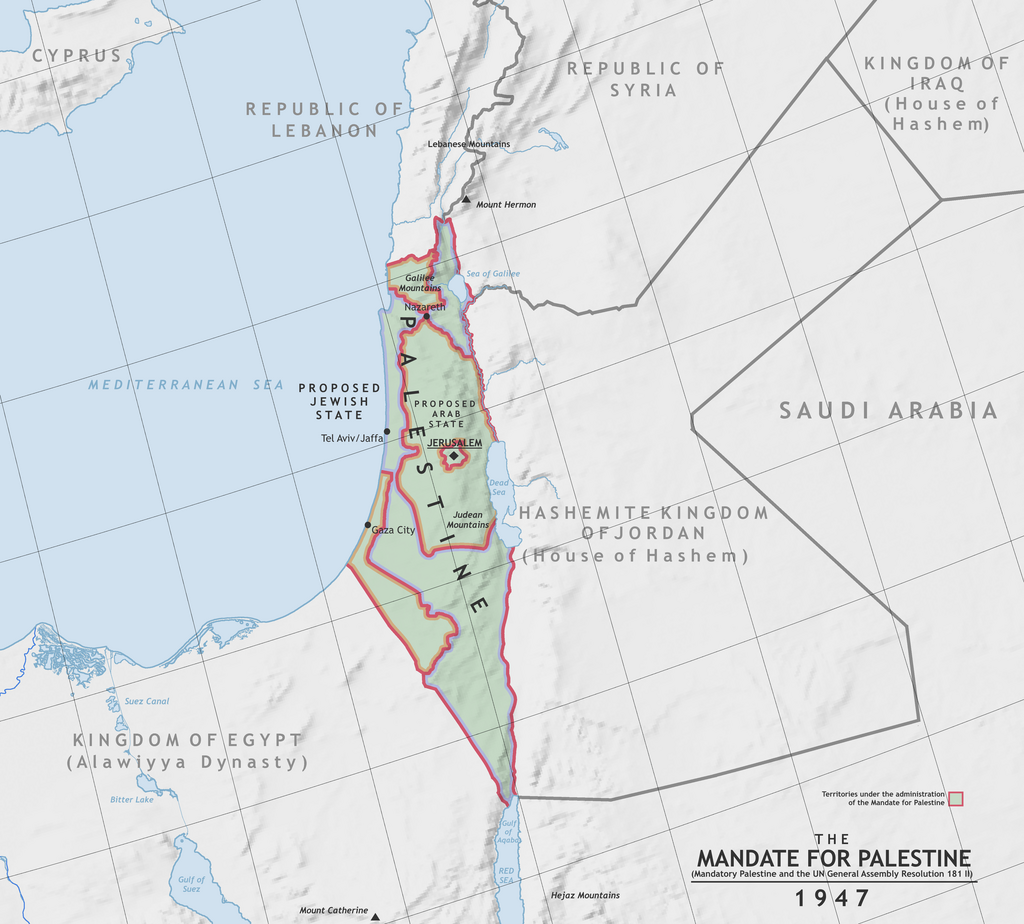
In 1947, the UN proposed a plan to partition Palestine into two states: one Arab and one Jewish, with Jerusalem to be administered internationally. The Jewish leadership accepted the plan, but Arab leaders and the surrounding Arab states rejected it, arguing it unfairly allocated land to the Jewish minority.
As the British prepared to withdraw, civil war broke out between Jewish and Arab militias. On May 14, 1948, the day the British Mandate expired, Jewish leaders declared the establishment of the State of Israel. The next day, armies from five neighboring Arab countries—Egypt, Jordan, Syria, Lebanon, and Iraq—invaded.
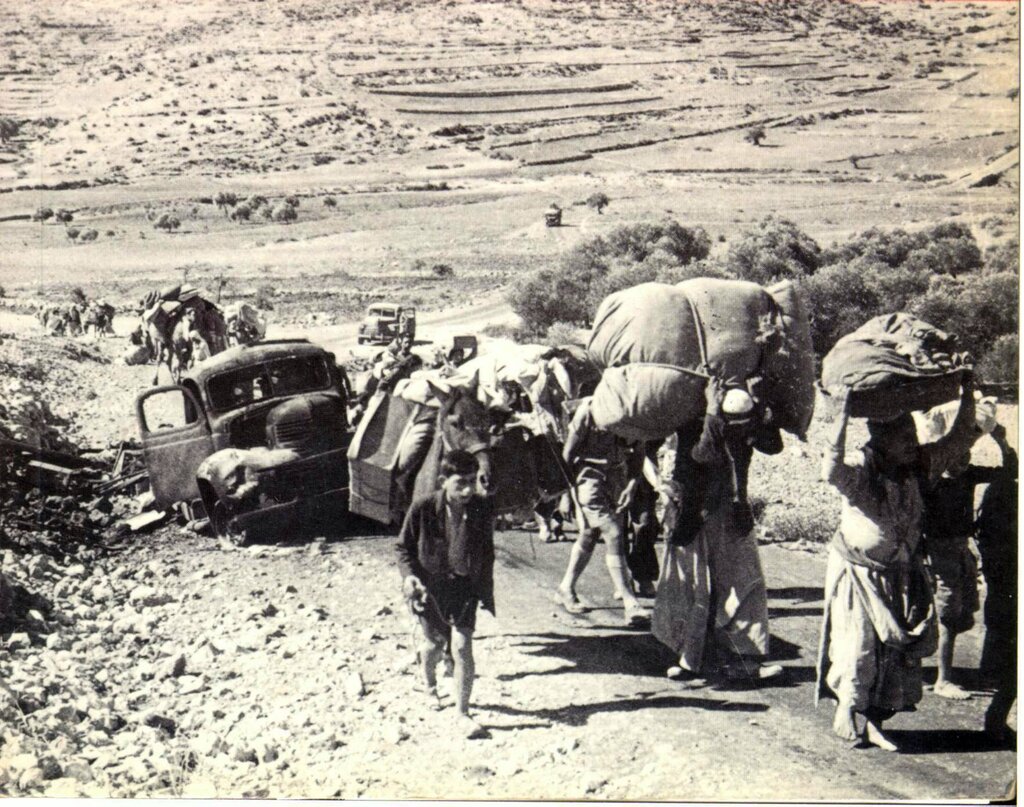
The conflict, which Israelis call the War of Independence and Palestinians call the Nakba (or "catastrophe"), reshaped the region. The new state of Israel not only defended its territory but expanded beyond the borders proposed by the UN partition plan. By the time armistice agreements were signed in 1949, Israel controlled 78% of what had been Mandatory Palestine.
The war had devastating consequences for Palestinians. Over 700,000 people—more than half the Arab population—fled or were expelled from their homes in the territory that became Israel. These refugees scattered into neighboring countries, the West Bank, and the Gaza Strip. Their displacement, and the question of their right to return, became a central and enduring element of the ongoing conflict.
Before World War I, the land that is now Palestine was part of which empire?
What was the Balfour Declaration of 1917?