The Cold War Explained
Origins of the Cold War
A Clash of Ideas
The end of World War II in 1945 wasn't just the end of a conflict; it was the beginning of a new one. The United States and the Soviet Union, allies against Nazi Germany, found themselves as the world's two remaining superpowers. The problem was, they had fundamentally different visions for the future.
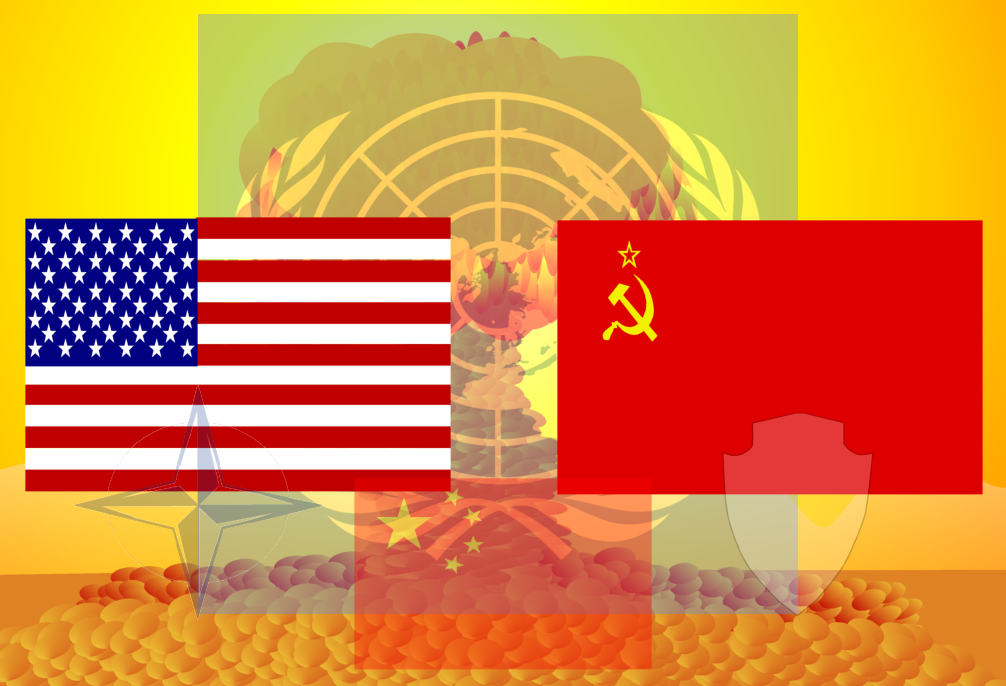
The United States championed capitalism and democracy. It believed in free markets, private ownership, and individual liberties. The government's role was to protect these rights and allow people to pursue their own success.
The Soviet Union, on the other hand, was built on the principles of communism. It advocated for a system where the state controlled all property and economic activity. The goal was to create a classless society where wealth was distributed equally among all citizens, guided by a single, all-powerful political party.
These two ideologies were like oil and water. One promoted individual freedom and competition, while the other prioritized collective equality and state control. They simply could not mix.
Drawing Lines on a Map
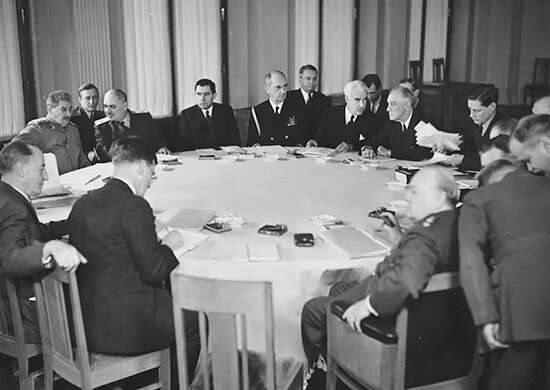
As World War II drew to a close, the leaders of the Allied powers met to decide the fate of the post-war world. At conferences like Yalta and Potsdam, they agreed to divide Germany and its capital, Berlin, into zones of occupation. But these meetings also revealed deep mistrust.
The Soviet Union, having been invaded by Germany twice in 30 years, was determined to create a buffer zone of friendly states in Eastern Europe to protect itself from future attacks. As the Soviet Red Army pushed the Nazis back, it occupied countries like Poland, Hungary, and Czechoslovakia. After the war, the USSR ensured that communist governments, loyal to Moscow, were installed in these nations.
This created what became known as the Eastern Bloc. In response, the United States and its allies in Western Europe formed a counter-alliance, the Western Bloc. Europe was now split in two.
It set in place spheres of influence for Soviet and Western interests, and would lead to the creation of East and West Germany.
The First Cracks Appear
The alliance forged in wartime quickly crumbled. The United States and its allies saw the Soviet takeover of Eastern Europe not as a defensive measure, but as aggressive expansionism. They feared that the USSR wanted to spread communism across the globe.
The Soviets, in turn, viewed American efforts to rebuild Western Europe, like the Marshall Plan, as a way to use economic power to undermine communism and dominate the continent. Each side saw the other's actions as a direct threat.
Disagreements over the future of Germany became a major flashpoint. The Western powers wanted to rebuild Germany as a stable, democratic nation. The Soviet Union wanted to keep it weak and extract heavy reparations. This impasse led to the formal division of the country into West Germany (allied with the US) and East Germany (controlled by the Soviets) in 1949.
A competition for influence had begun. Every political or economic move was seen through a lens of suspicion, pushing the two superpowers further apart and setting the stage for decades of hostility.
Before we test your knowledge, let's review the key ideas from this section.
Ready to check your understanding?
What was the primary reason the Soviet Union established control over countries in Eastern Europe after World War II?
Which of the following best describes the economic system championed by the United States after WWII?
With these tensions in place, the world entered a new era of geopolitical struggle.