The ClinGen Project Explained
Introduction to Genomic Medicine
The Blueprint of Life
Your body is made of trillions of cells, and each one contains a complete instruction manual: your genome. This manual is written in the language of DNA, a long, spiral-shaped molecule. If you were to stretch out the DNA from a single human cell, it would be about six feet long. To fit inside a microscopic cell nucleus, it's tightly coiled into structures called chromosomes.
Genes are specific sections of this DNA. Think of them as individual recipes in the instruction manual. Each gene contains the code to build a specific protein. Proteins are the workhorses of the cell, carrying out a vast array of tasks—from digesting your food to contracting your muscles.
A gene isn't just one continuous block of code. It's made up of coding regions called exons and non-coding regions called introns. During a process called transcription, the entire gene is copied into a molecule called RNA. Then, the cell snips out the intron sections and stitches the exon sections together to create the final message. This message is then translated into a protein.
When the Blueprint Changes
Just like a recipe can have a typo, the DNA sequence of a gene can have variations. These are called genetic variants. They are a normal part of what makes each of us unique. Most variants have no effect on our health. Some can even be beneficial. But others can change how a protein works, sometimes leading to disease.
A variant might change a protein's shape, stop it from being made altogether, or cause it to be produced in the wrong amount.
There are several types of genetic variants:
-
Single Nucleotide Polymorphism (SNP): This is the most common type, where a single DNA base (A, T, C, or G) is swapped for another. It's like changing one letter in a word.
-
Insertion/Deletion (Indel): This happens when one or more DNA bases are added or removed. This can shift the entire reading frame of the gene, scrambling the message from that point onward.
-
Structural Variants: These are larger-scale changes, affecting a big chunk of a chromosome. They can include duplications (a segment is repeated), deletions (a segment is lost), or inversions (a segment is flipped backward).
Reading the Genetic Code
How do we find these variants? Through genetic testing. This process involves analyzing a sample of your DNA, usually from blood or saliva, to look for changes in your genes.
Historically, scientists used a method called Sanger sequencing, which was great at reading one small piece of DNA at a time. It's still used today to confirm specific findings. But to analyze many genes at once, or even the entire genome, we now use Next-Generation Sequencing (NGS).
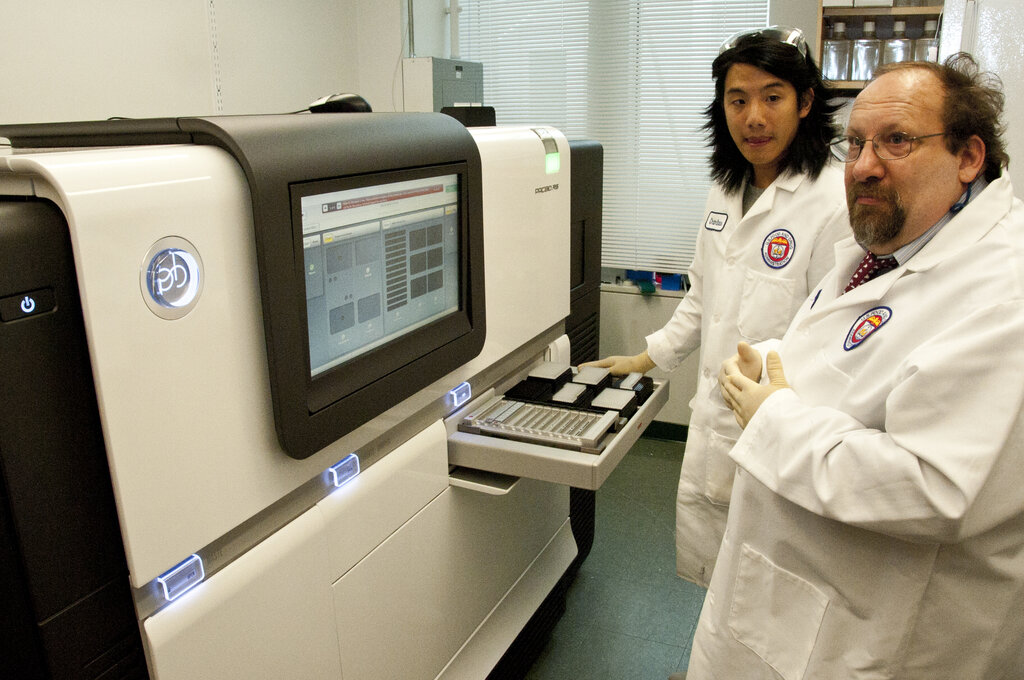
NGS is a powerful technology that allows us to sequence huge amounts of DNA quickly and cost-effectively. It's the engine behind several types of large-scale genetic tests:
| Test Type | Scope | Best For... |
|---|---|---|
| Single Gene Test | Looks at one specific gene | A condition strongly associated with a single gene |
| Gene Panel | Looks at a set of genes known to be related to a specific condition | Diseases that can be caused by variants in multiple different genes |
| Whole Exome Sequencing (WES) | Sequences all the exons (the protein-coding parts) of all genes | Complex medical cases where a specific diagnosis is unclear |
| Whole Genome Sequencing (WGS) | Sequences a person's entire genome, including exons, introns, and other regions | Comprehensive analysis for diagnostic or research purposes |
From Data to Diagnosis
Getting the sequence data is just the first step. The real challenge is interpreting it. A single person's genome can have millions of variants compared to the 'reference' human genome. The task for clinical geneticists and bioinformaticians is to sift through this mountain of data to find the one or two variants that might explain a patient's condition.
They classify variants into different categories based on the available evidence:
- Pathogenic: Strong evidence shows this variant causes disease.
- Likely Pathogenic: Very likely to cause disease, but the evidence isn't quite definitive.
- Benign: Strong evidence shows this variant is harmless.
- Likely Benign: Very likely to be harmless.
- Variant of Unknown Significance (VUS): There isn't enough evidence to know if it's harmful or harmless.
The VUS category can be frustrating for both doctors and patients. It means a genetic change was found, but we don't yet understand what it does. As scientific knowledge grows, many VUS results are eventually reclassified as either pathogenic or benign.
This process of interpretation is the core of genomic medicine. It combines the raw DNA sequence with scientific literature, population data, and a patient's personal and family medical history to provide meaningful insights that can guide diagnosis, treatment, and prevention.