The Cerebral Cortex Explained
Introduction to the Cerebral Cortex
The Brain's Wrinkled Bark
The cerebral cortex is the outermost layer of your brain. The word cortex comes from the Latin for "bark," which is a fitting description. Just like the bark of a tree, the cortex is a thin covering, but it's where most of the brain's heavy lifting happens. This is the part of the brain responsible for higher-level processes like thought, language, memory, and consciousness.
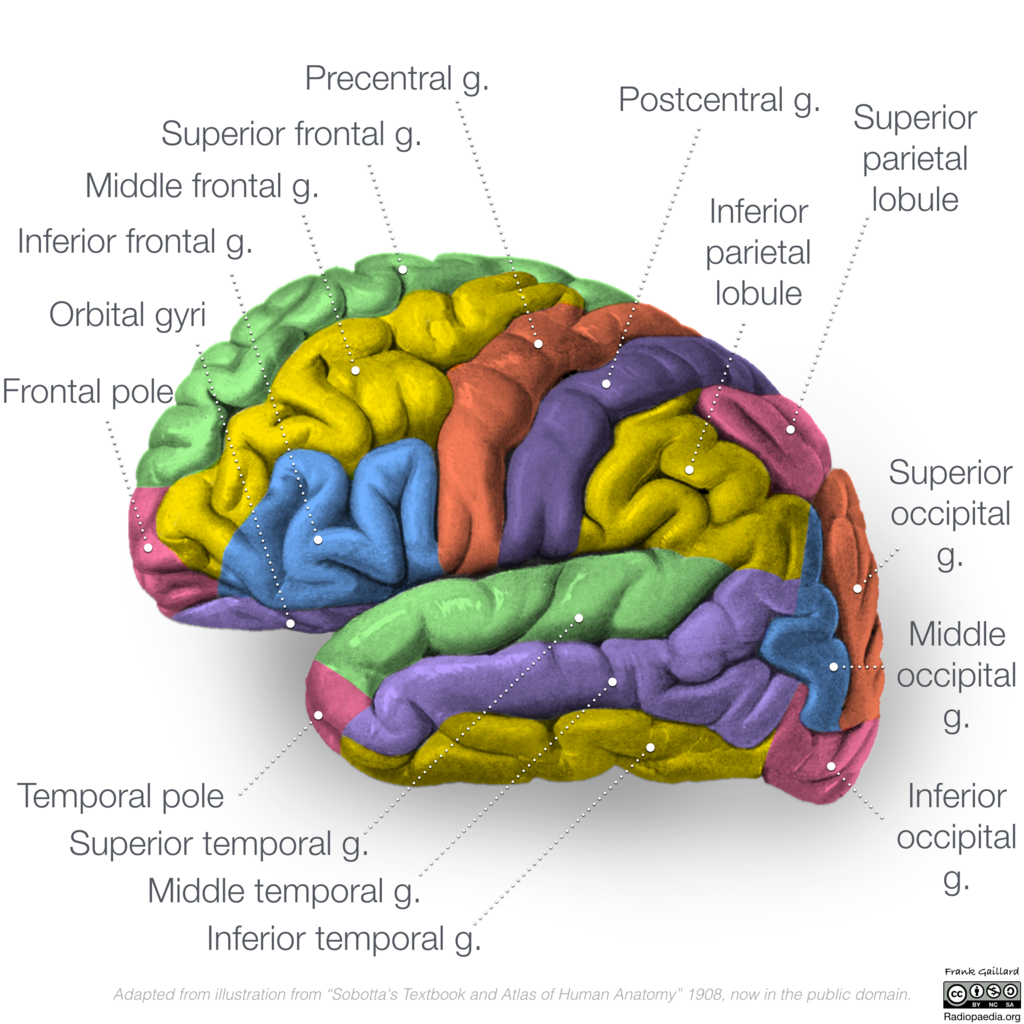
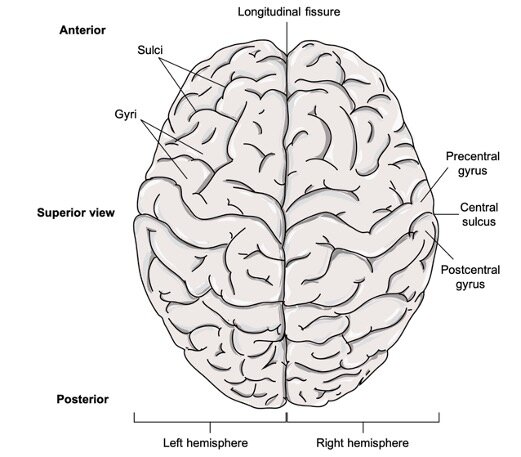
If you look at the cortex, its most striking feature is its wrinkled, folded appearance. These folds aren't random; they serve a critical purpose. The ridges are called gyri (singular: gyrus), and the grooves are called sulci (singular: sulcus). This folding dramatically increases the surface area of the cerebral cortex, allowing more neurons to be packed into the limited space of your skull. Think of it like crumpling a large sheet of paper to fit it inside a small ball. This extra surface area gives us our advanced cognitive abilities.
gyrus
noun
A ridge or fold on the convoluted surface of the brain.
The grooves, or sulci, act as the valleys between these ridges.
sulcus
noun
A groove or furrow on the surface of the brain.
Old Brain, New Brain
The cerebrum is divided down the middle into two halves: the left and right hemispheres. While they work together, they have specialized functions. But the cortex itself also has a key division based on its evolutionary history and structure.
Most of the cortex you see, about 90% of it in humans, is the neocortex (literally "new bark"). This is the most recently evolved part of the cortex and is responsible for higher-order functions like sensory perception, reasoning, and language. It has a complex, six-layered structure.
The remaining 10% is called the allocortex ("other bark"). This is an evolutionarily older part of the brain that includes structures like the hippocampus and parts of the limbic system. It has fewer layers (typically three or four) and is primarily involved in more fundamental processes like memory formation and emotion.
| Feature | Neocortex | Allocortex |
|---|---|---|
| Prevalence | ~90% of cerebral cortex | ~10% of cerebral cortex |
| Evolutionary Age | Newest part | Older part |
| Structure | Six layers | Three to four layers |
| Primary Roles | Higher cognition, language | Memory, emotion, olfaction |
The Hub of Higher Thought
Ultimately, the cerebral cortex is the command and control center for your conscious experience. It integrates information from your senses, allowing you to perceive the world around you. It's where you form thoughts, make decisions, and access memories.
Language, both spoken and written, is processed here. Your personality, your ability to plan for the future, and your sense of self are all rooted in the complex neural networks of the cerebral cortex.
In short, the cerebral cortex is what allows us to think, feel, and act in the complex ways that make us human.
Let's review these foundational concepts before moving on.
The folded, wrinkled appearance of the cerebral cortex, with its gyri and sulci, serves what primary purpose?
Which part of the cortex is the most evolutionarily recent, has a six-layered structure, and is responsible for higher-order functions like reasoning and language?