The Brains Wiring and How It Works
Neurons
The Brain's Messengers
Your nervous system is a vast communication network, and its fundamental messengers are specialized cells called neurons. Think of them as the wiring of your body. They carry signals that allow you to think, feel, move, and sense the world around you. Everything you experience is the result of these tiny cells firing messages to one another.
While neurons come in various shapes and sizes, most share a common three-part structure. Understanding these parts is key to seeing how they work.
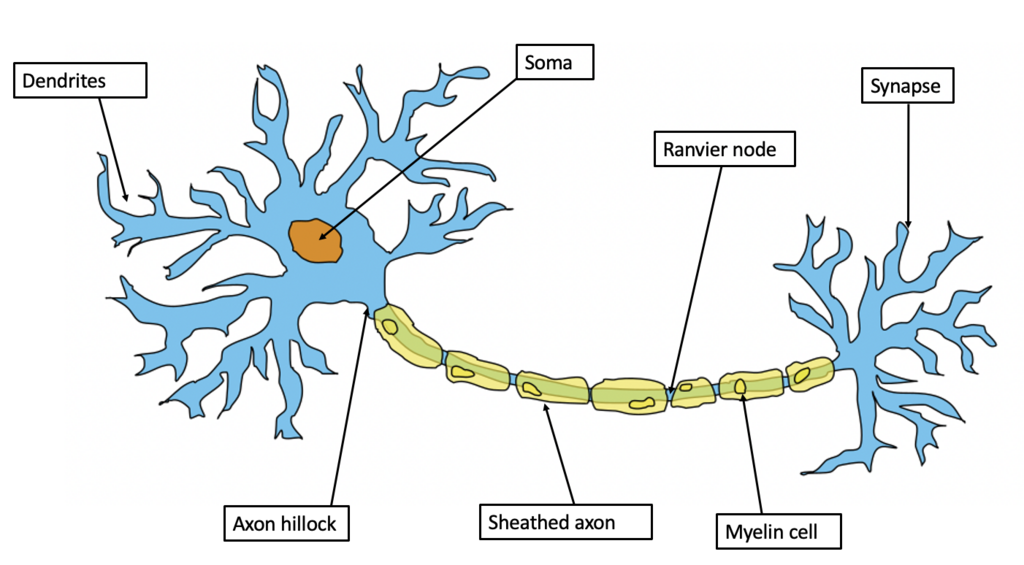
At the center is the cell body, or soma. Like any other cell, it contains a nucleus and is responsible for keeping the neuron healthy and functioning. Think of it as the neuron's command center.
Branching out from the cell body are dendrites. These tree-like extensions are the neuron's receivers. They collect incoming signals from other neurons and pass them toward the cell body.
Extending from the cell body is a single, long cable called the axon. Its job is to transmit signals away from the cell body and send them on to other neurons. Many axons are wrapped in a fatty layer called the myelin sheath, which acts like insulation on an electrical wire, helping the signal travel much faster.
The Action Potential
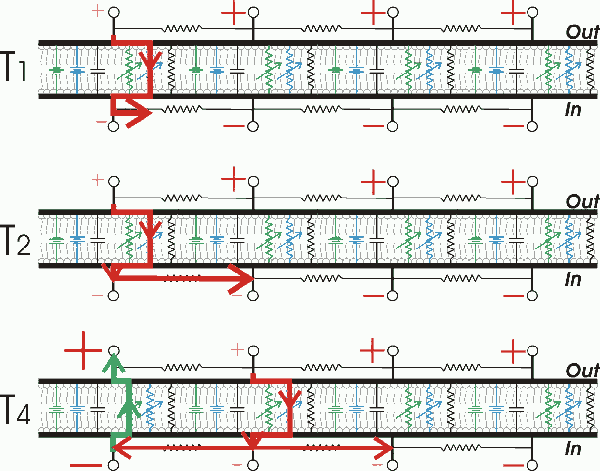
How does a neuron send a message? It uses a rapid, temporary change in electrical charge called an action potential. It's an all-or-nothing event. Once the neuron receives enough stimulation from its dendrites, it doesn't just send a weak signal—it fires a full-strength electrical impulse that travels down the axon.
Imagine a line of dominoes. A small push won't do anything, but once you push the first one hard enough to make it fall, the entire line topples over, one by one, until the end. An action potential travels down an axon in a similar way.
This electrical wave zips from the cell body all the way to the end of the axon. The presence of the myelin sheath dramatically speeds this up, allowing the signal to jump between gaps in the sheath, a process called saltatory conduction.
The Synapse
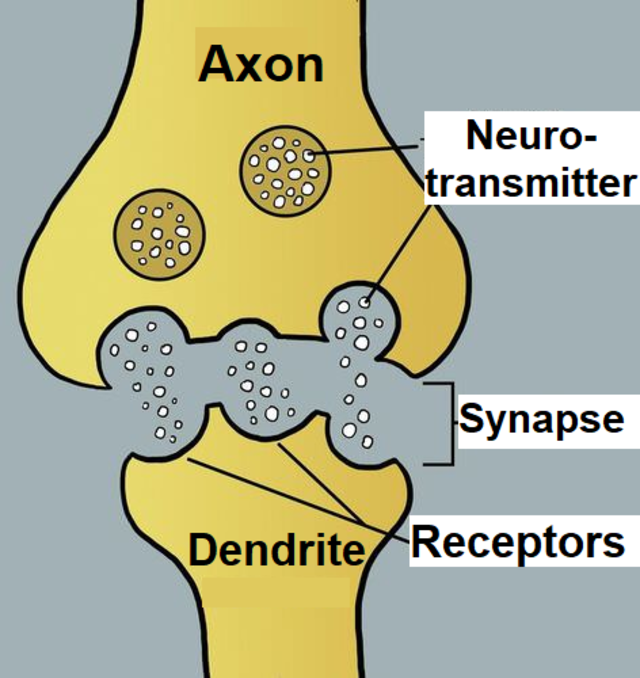
Neurons don't physically touch each other. There's a microscopic gap between the axon tip of one neuron and the dendrite of the next. This junction is called a synapse.
synapse
noun
The junction between two nerve cells, consisting of a minute gap across which impulses pass by diffusion of a neurotransmitter.
When an action potential reaches the end of the axon, it arrives at a structure called the axon terminal. This terminal is part of the synapse, facing the dendrite of the receiving neuron. The synapse's job is to ensure the message from the sending neuron is passed along to the receiving neuron. It acts as a tiny bridge, allowing information to flow from one cell to the next and continue its journey through the nervous system.
Now that you understand the basic structure and signaling process of a neuron, let's test your knowledge.
What is the primary function of dendrites?
Which part of the neuron is often compared to the 'command center' because it contains the nucleus and keeps the cell functioning?