The Blueprint of Humanity
Introduction to Human Anatomy
What is Anatomy?
Anatomy is the study of the body's structure. Think of it as creating a detailed map of the human body. Instead of cities and roads, you're learning about bones, muscles, and organs and how they all fit together. It’s about the “what” and “where” of our bodies.
This is different from physiology, which focuses on how those parts work. To use our map analogy, anatomy is the map itself, while physiology is the traffic flowing through the streets. You need to know the map before you can understand the traffic. So, let's start with the most basic building blocks.
Building Blocks of the Body
The human body is incredibly organized. It’s built up in layers of increasing complexity, starting from the tiniest particles. Imagine building a house: you start with individual bricks, use them to make walls, arrange walls to form a room, and group rooms to create a house. Your body is built in a similar way.
The journey from a single atom to a complete human being is a story of organization, with each level building upon the last.
It all begins at the chemical level. The body is made of atoms, like carbon, hydrogen, and oxygen. These atoms link together to form molecules, such as water, proteins, and fats. These molecules are the raw materials, the very 'stuff' we're made of.
Next is the cellular level. Molecules group together in a highly organized way to form cells. A cell is the smallest unit of life. We have hundreds of different types of cells, like nerve cells, muscle cells, and skin cells, each with a specific job to do. They are the individual bricks in our house analogy.
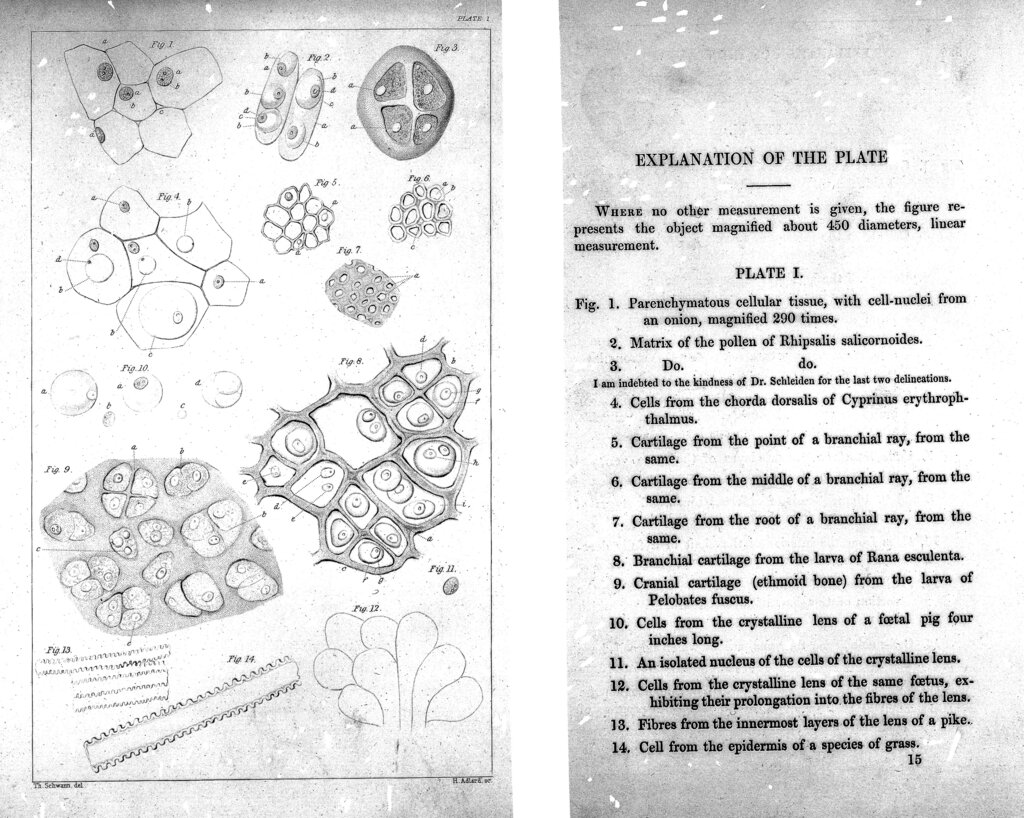
When groups of similar cells work together, they form a tissue. This is the tissue level of organization. For example, many muscle cells working in unison create muscle tissue, which allows you to move. Nerve cells band together to form nervous tissue, which sends signals throughout your body. Tissues are like the walls built from our cellular bricks.
It is convenient to consider the structures of the body in terms of fundamental levels of organization that increase in complexity, such as (from smallest to largest): chemicals, cells, tissues, organs, organ systems, and an organism.
These first three levels—chemical, cellular, and tissue—are the foundation for everything else. Understanding them is the first step to understanding the body as a whole. Later, we'll see how tissues form organs, and organs form systems.
The Language of Anatomy
To talk about the body accurately, we need a shared, precise language. It wouldn't be very helpful for a doctor to say a patient has pain "in the upper part of their arm." Is that near the shoulder? Near the elbow? On the front or the back? Anatomical terminology removes this confusion.
Everything starts from a standard reference point called the anatomical position. This is the body standing upright, with feet parallel and flat on the floor, head level and looking forward, arms at the sides, and palms facing forward. No matter how the body is actually positioned, all descriptions refer back to this standard pose.
With this starting point, we can use specific terms for direction. For example, superior means toward the head, and inferior means toward the feet. The nose is superior to the mouth. Anterior refers to the front of the body, and posterior refers to the back. Your sternum (breastbone) is anterior to your spine.
| Term | Meaning | Example |
|---|---|---|
| Superior | Toward the head | The head is superior to the chest. |
| Inferior | Toward the feet | The foot is inferior to the knee. |
| Anterior | Toward the front | The sternum is anterior to the heart. |
| Posterior | Toward the back | The spine is posterior to the stomach. |
| Medial | Toward the midline | The nose is medial to the eyes. |
| Lateral | Away from the midline | The ears are lateral to the nose. |
Learning these terms is like learning a new vocabulary. At first it may seem strange, but it allows for incredible precision when describing the human body.
Time to test your knowledge of these foundational concepts.
Which of the following describes the study of anatomy?
What is the correct order of the levels of organization in the human body, from simplest to most complex?
Understanding these core ideas—the levels of organization and the basic language of anatomy—provides the framework for exploring the body's more complex structures.