The Black Death Reshaping Europe
Demographic Collapse
A Devastating Arrival
In the middle of the 14th century, Europe was bustling. Trade routes connected cities and kingdoms, and populations were growing. But along these same routes, an unseen and terrifying passenger arrived: a pandemic that would reshape the continent.
The Black Death is the name given to the strain of bubonic plague (or pneumonic plague, or even anthrax as some controversial historians have argued) which ravaged Europe from 1346-53.
Carried by fleas on rats that traveled aboard merchant ships, the disease spread with breathtaking speed. It first hit commercial hubs like Genoa and Venice before marching inland, leaving a trail of death that few could comprehend.
Counting the Dead
The sheer scale of the mortality was unprecedented. While precise record-keeping was inconsistent, historians have pieced together a grim picture from tax records, parish registers, and contemporary accounts. The conclusion is staggering.
Mortality: ~1/3 of Europe’s population.
In just a few years, somewhere between 30% and 50% of Europe's entire population perished. That’s an estimated 25 to 50 million people. Some cities lost more than half their inhabitants. The map below shows how the plague swept across the continent over a four-year period.
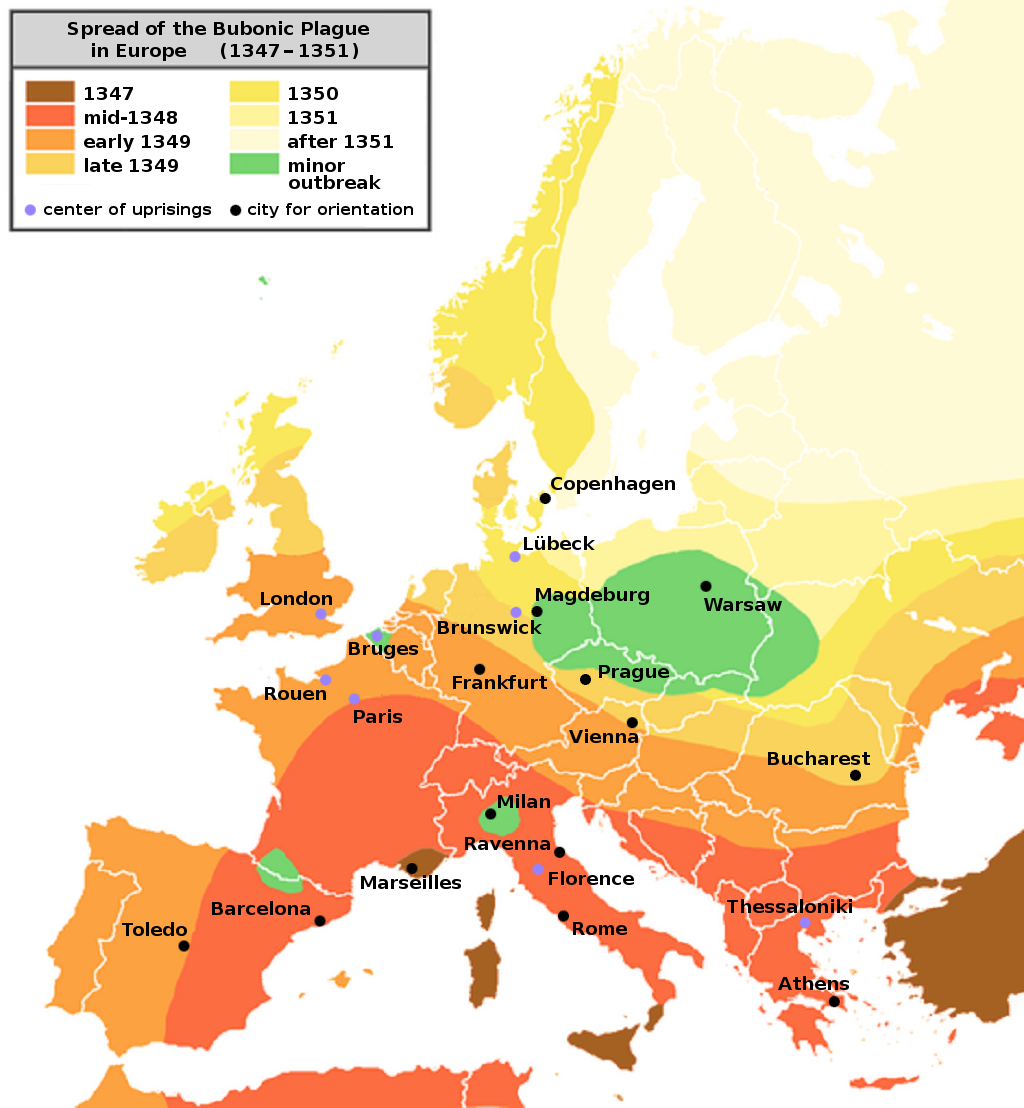
The experience of the plague, however, was not uniform. The death toll varied dramatically from one region to another, influenced by factors like trade, population density, and sometimes sheer luck.
| Region | Estimated Mortality Rate |
|---|---|
| Florence, Italy | 50% - 75% |
| England | 40% - 60% |
| Paris, France | ~50% |
| Poland & Bohemia | Relatively Low (~25%) |
Densely populated cities and regions with extensive trade links, like Italy and France, were devastated. In contrast, more isolated areas with less traffic, such as Poland and parts of the Basque country, suffered significantly lower mortality rates. Some small communities were wiped out entirely, while neighboring ones remained nearly untouched.
Society in Chaos
The immediate impact of such a massive population loss was societal breakdown. Fields were left unplowed, and harvests rotted as farm laborers died. Entire villages were abandoned. The basic functions of governance and commerce ground to a halt in many places because there was simply no one left to perform the work.
The social fabric frayed. Fear and paranoia were rampant. Family members abandoned their sick, and the sheer number of dead overwhelmed traditional burial rites. Mass graves became a common and horrifying sight.
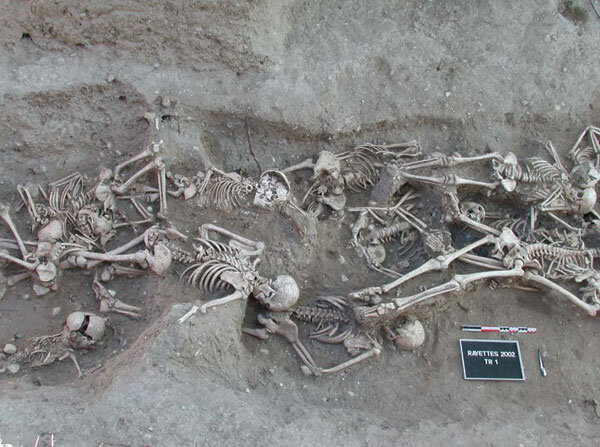
This sudden, catastrophic demographic collapse didn't just cause immense suffering; it created a vacuum. With a third of the continent gone, the world was irrevocably changed, setting the stage for profound shifts in the years to come.
According to historical estimates, what percentage of Europe's population perished during the Black Death in the mid-14th century?
Which factor best explains why regions like Italy and France were devastated by the plague, while areas like Poland suffered less?