The Bilaminar Disc and Early Implantation
Implantation Mechanics
The Window of Implantation
After its journey down the fallopian tube, the blastocyst arrives in the uterus. For a few days, it floats freely in the uterine cavity, nourished by secretions from the uterine glands. During this time, the uterine lining, or endometrium, is undergoing its own preparations. Hormonal signals, primarily progesterone, have caused it to thicken and become highly vascular, creating a receptive environment. This brief period, typically between days 6 and 10 after ovulation, is known as the "window of implantation."
The blastocyst then burrows into the uterine lining — a process called implantation.
The process begins with apposition, where the blastocyst stops tumbling and orients itself correctly. One side of the blastocyst contains the inner cell mass, which will become the embryo proper. This side is called the embryonic pole. For a successful pregnancy, the embryonic pole must make first contact with the endometrial surface. Once positioned, it begins to adhere to the lining, a sticky process mediated by a complex dialogue of molecules on both the embryonic and uterine surfaces.
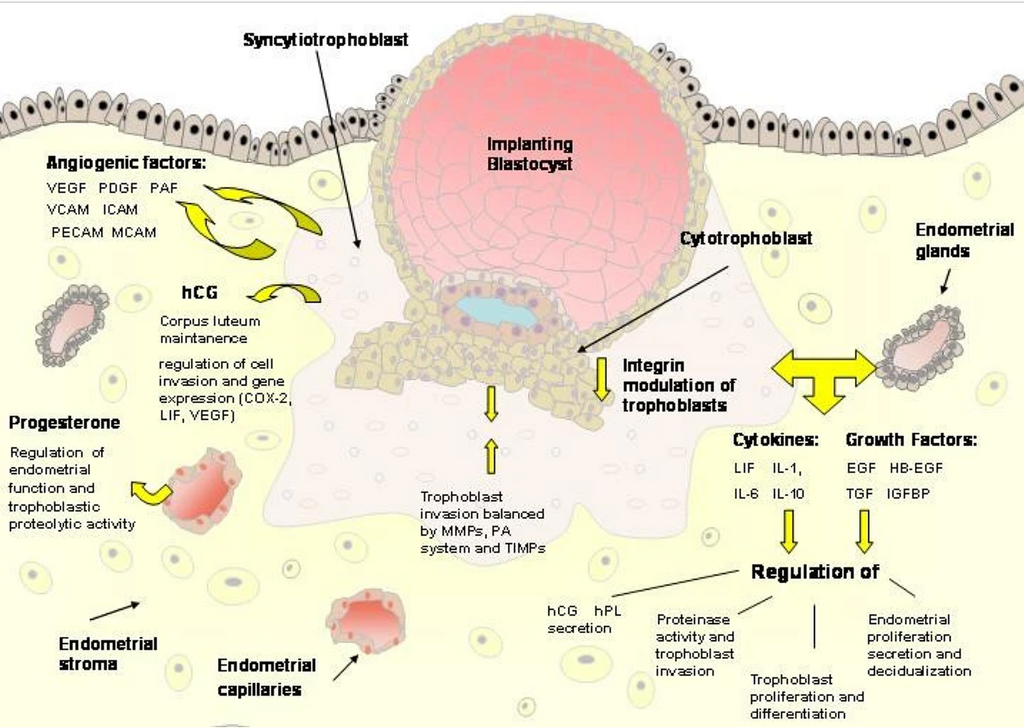
A Tale of Two Layers
With the blastocyst now anchored, its outer cell layer, the , begins a remarkable transformation. It rapidly differentiates into two distinct and specialized layers. This is a critical step, as these new layers are responsible for invading the maternal tissue and establishing the life-support system for the embryo.
The inner layer, which remains cellular with clear boundaries, is called the cytotrophoblast. Think of it as the support crew and a source of new cells. The outer layer is the syncytiotrophoblast. This layer is truly unique; it's a large, multinucleated mass of cytoplasm formed by the fusion of underlying cytotrophoblast cells. It has no individual cell membranes, allowing it to act as a single, aggressive, invasive front.
The syncytiotrophoblast is the engine of implantation. It pushes finger-like projections into the endometrium and begins secreting —powerful digestive chemicals that break down the maternal tissue. This enzymatic action allows the blastocyst to literally digest its way into the uterine wall, burrowing deeper until it is fully enveloped. This invasive process is highly controlled; if it were to go unchecked, it could damage the uterus. The endometrial cells respond by undergoing a change called the decidual reaction, which helps contain the invasion and provides a nutrient-rich site for the developing placenta.
Establishing a Connection
As the syncytiotrophoblast invades, it erodes the walls of maternal blood vessels. Small pools of maternal blood, called lacunae, form within the syncytiotrophoblast layer. This is the very first, primitive circulatory connection between mother and embryo. It allows for the transfer of nutrients and oxygen from mother to embryo and the removal of waste products in the opposite direction.
This invasive but necessary process firmly secures the embryo within the uterine wall, marking the successful completion of implantation. The foundation for the placenta has been laid, and the next stage of development can begin.
Ready to check your understanding of how an embryo makes its new home?
What is the 'window of implantation'?
Which specialized layer of the trophoblast is directly responsible for invading the uterine wall by secreting digestive enzymes?
With implantation complete, the stage is set for the formation of the specialized tissues and organs that will make up the new individual.