The Biafran War Explained
Pre-Colonial Nigeria
Societies Before Nigeria
Before the name “Nigeria” existed, the land was home to a vibrant collection of distinct kingdoms, empires, and societies. These groups had their own unique political structures, economies, and cultural traditions. Understanding these pre-colonial societies is key to understanding the region's complex history. Let's explore the three largest ethnic groups: the Yoruba, the Igbo, and the Hausa-Fulani.
The Yoruba Kingdoms
In the southwest, the Yoruba people shared a common language and cultural heritage, centered around the spiritual city of Ife, which they considered their ancestral home. Politically, however, they were not a single unified state. Instead, they were organized into a series of powerful city-states and kingdoms.
The most dominant of these was the Oyo Empire. At its peak, Oyo controlled a vast territory through its formidable cavalry and well-structured government. The empire's political system was a sophisticated form of constitutional monarchy with checks and balances. The king, known as the Alaafin, held significant power, but he did not rule alone. The Oyo Mesi, a council of seven principal chiefs, had the authority to keep the Alaafin's power in check and even force him to abdicate if he became tyrannical.
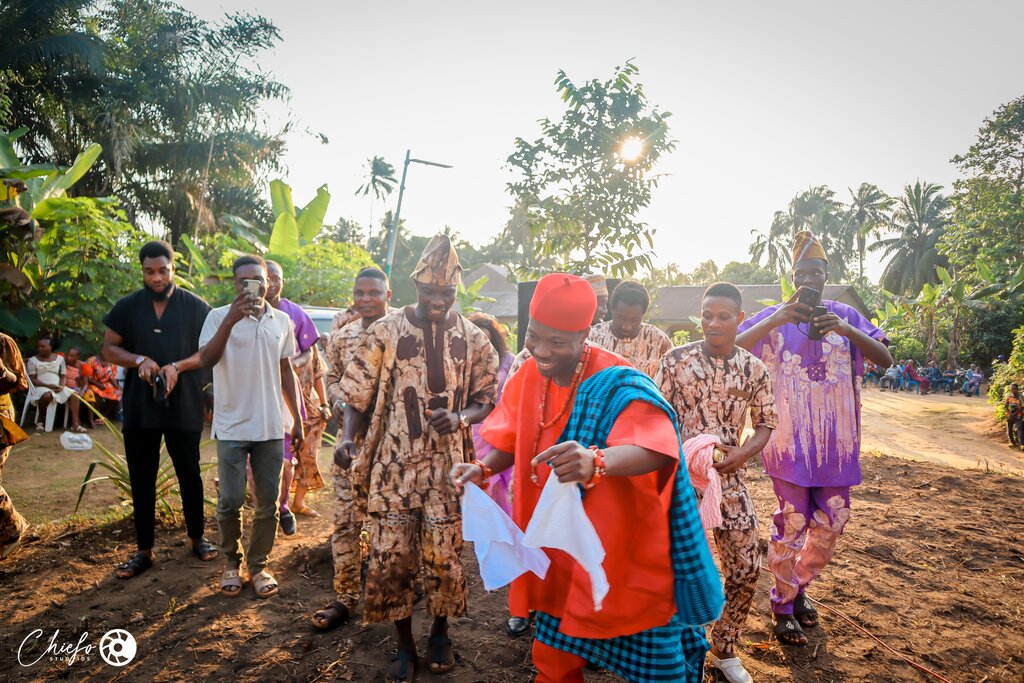
The Yoruba economy was diverse. They were skilled farmers who cultivated crops like yams, maize, and beans. They were also renowned artisans and traders. Yoruba craftspeople produced exquisite sculptures in bronze, ivory, and terracotta that are celebrated worldwide. Their extensive trade networks connected them to communities across West Africa and even to traders from North Africa and Europe.
The Igbo Society
In the southeast lived the Igbo people. Their society offered a sharp contrast to the centralized kingdoms of the Yoruba. The Igbo were highly decentralized and did not have kings or large empires. Instead, political life was organized at the village level.
Governance was typically handled by a council of elders, with input from a general assembly where all adult males had the right to speak. This system was democratic and republican in nature. Social and political identity was based on kinship, with the patrilineage being the most important unit.
patrilineage
noun
A line of descent traced from a common male ancestor.
The Igbo were industrious farmers and traders. Because they lived in a dense rainforest region, farmland was a precious resource. Trade was a vital part of their economy, allowing villages to exchange goods and specialize in certain crafts. A unique trading network known as the Aro Confederacy, centered around a powerful oracle, connected Igbo communities and managed long-distance trade across the entire region.

The Hausa-Fulani Emirates
The northern part of the region was dominated by the Hausa people for centuries. They built several powerful, independent city-states, such as Kano, Katsina, and Zaria, which became major centers of trade. Thanks to their location, these states were key hubs in the trans-Saharan trade network, connecting West Africa with North Africa and the Middle East. They traded goods like leather, salt, and textiles.
In the early 19th century, this political landscape was transformed. A Fulani Islamic scholar and preacher, Usman dan Fodio, led a successful jihad, or holy war. His movement overthrew the old Hausa rulers and established a vast empire known as the Sokoto Caliphate. This caliphate united the Hausa states and surrounding areas under a single Islamic authority, with the Sultan of Sokoto as its spiritual and political leader. The Fulani integrated with the Hausa elite, creating the ruling class often referred to today as the Hausa-Fulani.
| Society | Political Structure | Key Economic Activities |
|---|---|---|
| Yoruba | Centralized kingdoms (e.g., Oyo Empire) with checks and balances | Farming, artisan crafts (sculpture), trade |
| Igbo | Decentralized, autonomous villages governed by councils | Farming, trade (Aro Confederacy), blacksmithing |
| Hausa-Fulani | Islamic caliphate (Sokoto) ruling over emirates | Trans-Saharan trade, farming, livestock herding |
These three groups, with their very different histories and systems of governance, formed the complex social fabric of the region long before the arrival of European colonial powers. Each had a rich heritage and a distinct way of organizing society.
Which of the following best describes the political structure of pre-colonial Igbo society?
What major event in the early 19th century transformed the political landscape of the Hausa states?