The Beginning of Life Single Cells
What Are Living Things
What Makes Something Alive?
It seems like a simple question. A dog is alive. A rock is not. But the line can get blurry. A fire grows and consumes fuel, but we wouldn't call it a living thing. A crystal can get larger, but it isn’t alive either. To separate the living from the non-living, biologists use a checklist of shared characteristics. To be considered alive, an organism has to tick all the boxes.
Something that is alive will exhibit all of these traits, while non-living things might show some, but never all of them.
The Checklist of Life
Let's walk through the fundamental traits that define life. Think of them as the rules every living organism must follow, from the smallest bacterium to the largest whale.
Organism
noun
An individual living being, such as an animal, plant, fungus, or single-celled life form.
1. It's Made of Cells
Every living thing is composed of at least one cell. Cells are the basic, microscopic building blocks of life, like tiny rooms where all the essential processes happen. Some organisms, like bacteria, are just a single cell. Others, like humans, are made of trillions of cells working together.
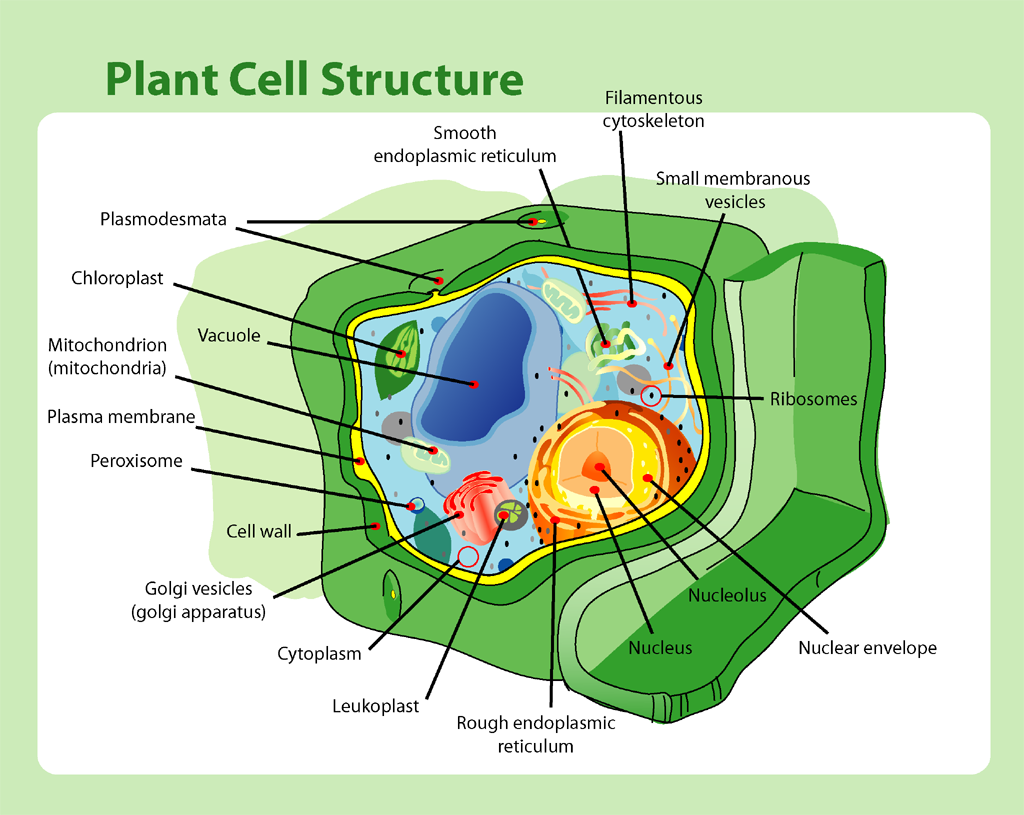
2. It Grows and Develops
Living things increase in size or complexity over time. A kitten doesn't just get bigger; it develops into an adult cat with different abilities. A tiny seed sprouts and grows into a complex tree. This isn't like a crystal simply adding more layers. It's a programmed process of change.
3. It Reproduces
All living things can create offspring, passing their genetic information to the next generation. This can be as simple as a single cell splitting in two or as complex as the courtship rituals of birds. The ability to reproduce ensures the continuation of the species.
4. It Responds to Its Environment
A plant turns its leaves toward the sun. You pull your hand away from a hot stove. These are responses to stimuli. Living organisms can detect changes in their surroundings and react to them, a key trait for survival. This sensitivity allows them to find food, avoid danger, and adapt to changing conditions.
5. It Uses Energy
Life requires energy. Organisms must take in energy and use it to power all their activities, a process called metabolism. Plants capture it from the sun through photosynthesis. Animals get it by eating other organisms. This energy fuels everything from growth to movement to simply staying warm.
Metabolism
noun
The chemical processes that occur within a living organism in order to maintain life.
Putting It All Together
No single characteristic is enough to define life. A river moves and a fire uses energy, but neither is made of cells or can reproduce in a biological sense. It's the combination of all these traits that draws the line. Each living thing is a complex system that maintains itself, responds to its world, and carries its legacy into the future.
| Characteristic | Living Example (Dog) | Non-Living Example (Car) |
|---|---|---|
| Made of Cells | Yes, trillions of them. | No, made of metal and plastic. |
| Grows & Develops | Yes, from a puppy to an adult. | No, it is assembled. |
| Reproduces | Yes, can have puppies. | No, it's built in a factory. |
| Responds to Stimuli | Yes, barks at strangers. | No, only reacts to a driver. |
| Uses Energy | Yes, eats food for fuel. | Yes, but uses gasoline, not metabolism. |
Notice that the car meets one criterion: it uses energy. But because it doesn't meet all of them, we know it's not a living organism. This framework is essential for understanding the world around us, especially as we begin to look at life on the smallest scales.