The Beatles Phenomenon
Early Life and Formation
The Quarrymen
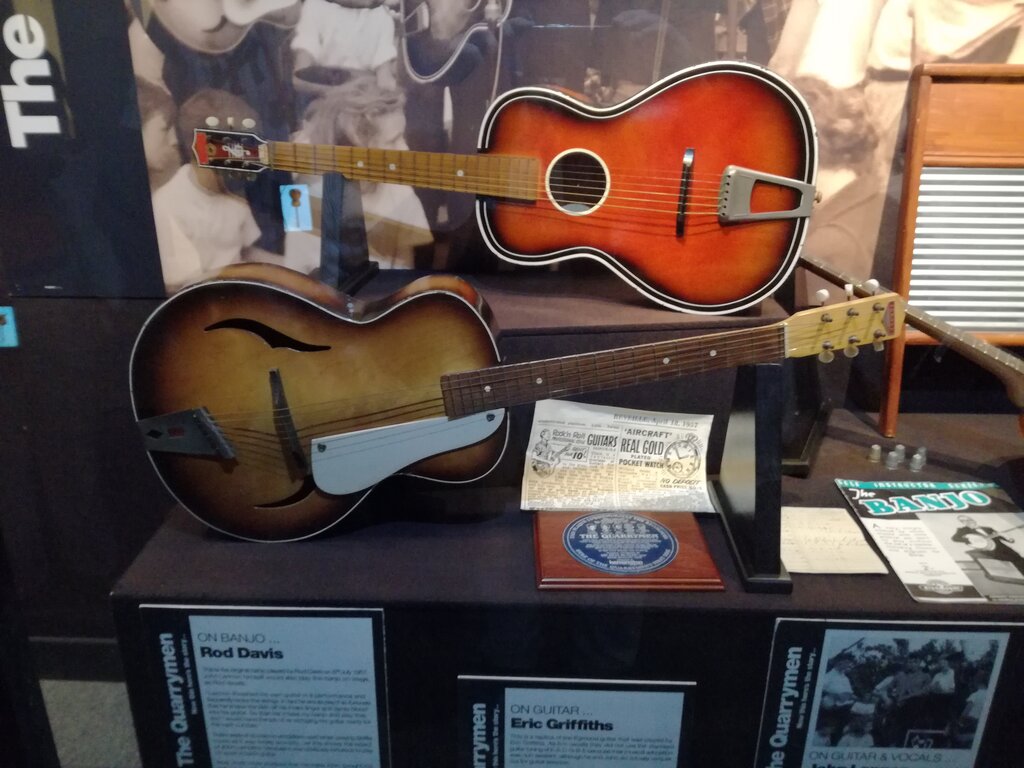
In post-war Liverpool, a gritty port city, American culture arrived on vinyl records carried by sailors. The raw energy of artists like Elvis Presley, Little Richard, and Chuck Berry sparked a musical fire in the city's youth. One of them was John Lennon, a sharp-witted art student who started a skiffle group with his friends in 1956. They called themselves The Quarrymen, named after their school, Quarry Bank High School.
skiffle
noun
A genre of folk music with jazz, blues, and country influences, often using homemade or improvised instruments like washboards and tea-chests.
On a summer afternoon in 1957, The Quarrymen were playing at a church festival. In the audience was a polite, musically talented 15-year-old named Paul McCartney. After the show, Paul impressed John by playing Eddie Cochran's "Twenty Flight Rock" and Gene Vincent's "Be-Bop-A-Lula" on the guitar, even writing down the lyrics for John. A few weeks later, John asked him to join the band.
The musical core was forming. Paul soon introduced John to his younger schoolmate, George Harrison. George was a dedicated and skilled guitarist, but at 14, John thought he was too young. George persisted, eventually cornering John on the upper deck of a bus and nailing the complex guitar instrumental "Raunchy." He was in.
Forged in Hamburg
With John's art school friend Stuart Sutcliffe on bass and a drummer named Pete Best, the group cycled through a few names before settling on The Beatles. Their early years were spent playing in tough clubs around Liverpool, most famously The Cavern Club. They were one of many local bands playing a style that became known as Merseybeat, a fusion of rock and roll, skiffle, and R&B.
But their real training ground wasn't in England. In 1960, they took a residency in Hamburg, Germany's rough port district. The conditions were grim, the pay was low, and the hours were brutal. They were expected to play for up to eight hours a night, seven nights a week.
This relentless schedule forced them to expand their song list, tighten their sound, and create an electrifying stage show to keep the rowdy audiences entertained. They had to be loud, energetic, and captivating.
It was in Hamburg that they crossed paths with another Liverpool musician, Richard Starkey, who went by the stage name Ringo Starr. He was the drummer for Rory Storm and the Hurricanes, another top band on the Hamburg circuit. The Beatles were impressed by his steady, professional drumming and easygoing personality. When they occasionally needed a substitute drummer, Ringo would sit in.
After several grueling trips to Hamburg between 1960 and 1962, The Beatles returned to Liverpool as a completely different band. Stuart Sutcliffe had decided to stay in Germany to pursue his passion for art, so Paul reluctantly took over on bass. More significantly, just as they were on the cusp of a recording contract, the band and their new manager Brian Epstein made the difficult decision to replace Pete Best. They knew exactly who they wanted. In August 1962, Ringo Starr officially joined The Beatles, finalizing the lineup that would soon change the world.
The years of playing in gritty clubs had transformed them from enthusiastic amateurs into a tight, powerhouse rock and roll machine, ready for the studio and the success that lay just ahead.