The Battle of Plassey and the Rise of British India
Mughal Empire Decline
The Empire Cracks
For nearly two centuries, the Mughal Empire was a symbol of immense power and wealth in India. From its heartland in Delhi, it commanded a vast territory. But by the early 18th century, this mighty structure began to show deep cracks.

The turning point was the death of Emperor Aurangzeb in 1707. His long reign was marked by costly wars that drained the imperial treasury. After him, a series of weak and short-lived emperors took the throne. Costly wars of succession became the norm, as princes fought bloody battles for power. Each conflict further depleted the empire's resources and military strength.
At the same time, the administration that held the empire together began to decay. Officials grew corrupt, and the system for collecting taxes and maintaining the army faltered. The empire had simply grown too large to be effectively managed from the capital.
The Mughal Empire, which had once extended from Central Asia to almost the entire Indian subcontinent, began disintegrating rapidly after the death of Aurangzeb in 1707.
New Powers Emerge
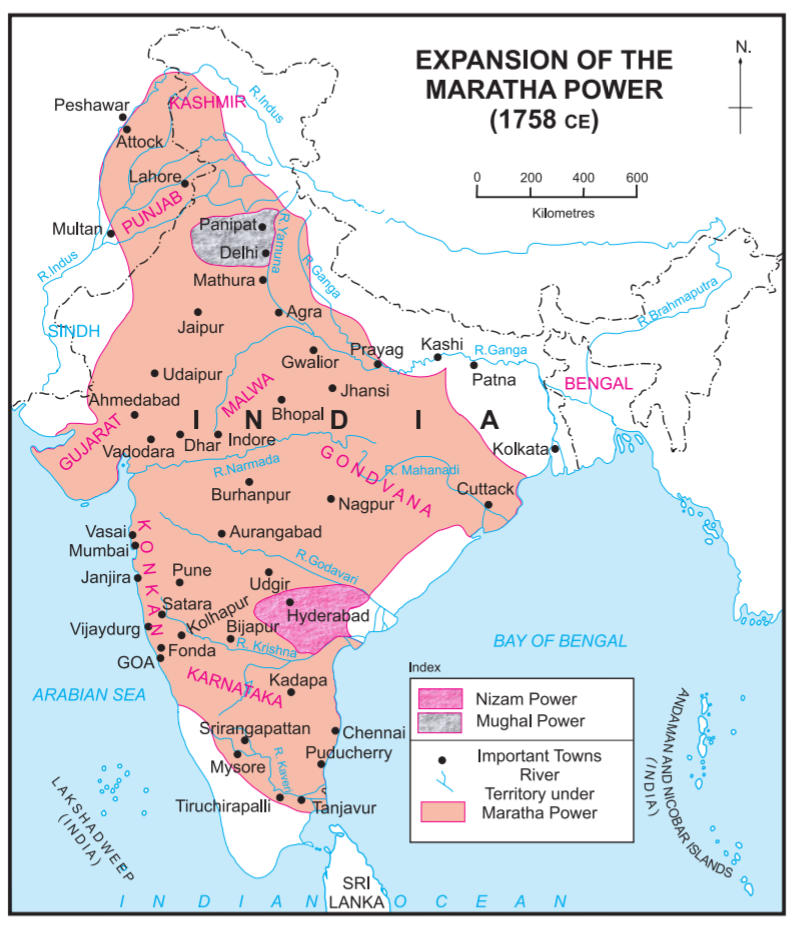
As the emperor's grip weakened, ambitious provincial governors, nobles, and local chieftains saw an opportunity. They began to carve out their own domains. While they might have paid lip service to the Mughal emperor in Delhi, in reality, they were founding independent dynasties.
States like Hyderabad, Awadh, and Bengal emerged as major regional powers. Their rulers, who once served the emperor, now commanded their own armies, collected their own taxes, and conducted their own politics. The empire wasn't conquered overnight; it was hollowed out from within.
The Rise of Bengal
Bengal was one of the empire's richest provinces, a hub of agriculture and trade. As central authority faded, its governors began to act with increasing independence. Murshid Quli Khan, appointed governor by Aurangzeb, consolidated his power and effectively established a ruling dynasty. His successors, the Nawabs of Bengal, ruled the province as a virtually independent state.
Nawab
noun
A title given to semi-autonomous rulers of provinces or states in the Mughal Empire. It is the Hindustani pronunciation of the Arabic word for 'deputy'.
The Nawabs controlled the province's immense wealth, maintained their own court, and managed their own affairs. Though they still acknowledged the Mughal emperor as their sovereign, this was largely a formality. The real power lay in their provincial capital, Murshidabad.
This political fragmentation created a volatile and competitive environment. The old, unified empire was gone, replaced by a mosaic of ambitious regional states. It was into this fractured landscape that European trading companies would soon find an opportunity to expand their influence.