The Basics of Electricity
Atomic Structure
The Building Blocks of Matter
Everything around you, from the air you breathe to the screen you're reading this on, is made of tiny particles called atoms. Think of them as the fundamental LEGO bricks of the universe. To understand electricity, we first need to look inside these bricks.
At the center of every atom is a dense core called the nucleus. The nucleus contains two types of particles: protons and neutrons.
- Protons carry a positive electric charge (+).
- Neutrons have no charge at all; they are neutral.
Swirling around the nucleus are much smaller, lighter particles called electrons. Electrons carry a negative electric charge (-).
In a stable atom, the number of electrons is equal to the number of protons. The negative charges of the electrons perfectly balance the positive charges of the protons, making the atom electrically neutral overall.
The Rules of Attraction
Electric charge follows a simple, fundamental rule that governs how these particles interact.
Opposite charges attract, while like charges repel.
This means a proton and an electron will pull toward each other, but two electrons will push each other away. This attraction is what holds the electrons in orbit around the nucleus. The flow of these very electrons is what we call electric current.
Conductors and Insulators
How easily an electric current can flow depends on the material. This is determined by how tightly the atoms in a material hold onto their outermost electrons, often called valence electrons.
Conductor
noun
A material through which electric charge can flow freely.
In conductors, like copper and gold, the outermost electrons are loosely bound to their atoms. They can easily jump from one atom to the next, creating a flow of charge. Think of it like a relay race where runners (electrons) easily pass a baton (charge) down the line.
Insulator
noun
A material that resists the flow of electric charge.
In insulators, like rubber and glass, the electrons are held very tightly to their atoms. They can't move around freely, which prevents an electric current from flowing. This is why electrical wires are wrapped in plastic—to keep the electricity contained.
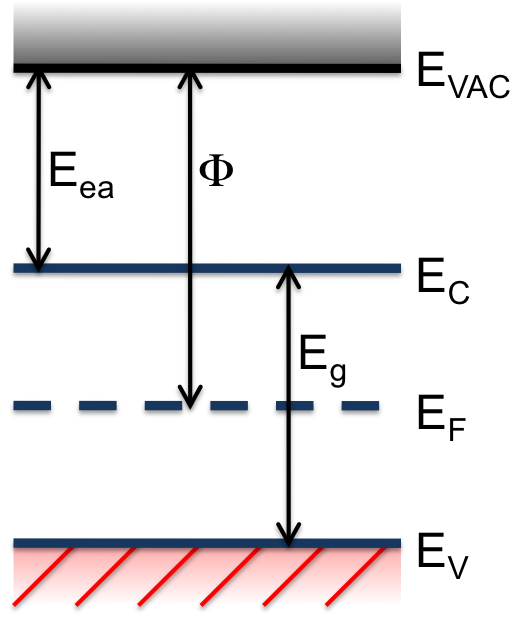
There's also a third category: semiconductors. Materials like silicon fall in between conductors and insulators. Under normal conditions, they act like insulators. But with a little push, like adding energy or impurities, they can be made to conduct electricity. This unique property is the foundation of modern electronics, from your phone to your computer.
Let's review these core concepts.
Now, test your understanding.
What particles are found in the nucleus of an atom?
In a stable, electrically neutral atom, the number of electrons is equal to the number of protons.
Understanding how atoms are built and how their electrons behave is the first step to understanding electricity. It all begins with the push and pull of positive and negative charges.