The Axon Hillock and Neural Firing
Neuron Structure
The Brain's Messengers
Your nervous system is a vast communication network, and its primary messengers are specialized cells called neurons. Think of them as the wiring that connects everything, carrying signals that control your thoughts, movements, and senses. While they come in many shapes and sizes, most neurons share the same basic four-part structure.
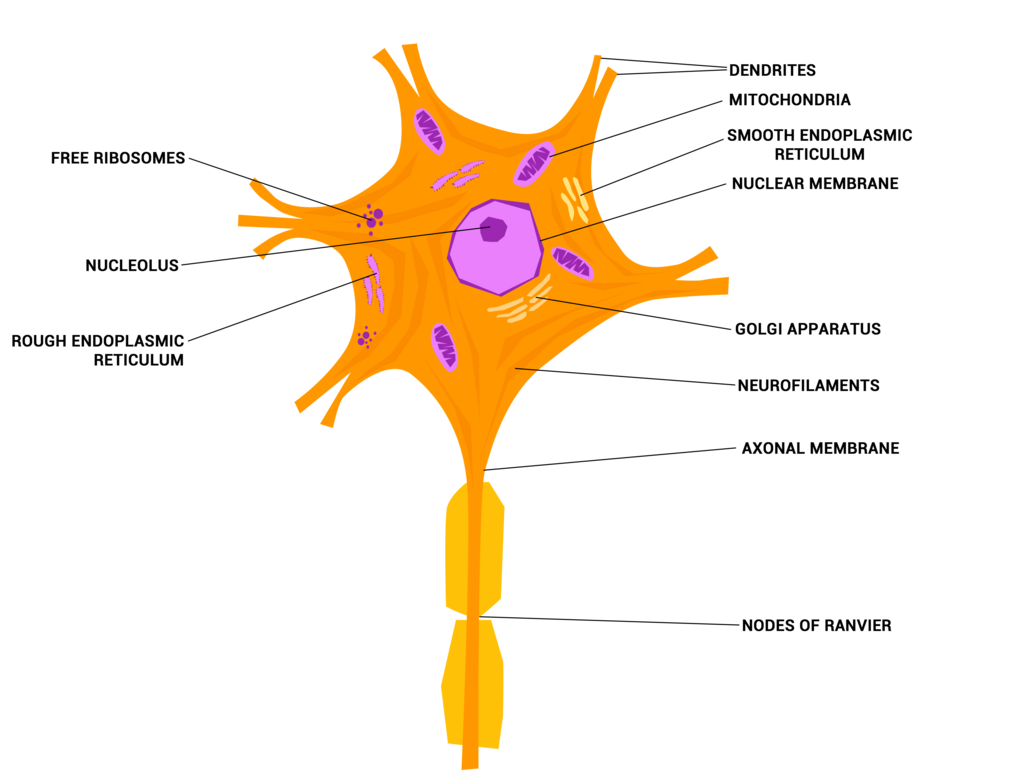
The Command Center
Every neuron has a central part called the cell body, or soma. This is the neuron's life-support center. It contains the nucleus, which holds the cell's genetic material, and other essential machinery that produces energy and keeps the neuron healthy. If the soma dies, the entire neuron dies with it.
Soma
noun
The cell body of a neuron, which contains the nucleus and other organelles essential for the cell's life processes.
Receiving Signals
Branching out from the cell body are short, tree-like extensions called dendrites. Their job is to receive incoming signals from other neurons. The word "dendrite" comes from the Greek word dendron, which means "tree," a fitting name for their branching appearance.
A neuron can have thousands of these branches, creating a vast network for receiving information. Each connection point is a potential source of a new message.
You can think of it this way: Dendrites listen. They are the input channels of the neuron.
Sending the Message
Once the soma processes the incoming signals from the dendrites, it may decide to send a message of its own. This message travels down a long, slender fiber called the axon.
The axon is the neuron's transmitter. It can be incredibly short or, in some cases, stretch over a meter long, like the axons that run from your spinal cord down to the muscles in your big toe.
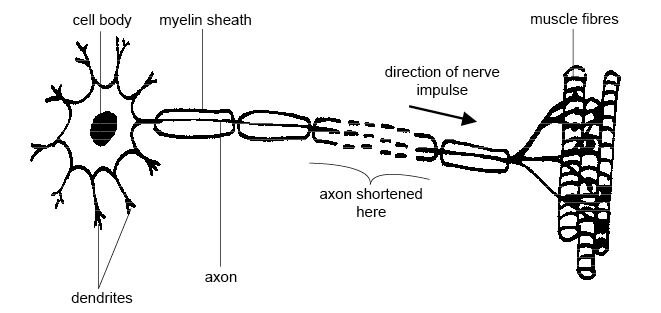
At the very end of the axon are several small branches that form the synaptic terminals, also known as axon terminals. These terminals don't physically touch the next neuron. Instead, there's a tiny gap called a synapse.
When the electrical signal reaches the synaptic terminals, it triggers the release of chemical messengers that travel across the synapse to the dendrites of the next neuron, passing the message along.
By understanding these four basic parts—soma, dendrites, axon, and synaptic terminals—you have the foundation for how the entire nervous system communicates.
Ready to check your understanding?
What is the primary function of the neuron's soma (cell body)?
If a neuron were a telephone system, which part would function as the long-distance wire carrying the main message?