The Automobile Explained
Automobile Basics
The Engine
The engine is the heart of a car. Its job is to convert the chemical energy in fuel into mechanical energy, or motion. Most cars use an internal combustion engine, where small, controlled explosions inside cylinders push pistons up and down. This linear motion is then converted into rotational motion by a crankshaft.
This process happens in a continuous cycle with four main steps, known as the four-stroke cycle:
- Intake: The piston moves down, drawing a mixture of fuel and air into the cylinder through the intake valve.
- Compression: The intake valve closes, and the piston moves up, squeezing the fuel-air mixture.
- Power (or Combustion): The spark plug ignites the compressed mixture, causing an explosion that forces the piston down with great force.
- Exhaust: The piston moves up again, pushing the leftover burnt gases out through the exhaust valve.
This cycle repeats hundreds or thousands of times per minute, spinning the crankshaft and generating the power needed to move the car.
The Drivetrain
The power generated by the engine needs to reach the wheels. The system of components that transfers this power is called the drivetrain. The central piece of the drivetrain is the transmission.
transmission
noun
A mechanical assembly that uses gears to transfer power from the engine to the wheels, allowing the gear ratio to be changed as the car speeds up and slows down.
Think of the transmission like the gears on a bicycle. A low gear provides more torque for starting or climbing hills, while a high gear allows for higher speeds with less engine effort. An automatic transmission shifts these gears for you, while a manual transmission requires the driver to shift using a clutch pedal and gear selector.
Chassis, Suspension, and Brakes
These three systems form the car's skeleton and provide control over its movement. The chassis is the vehicle's frame. It's the structural backbone that supports the engine, body, and all other components.
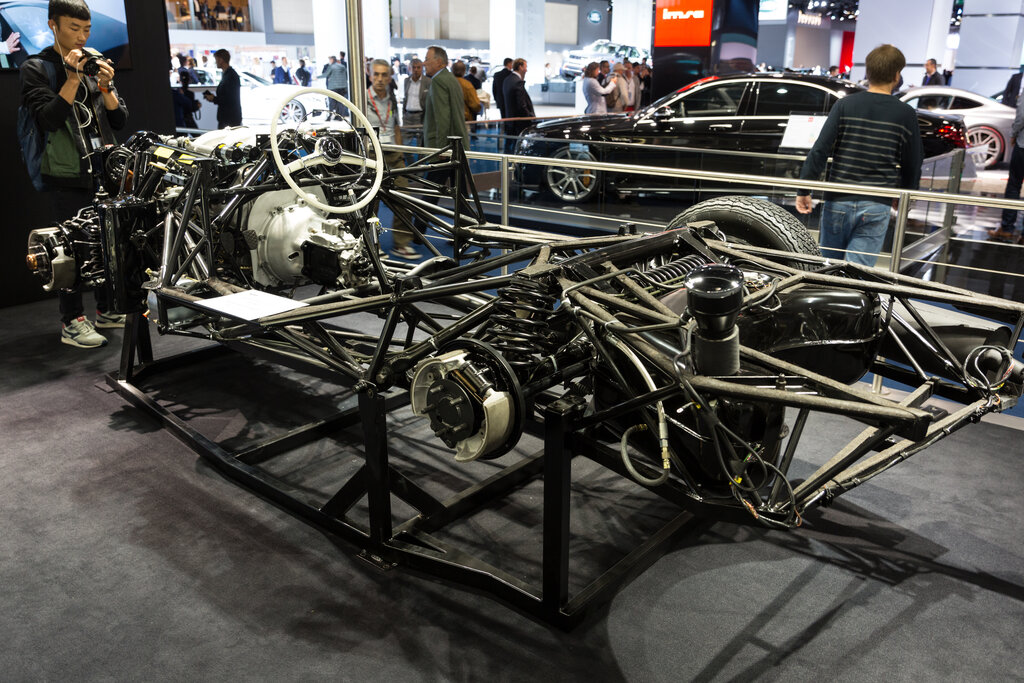
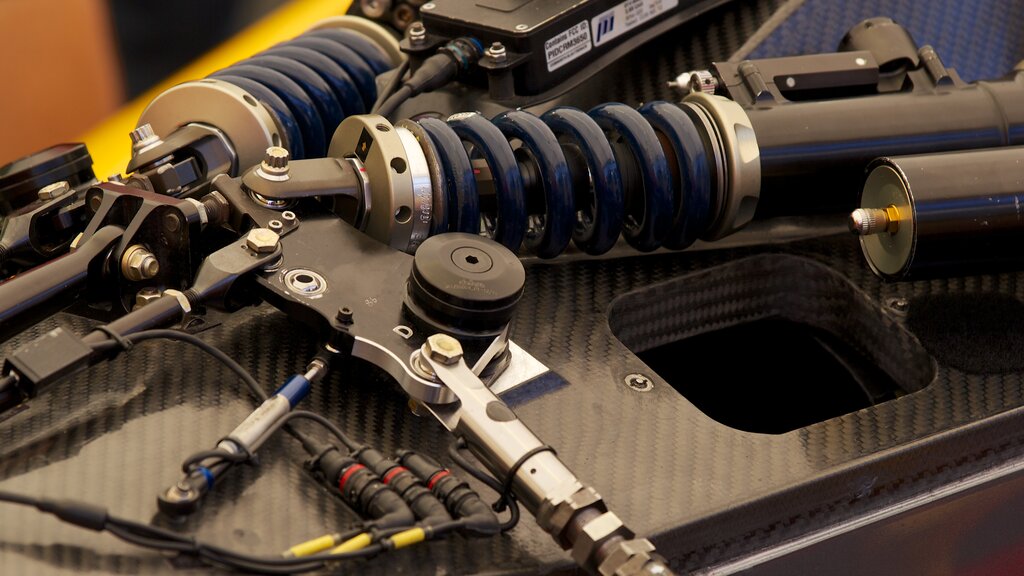
The suspension system connects the wheels to the chassis and is designed to absorb bumps from the road, providing a smooth ride. It uses springs to absorb impacts and shock absorbers (or dampers) to control the bouncing of the springs. This keeps the tires in contact with the road for better traction and control.
Finally, the brake system is responsible for slowing and stopping the car. When you press the brake pedal, you're activating a hydraulic system that forces brake pads to clamp down on discs (or rotors) attached to the wheels. The friction created converts the car's kinetic energy into heat, slowing the vehicle down.
Supporting Systems
Several other systems work in the background to keep the car running smoothly. The electrical system is one of the most important. It includes the battery, which provides power to start the engine, and the alternator, which recharges the battery and powers the car's electronics (like lights, radio, and computers) while the engine is running.
The battery starts the car, and the alternator keeps it running.
The fuel system delivers gasoline or diesel from the fuel tank to the engine. It consists of the tank, a fuel pump that moves the fuel, fuel lines to carry it, and fuel injectors that spray a fine mist of fuel into the engine's cylinders for combustion.
| System | Primary Function |
|---|---|
| Engine | Converts fuel into motion |
| Drivetrain | Transmits power to the wheels |
| Chassis | Provides structural support |
| Suspension | Absorbs road bumps and maintains traction |
| Brakes | Slows and stops the vehicle |
| Electrical | Starts the engine and powers electronics |
| Fuel | Delivers fuel to the engine |
Time to see what you've learned about the core components that make a car go.
What is the primary function of a car's internal combustion engine?
During which stroke of the four-stroke cycle does the spark plug ignite the fuel-air mixture?
Each of these systems is a complex topic in its own right, but understanding their basic roles is the first step to knowing how an automobile works.