The Attention Crisis
Introduction to Attention
What is Attention?
Think of attention as a spotlight. In a dark room full of objects, your spotlight can only light up one thing at a time. Your brain works in a similar way. It's constantly bombarded with information from your senses: sights, sounds, smells, and thoughts. Attention is the cognitive process that allows you to selectively concentrate on one piece of this information while ignoring the rest.
This filtering ability is crucial. Without it, you wouldn't be able to read this sentence because you'd be equally focused on the feeling of your chair, the sound of the air conditioner, and the memory of what you had for breakfast. Attention brings order to the chaos of sensory input, allowing us to navigate the world effectively.
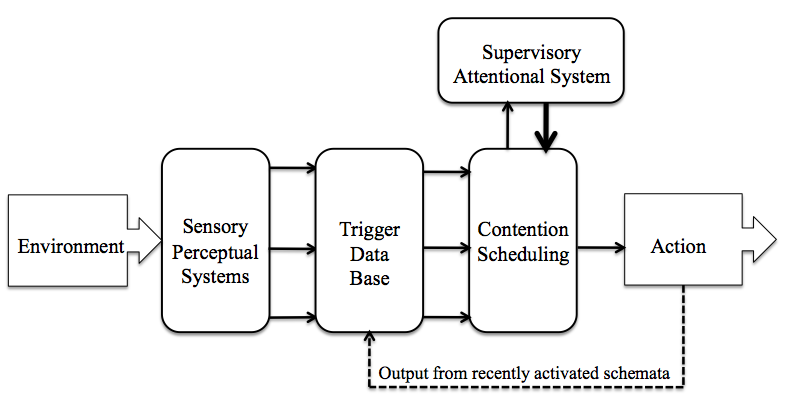
The Four Flavors of Attention
Attention isn't a single, monolithic thing. Psychologists generally break it down into four different types, each suited for different situations.
Sustained Attention
noun
The ability to maintain focus on a single activity or stimulus for a long period. It's the kind of attention you use when watching a movie, reading a book, or driving on a long, straight highway.
Selective Attention
noun
The ability to focus on a particular object or task for a period of time, while simultaneously ignoring distracting information. This is what allows you to have a conversation in a noisy restaurant, tuning out all the other chatter around you.
Divided Attention
noun
The ability to process two or more responses or react to two or more different demands simultaneously. This is often called multitasking, like listening to a podcast while doing the dishes.
Alternating Attention
noun
The ability to shift your focus of attention and move between tasks with different cognitive requirements. An example is preparing a recipe: you read the instructions, then measure the ingredients, then check the oven, shifting your focus between different steps.
| Type of Attention | Key Feature | Everyday Example |
|---|---|---|
| Sustained | Long-term focus on one thing | Reading a chapter of a book |
| Selective | Focusing while ignoring distractions | Talking at a loud party |
| Divided | Juggling multiple tasks at once | Driving while listening to the radio |
| Alternating | Switching between different tasks | Cooking from a recipe |
Why Attention Matters
Attention is the gateway to almost all other cognitive functions. It works hand-in-hand with perception, memory, and learning.
Perception: Your senses are always taking in information, but attention determines what you actually perceive. You might be looking at a crowded scene, but you only truly perceive the details your attention is focused on, like a friend's face in the crowd.
Memory: You can't remember something you didn't pay attention to in the first place. The process of forming a new memory, called encoding, requires attention. This is why you might forget the name of someone you just met at a party—your selective attention was likely focused elsewhere.
To learn, you must first pay attention. To remember, you must first have learned.
Learning: Whether it's mastering a new language or learning to play the guitar, the ability to direct and sustain your attention is fundamental. Learning requires focusing on new information, practicing skills, and integrating feedback, all of which are managed by your attentional systems.
Let's check your understanding of these core concepts.
The 'spotlight' metaphor for attention primarily illustrates its role in:
Without the filtering ability of attention, our conscious experience would be best described as:
Understanding these different types of attention is the first step in exploring how our minds work to process the world around us.