The Art of Wise Decisions
Introduction to Decision-Making
What is Decision-Making?
At its core, decision-making is the cognitive process of selecting a course of action from among several alternatives. It's something we do constantly, from the trivial choice of what to wear in the morning to life-altering decisions about careers and relationships. Every decision, big or small, follows a fundamental pattern.
First, we perceive and gather information. Then, we process that information. Finally, we make a choice.
Think about choosing an apple at the grocery store. Your eyes take in information about its colour, size, and any blemishes (perception). Your brain then weighs these factors against your past experiences and preferences for crispness or sweetness (processing). Finally, you select a specific apple and place it in your basket (choice). Most of this happens in a split second, a testament to how deeply ingrained this process is.
This simple flow is the foundation of every choice we make, from the automatic to the highly considered.
The Two Minds Within
Psychologists often describe our thinking using the dual-process theory, which proposes that we have two different systems for making decisions. Think of it as having two minds that work in tandem: one is fast and intuitive, the other is slow and deliberate.
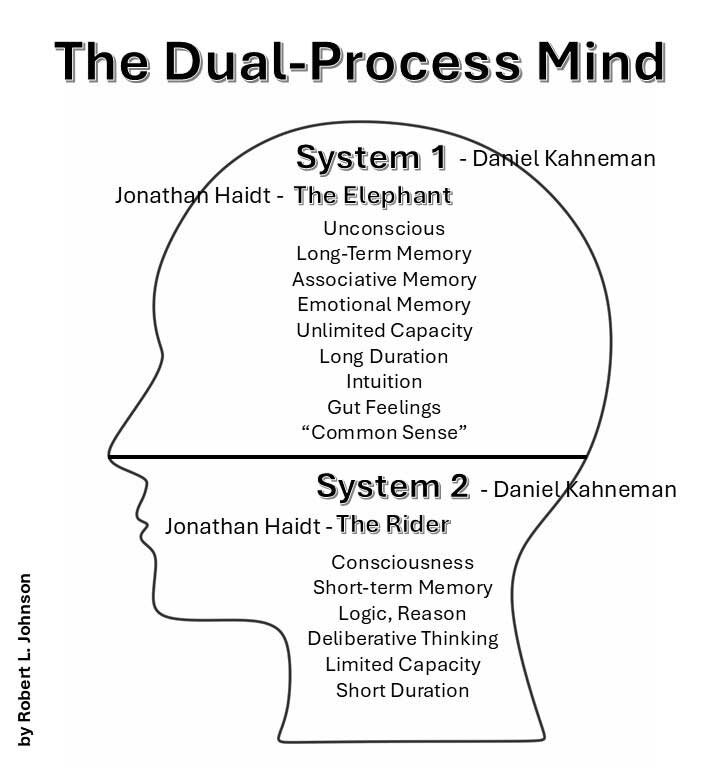
System 1 is the elephant. It's our automatic, intuitive, and emotional mind. It operates quickly and without conscious effort. It's the system that lets you instantly know that $2+2=4$, recognise a friend's face in a crowd, or get a 'gut feeling' about a situation. System 1 is powerful and handles most of our daily choices effortlessly.
System 2 is the rider. It's our slow, analytical, and logical mind. This system requires conscious effort and attention. You engage System 2 when you're solving a complex maths problem, comparing the features of two different phones, or learning a new skill. The rider can reason and plan, but it's also easily tired.
Kahneman breaks down how our brains process information in two ways—fast, intuitive thinking (System 1) and slow, deliberate thinking (System 2).
An Effortless Partnership
These two systems aren't in conflict; they form a highly efficient partnership. System 1, the elephant, is constantly generating impressions, feelings, and intuitions. System 2, the rider, usually acts as a monitor, endorsing the suggestions from System 1. For most routine decisions, this works perfectly.
When you drive a familiar route, your System 1 is largely in control, handling the steering, braking, and accelerating. It's only when something unexpected happens, like a sudden traffic jam or a confusing detour, that your System 2 rider wakes up to analyse the new problem and decide on a new course of action.
| System 1 (The Elephant) | System 2 (The Rider) | |
|---|---|---|
| Speed | Fast, automatic | Slow, deliberate |
| Effort | Effortless | Requires mental energy |
| Control | Unconscious | Conscious, controlled |
| Function | Intuition, gut feelings | Analysis, reasoning, logic |
| Example | Slamming on the brakes | Calculating a 15% tip |
The key is that System 2 is lazy. It conserves energy by letting System 1 do most of the work. This is incredibly efficient, freeing up our mental resources to focus on what truly requires our attention. Understanding this partnership is the first step in understanding how we think and make choices.
What are the three fundamental stages of the decision-making process described in the text?
According to the dual-process theory, which system is described as the 'elephant'?
Recognising these two modes of thinking within yourself helps clarify why some decisions feel easy and others feel hard.