The Art of Vincent van Gogh
Early Life and Influences
The Making of an Artist
Before the swirling stars and vibrant sunflowers, Vincent van Gogh was a young man searching for his place in the world. Born in 1853 in Groot Zundert, a small village in the Netherlands, he was the son of a Protestant pastor. The atmosphere at home was devout and serious, shaping his intense and compassionate nature from an early age.
His family had deep roots in the art world. Several of his uncles were art dealers, and it was through them that Vincent first stepped into a life surrounded by paintings. This wasn't a world of bohemian artists, but of respectable commerce. Art was a business, a trade in beautiful objects.
At sixteen, he followed the family path and began working as a clerk for the art dealership Goupil & Cie. The job took him from The Hague to London and then Paris. He was good at his work, but a growing unease settled in. He found the way art was treated as a commodity deeply unsatisfying. For Vincent, art was meant to be something more profound, something that offered comfort and meaning.
A Search for Purpose
After being dismissed from his job at the gallery, van Gogh's search for meaning intensified. He felt a strong religious calling and decided to become a pastor like his father. He studied theology but struggled with the formal academic requirements. His passion was for people, not exams.
He then worked as a lay missionary in the Borinage, a bleak coal-mining district in Belgium. He lived in poverty alongside the miners, giving away his own food and sleeping on straw. He was deeply moved by their difficult lives and immense dignity.
This experience of living among the poor cemented his desire to create art for and about ordinary people, capturing their raw, unvarnished humanity.
While in the Borinage, he began to draw obsessively, sketching the miners and their families. His brother, Theo, who worked as an art dealer in Paris, recognized the raw power in these sketches. He encouraged Vincent to pursue art seriously and offered financial and emotional support. At the age of 27, Vincent van Gogh made the decision that would change his life: he would become an artist.
First Brushstrokes
Van Gogh's artistic education was unconventional. He was mostly self-taught, tirelessly copying drawings and studying instructional books. He briefly attended art academies in Brussels and Antwerp but chafed under their rigid structure. He preferred to learn by doing, by observing the world around him.
During this early period, he was heavily influenced by the Dutch masters he had admired in his youth, like Rembrandt. Their use of dark, earthy colors and their focus on the lives of common people resonated with him. He was also inspired by the work of French realist painters like Jean-François Millet, whose depictions of peasant life showed a deep respect for manual labor.
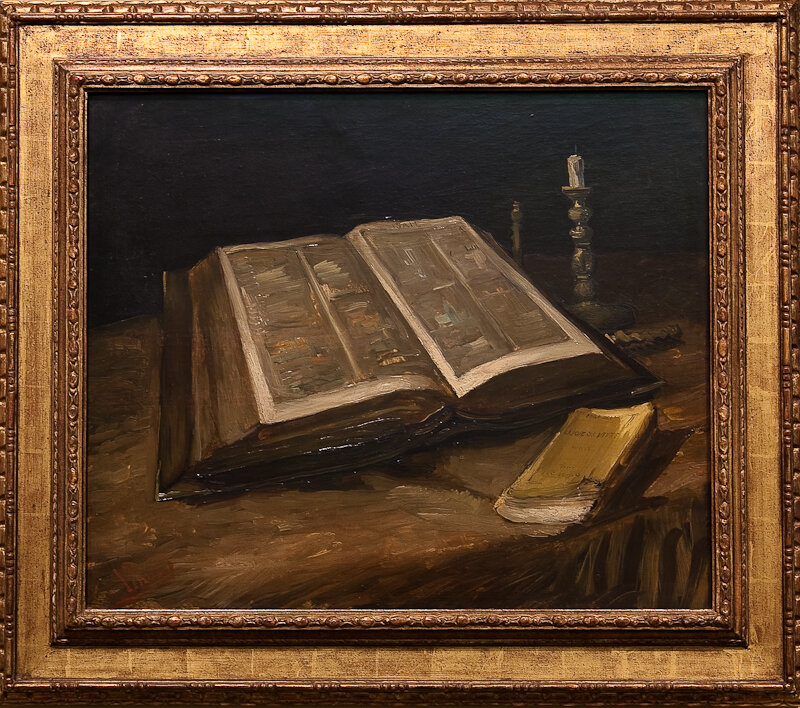
His early paintings were not filled with the bright, explosive color he would later become famous for. Instead, they were characterized by dark, muddy tones of brown, gray, and green. He wanted his art to be honest, to reflect the harsh realities of the lives he depicted. This foundational period in the Netherlands and Belgium, marked by struggle and deep empathy, was essential. It was here that he found his subject matter and forged the powerful connection to humanity that would fuel his entire artistic career.
What was Vincent van Gogh's first profession, following a family tradition?
True or False: The bright, explosive colors famous in van Gogh's later work were also characteristic of his earliest paintings.
These formative years set the stage for the revolutionary artist he would become.