The Art of Vibe Coding
Introduction to Vibe Coding
What Is Vibe Coding?
Imagine describing a new app to a friend, and that friend instantly builds it for you. That's the basic idea behind vibe coding. It's a style of software development where you work with an Artificial Intelligence, typically a Large Language Model (LLM), to create software. Instead of writing code line-by-line, you describe what you want in natural language.
Vibe coding is an emerging style of software development where programmers interact with artificial intelligence in a conversational, intuitive, and iterative manner.
The goal is to go from an idea to a working product as fast as possible. You provide the "vibe"—the overall goal and feel of the project—and the AI handles the complex syntax. The process feels more like a conversation than a monologue. You describe, the AI generates, you test, and you refine your description.
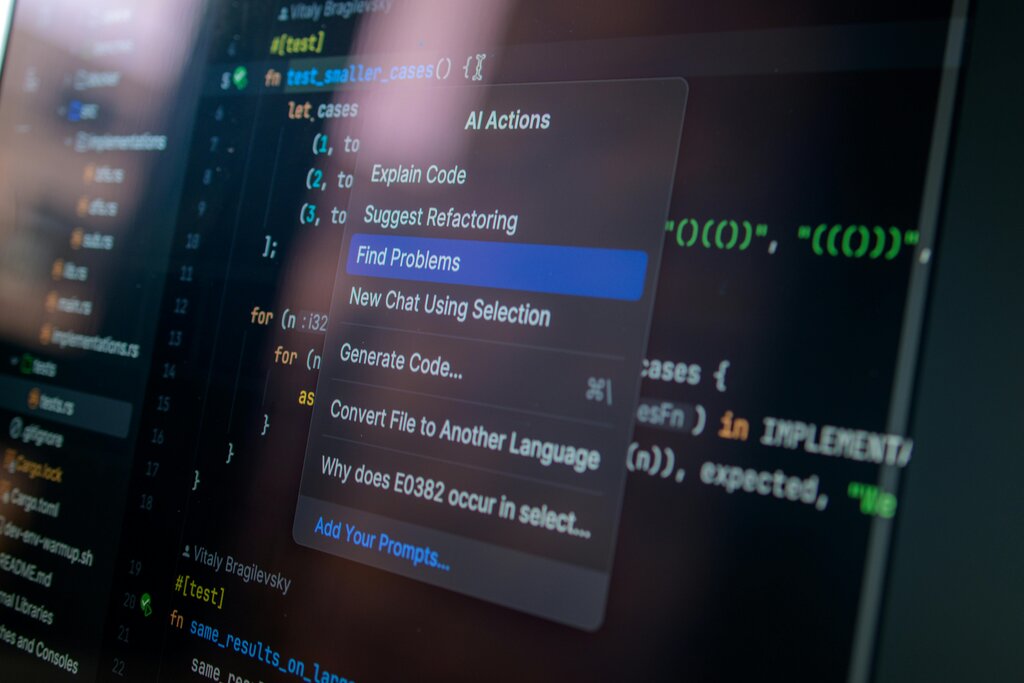
A New Way to Build
Vibe coding flips the traditional development process on its head. In a typical project, a developer writes code, carefully reviews it for errors, and then tests for functionality. The focus is on writing clean, correct, and efficient code from the start.
Vibe coding prioritizes speed and experimentation. A developer using this method might not even read the code the AI produces. The primary test is simple: Does it run? Does it do what I asked? Evaluation is based on the final output, not the underlying structure. This makes it a powerful tool for rapid prototyping, allowing developers to test ideas without investing days or weeks in manual coding.
| Feature | Traditional Coding | Vibe Coding |
|---|---|---|
| Primary Input | Writing precise code | Describing intent in natural language |
| Developer Focus | Code correctness and structure | Final output and functionality |
| Evaluation | Code reviews, line-by-line debugging | Running the program, observing results |
| Pace | Methodical and deliberate | Fast and iterative |
| Goal | Building robust, maintainable software | Rapidly testing and exploring ideas |
The core of vibe coding is a tight feedback loop. You prompt the AI, execute the generated code, and immediately see the result. If it's not right, you adjust your prompt and try again. It's a cycle of continuous experimentation.
The Good and The Bad
Like any new technology, vibe coding comes with its own set of trade-offs. On one hand, it can dramatically accelerate the initial phases of a project. It lowers the barrier to entry, allowing people with great ideas but limited coding skills to build functional prototypes.
However, this speed comes at a cost. Since the developer often skips reviewing the code, it can contain hidden bugs, inefficiencies, or serious security vulnerabilities. There's also a risk of becoming too reliant on the AI, creating a generation of developers who can prompt an AI to build something but can't fix it when it breaks. Without a solid understanding of the code's inner workings, debugging becomes nearly impossible.
The main drawback is a potential lack of understanding. If you didn't write the code, you might not know how to maintain or secure it.
Ultimately, vibe coding is a powerful new tool in the developer's arsenal. It's best suited for brainstorming, creating early-stage prototypes, and automating repetitive coding tasks. For building critical, secure, and long-lasting applications, the careful, deliberate approach of traditional coding remains essential. Think of it as a helpful assistant, not a complete replacement for a skilled developer.
Ready to check your understanding?
What is the primary goal of vibe coding?
In the vibe coding workflow, a developer's primary method of evaluation is asking: "Does the output do what I asked?"
That covers the fundamentals of what vibe coding is and how it's changing the way people build software.