The Art of Verbal Influence
Introduction to Persuasion
What is Persuasion?
At its core, persuasion is the art of guiding people toward a particular belief, attitude, or action. It’s not about manipulation or force. Instead, it’s about presenting ideas in a way that resonates with others, helping them see a new perspective or feel motivated to make a change.
Persuasion
noun
A process aimed at changing a person's (or a group's) attitude or behavior toward some event, idea, object, or other person(s), by using written, spoken, or visual methods.
We encounter persuasion every day. It's in the conversations we have with friends, the reviews we read before buying something, and the way leaders inspire their teams. Understanding how it works is fundamental to effective communication. It’s the difference between simply stating your case and truly connecting with your audience.
A Quick Trip to Ancient Greece
The formal study of persuasion began thousands of years ago in ancient Greece. In city-states like Athens, democracy was taking root. Citizens had to speak for themselves in public assemblies and courts of law. The ability to speak clearly and persuasively wasn't just a useful skill—it was essential for participating in public life.

This need gave rise to the art of rhetoric, the study of effective speaking and writing. Teachers of rhetoric, known as Sophists, taught citizens how to construct arguments and deliver powerful speeches. They understood that the way an idea is presented can be just as important as the idea itself.
Aristotle's Big Idea
The philosopher Aristotle took a more systematic approach. He wasn't just interested in winning debates; he wanted to understand the mechanics of persuasion. He famously defined rhetoric as the ability to see, in any given situation, the “available means of persuasion.”
Let rhetoric be [defined as] an ability, in each [particular] case, to see the available means of persuasion
Aristotle identified three primary ways to persuade an audience. He called them the artistic proofs, or the rhetorical appeals:
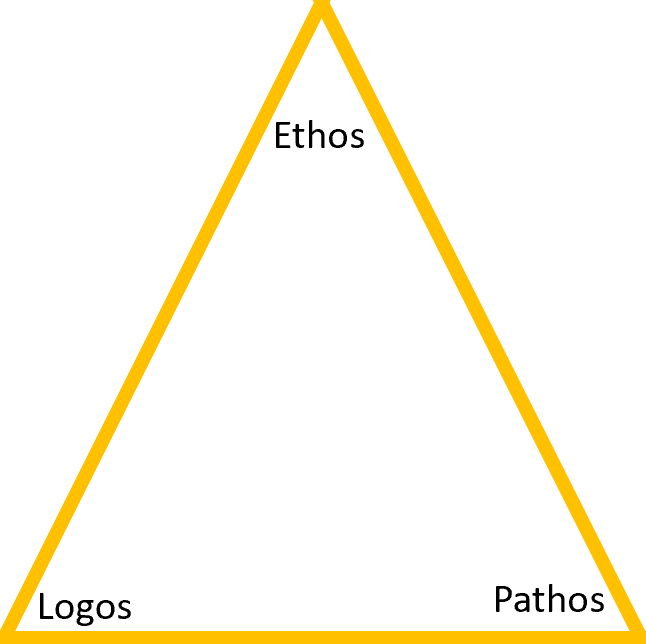
- Ethos (Character): This is about the speaker's credibility and trustworthiness. Do we believe them? Do we respect their authority or expertise?
- Pathos (Emotion): This appeal connects with the audience's emotions, values, and beliefs. It makes the message feel relevant and important to them personally.
- Logos (Logic): This refers to the logical quality of the argument itself. Is it well-reasoned? Is it supported by facts and evidence?
For Aristotle, a truly persuasive message balanced all three. Relying too heavily on one could make an argument feel weak, manipulative, or dry.
Why Persuasion Still Matters
The principles developed in ancient Greece are still incredibly relevant. Persuasion is the foundation of leadership, collaboration, and social change. It's how we build consensus, advocate for ideas we care about, and navigate complex social situations.
Effective persuasion is about more than just talking; it's about understanding. It requires you to listen, to empathize with your audience, and to build a bridge between your perspective and theirs. When done ethically, it's a powerful tool for bringing people together and making progress.
Now that you understand the foundations of persuasion, let's test your knowledge.
According to the text, what is the core purpose of persuasion?
The formal study of effective speaking and writing, which began in ancient Greece, is known as:
Understanding the history and core components of persuasion gives you a framework for becoming a more effective and ethical communicator.