The Art of Strategy
Introduction to Strategic Thinking
What Is Strategic Thinking?
It's about seeing the bigger picture and connecting the dots in a way that helps you move toward a future goal. It isn't just for CEOs or generals. It’s a way of approaching challenges and opportunities that anyone can learn and apply to their personal and professional lives.
Strategic thinking is about asking "What if?" and "Why?" before you get to the "How?"
At its core, strategic thinking is a process of thought that helps you prepare for the future. It’s about understanding where you are, where you want to go, and what the best path might be to get there. This involves looking at the forces at play around you, anticipating potential changes, and positioning yourself to take advantage of them.
Strategic Thinking
noun
A cognitive process focused on analyzing critical factors and variables that will influence the long-term success of an organization, a team, or an individual.
More Than Just a Plan
People often confuse strategic thinking with strategic planning, but they are not the same. They are related, but distinct, processes. Strategic thinking is the creative, divergent process of envisioning a future. Strategic planning is the structured, convergent process of laying out the steps to get there.
At its core, strategic planning is about envisioning the future and determining the best course of action to achieve that vision.
Think of it this way: Strategic thinking is like an architect dreaming up a new kind of building. They consider the environment, the purpose of the building, and innovative materials. Strategic planning is like the blueprint that details the exact dimensions, materials, and construction schedule. You need the creative vision before you can create the detailed plan.
| Feature | Strategic Thinking | Strategic Planning |
|---|---|---|
| Focus | Vision, insight, "what" & "why" | Action, steps, "how" & "when" |
| Process | Creative & intuitive | Linear & analytical |
| Outcome | A new perspective or direction | A detailed roadmap or plan |
| Timing | Ongoing and continuous | Periodic (e.g., annually) |
The Core Ingredients
Strategic thinking isn't a single skill but a combination of several key components working together. The three most fundamental are vision, analysis, and creativity.
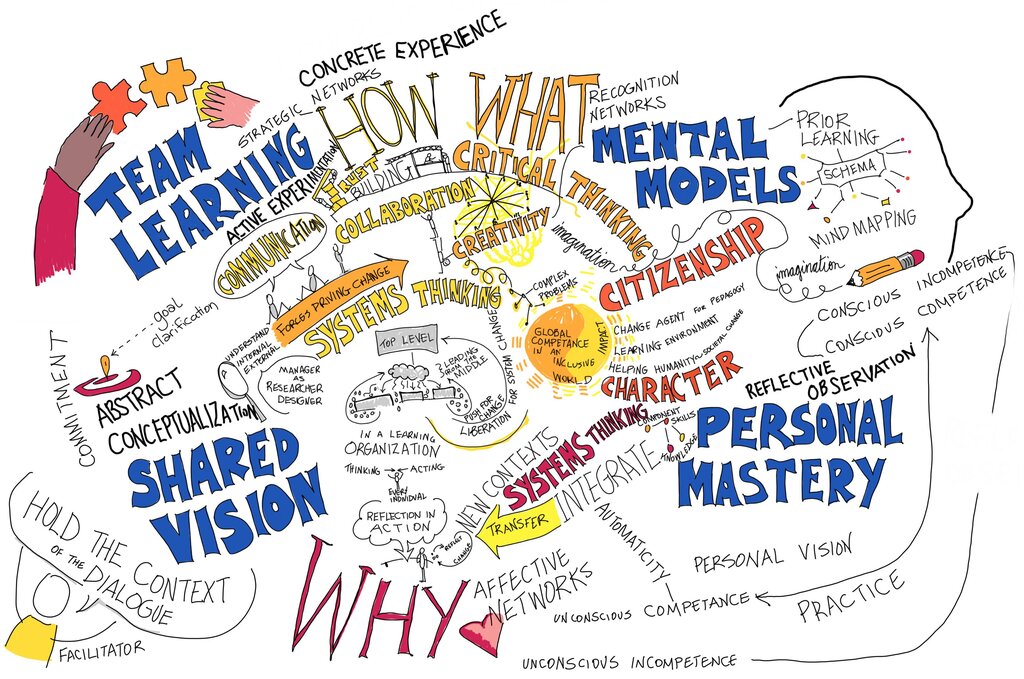
Vision is about looking ahead and defining a desired future. It’s the ability to see what could be, not just what is. A clear vision provides direction and motivation, acting as a north star for all your decisions and actions. It answers the question: "Where are we going?"
Analysis is about understanding your current reality. This involves gathering information, identifying patterns, and understanding the relationships between different parts of a system. It requires you to be curious, ask probing questions, and look at a situation from multiple angles. Analysis answers the question: "Where are we now and what factors are at play?"
Creativity is the bridge between your vision and your analysis. It's about generating new ideas and finding innovative ways to solve problems or seize opportunities. Strategic thinking requires you to challenge assumptions and think outside the box to find paths that others might miss. It answers the question: "How can we get there in a better way?"
Now, let's test what you've learned about the fundamentals of strategic thinking.
What is the primary focus of strategic thinking?
The creative, divergent process of envisioning a future is known as strategic ______, while the structured, convergent process of laying out the steps to get there is strategic ______.
By understanding these core ideas, you've taken the first step toward thinking more strategically in your own life.