The Art of Professional Gambling
Probability Basics
What Are the Odds?
Probability is the language we use to talk about uncertainty. When you flip a coin, roll dice, or draw a card, you're dealing with probability. It's a way to measure how likely something is to happen.
Every random event has a set of possible outcomes, called the sample space. For a coin flip, the sample space is {Heads, Tails}. For a standard six-sided die, it's {1, 2, 3, 4, 5, 6}. An event is a specific outcome or a set of outcomes, like rolling a 4, or rolling an even number.
Probability is a number between 0 and 1, where 0 means the event is impossible and 1 means it's certain.
Probability Distributions
A probability distribution is just a list of all possible outcomes and their corresponding probabilities. It gives you the full picture of what can happen in a random process. For a fair six-sided die, each face has an equal chance of landing up.
Since there are six outcomes, the probability of any single outcome is 1 divided by 6.
We can show this distribution in a simple table.
| Outcome | Probability |
|---|---|
| 1 | 1/6 |
| 2 | 1/6 |
| 3 | 1/6 |
| 4 | 1/6 |
| 5 | 1/6 |
| 6 | 1/6 |
Notice that if you add up all the probabilities, you get 1. This is always true for any probability distribution. It means that one of the possible outcomes must occur.
Expected Value
Expected value, often called EV, is one of the most important concepts for any kind of betting. It tells you the average result you can expect from a random event if you repeat it many times. It's not what you'll get on a single try, but what your wins or losses will average out to over the long run.
To calculate it, you multiply each possible outcome by its probability, then add all those values together.
Let's look at a simple betting game. Suppose a friend offers you a bet on a single die roll:
- If you roll a 6, they pay you $10.
- If you roll any other number (1, 2, 3, 4, or 5), you pay them $3.
Is this a good bet? Let's calculate the expected value from your perspective.
The probability of winning is $1/6$, and the outcome is +$10. The probability of losing is $5/6$, and the outcome is -$3.
First, we calculate each part:
Now, add them together:
The expected value is negative. This means that on average, you can expect to lose about 83 cents every time you play this game. In the short term, you might win $10 and feel great. But if you played a hundred times, you'd likely be down around $83.
A positive EV means a bet is profitable in the long run. A negative EV means it's a losing proposition.
Variance and the Law of Large Numbers
While expected value tells you the average outcome, variance tells you how spread out the results can be. Think of it as a measure of risk or volatility.
A bet with low variance will have results that are usually close to the expected value. A bet with high variance can have wild swings, with big wins and big losses.
Consider two games, both with an EV of $0:
- Game A (Low Variance): You win $1 on heads, you lose $1 on tails.
- Game B (High Variance): You win $1,000 on heads, you lose $1,000 on tails.
In both games, you'd expect to break even over time. But Game B requires a much larger bankroll to withstand the potential swings. High variance means you could lose many times in a row before a win, even if the bet is favorable.
This brings us to the law of large numbers. This is a principle that says as you repeat an experiment more and more times, the average of your results will get closer and closer to the expected value.
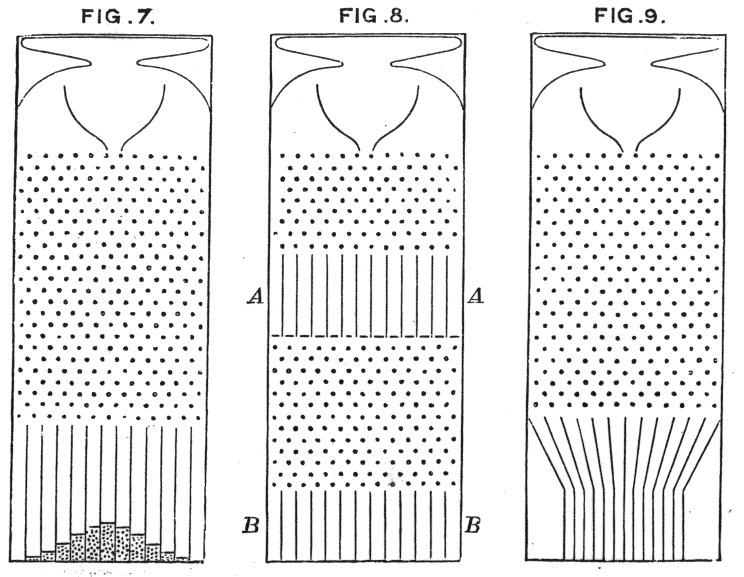
A single coin flip is 50/50, but you could easily get three heads in a row. However, if you flip a coin 10,000 times, you can be very confident that the number of heads will be very close to 5,000. For gamblers, this means that over thousands of bets, your actual results will start to mirror the mathematical EV. It's the principle that allows casinos to be profitable and is the foundation for any long-term winning strategy.
Let's check your understanding of these fundamental concepts.
What does the 'sample space' in probability refer to?
If you roll a standard six-sided die, what is the probability of rolling a number that is a multiple of 3?
Grasping these ideas—distributions, expected value, variance, and the law of large numbers—is the first step toward thinking about gambling in a structured, mathematical way.