The Art of Lyrical Sound
Music Fundamentals
The Building Blocks of Sound
All music is built from sound, and the most basic quality of any musical sound is its pitch. Pitch is simply how high or low a note sounds. A piccolo flute plays high-pitched notes, while a tuba plays low-pitched ones.
Scientifically, pitch is determined by frequency, which is the speed of vibration of a sound wave. Faster vibrations create higher pitches, and slower vibrations create lower ones. We measure frequency in Hertz (Hz), which stands for cycles per second.
Pitch
noun
The perceived highness or lowness of a sound, determined by its frequency of vibration.
For example, the A note that orchestras tune to (often called A4) has a frequency of 440 Hz. The A note an octave higher (A5) is exactly double that frequency, at 880 Hz. This mathematical relationship is what makes octaves sound so similar.
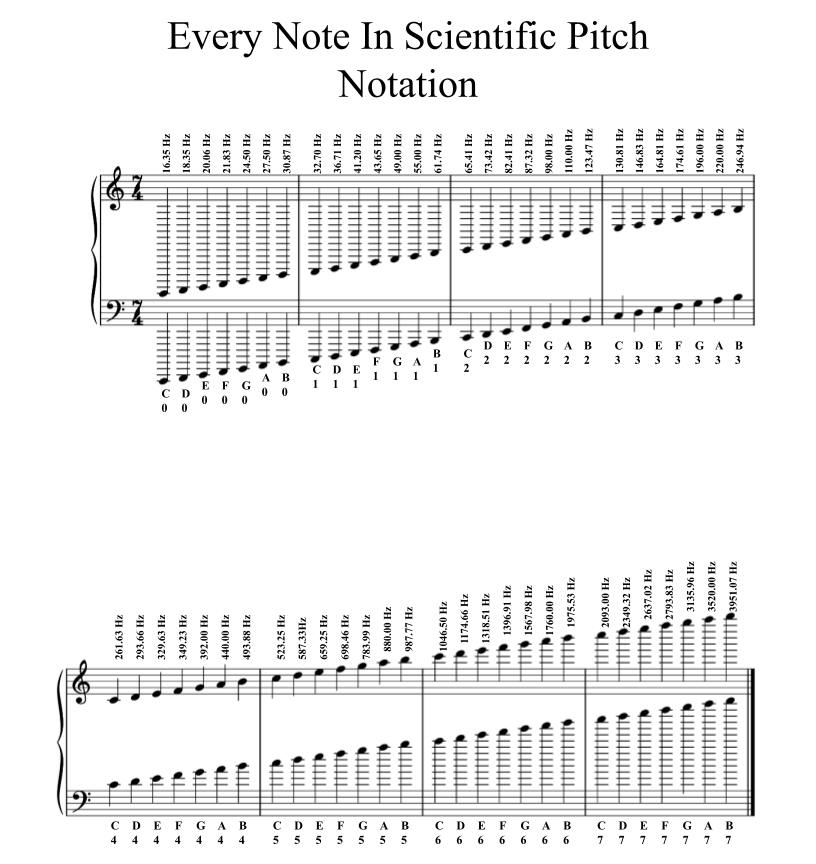
In Western music, we organize these pitches into a system of twelve notes, which repeat in cycles called octaves. These are the familiar letter names you see on a piano: A, B, C, D, E, F, and G, plus the sharps and flats in between.
Keeping Time
If pitch is about the notes themselves, rhythm is about when you play them. Rhythm is the pattern of sounds and silences in time. It's what gives music its pulse and makes you want to tap your foot.
At the heart of rhythm is duration, or how long a note is held. We represent different durations with different types of notes.
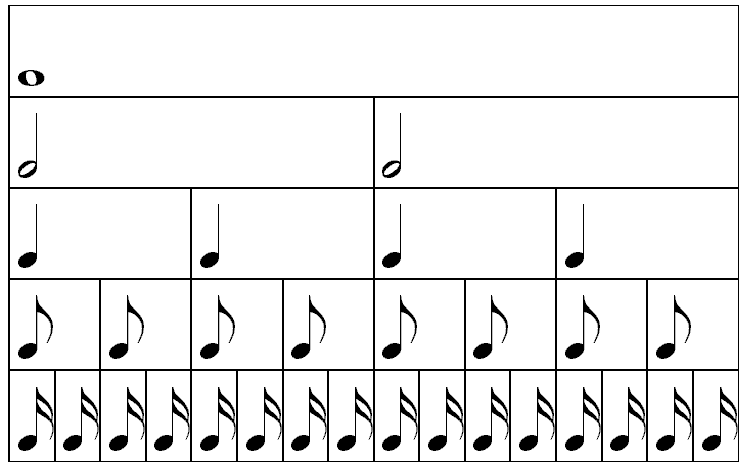
These notes are organized into small, regular groups called measures (or bars). To know how to group them, we use a time signature. It looks like a fraction and appears at the beginning of a piece of music.
The top number of a time signature tells you how many beats are in each measure. The bottom number tells you what kind of note gets one beat.
So, in $4/4$ time, the most common time signature in popular music, there are four beats per measure, and a quarter note ($1/4$) gets one beat. In $3/4$ time, common for waltzes, there are three beats per measure, and a quarter note still gets one beat.
Scales, Intervals, and Chords
Notes are rarely used in isolation. They are typically organized into scales, which are sets of notes that form the basis for melodies and harmonies. The two most fundamental types of scales are major and minor.
A scale is built from a specific pattern of whole steps (two keys on a piano with one in between) and half steps (two keys right next to each other). The major scale follows the pattern: Whole-Whole-Half-Whole-Whole-Whole-Half.
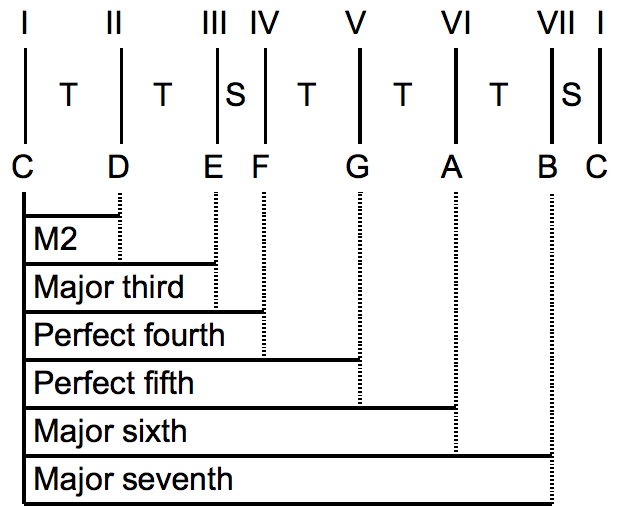
Major scales tend to sound bright and happy. Minor scales, which follow a different pattern (Whole-Half-Whole-Whole-Half-Whole-Whole), often sound more somber or reflective.
The distance between any two notes is called an interval. We measure intervals by counting the number of steps between the notes in the scale. For example, from C to E in the C major scale is a third (C is 1, D is 2, E is 3). Intervals are the building blocks of both melody (notes played one after another) and harmony (notes played at the same time).
When we stack specific intervals on top of each other, we create chords. The most basic chord is a triad, built from three notes. A major triad, like C major, consists of a root note (C), a major third (E), and a perfect fifth (G). Playing these three notes together creates the full, happy sound of a major chord.
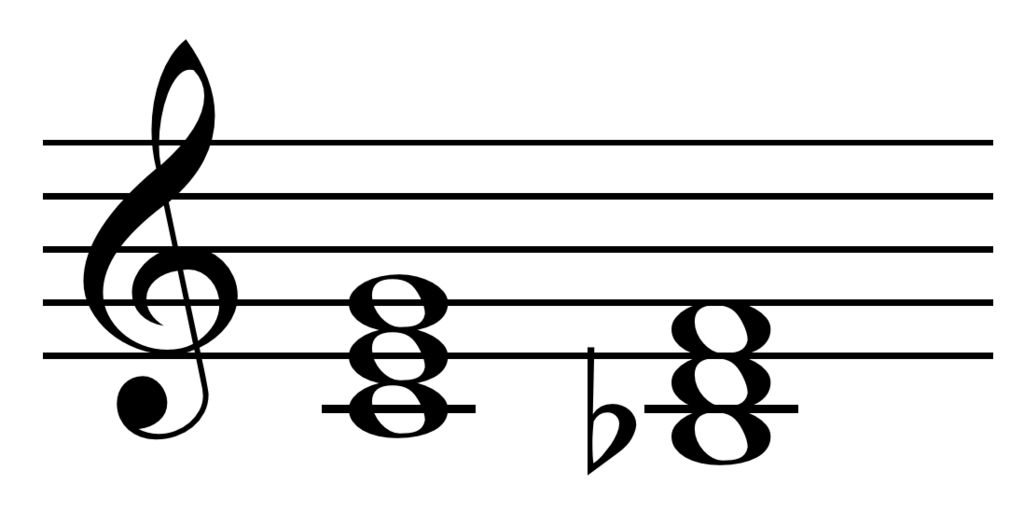
We can make chords more complex by adding more notes. Adding another third on top of a triad creates a seventh chord. These chords, like the G dominant seventh (G-B-D-F), add tension and richness to the music, making our ears crave a return to a more stable chord.
Ready to test your knowledge on these building blocks?
If a musical note has a frequency of 220 Hz, what is the frequency of the note one octave higher?
In a piece of music with a time signature, how many beats are in each measure?
Understanding these core elements—pitch, rhythm, scales, intervals, and chords—is the first step to speaking the language of music. They are the foundation upon which all melodies and harmonies are built.