The Art of Layering Guitar Parts
Introduction to Multitrack Recording
From One Track to Many
Before the 1950s, recording music was a live-or-die event. The entire band would gather around a single microphone and play a song from start to finish. If the drummer dropped a stick or the singer went flat, everyone had to start over. The final recording was a single, unchangeable snapshot of that one performance.
Then came a revolutionary idea: what if you could record different instruments at different times and combine them later? This is the core of multitrack recording. It allows you to capture individual sounds on separate channels, or 'tracks'. You can record the drums on track 1, bass on track 2, guitar on track 3, and vocals on track 4. Each track is an independent audio stream.
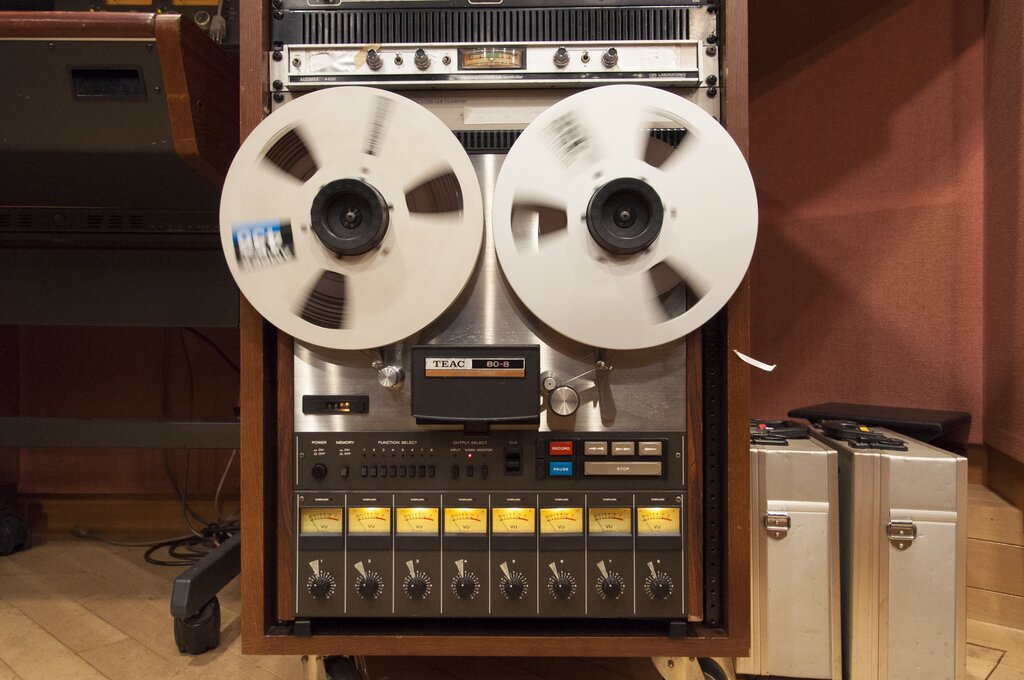
This technique was pioneered by guitarist and inventor Les Paul in his home studio. He experimented with modifying tape recorders to record multiple layers of sound on top of each other. This allowed him to play multiple guitar parts himself, creating a rich, layered sound that was impossible to perform live. The Beatles and their producer George Martin later popularized these techniques at Abbey Road Studios, pushing the boundaries of what a pop record could sound like.
The Modern Studio Setup
Today, you don't need a massive tape machine to record multiple tracks. The basic components of a modern digital setup are surprisingly simple and accessible.
-
Digital Audio Workstation (DAW): This is the software that acts as your recorder, mixer, and editor all in one. It's the command center of your studio, where you can see all your tracks laid out on a timeline.
-
Audio Interface: This is a small box that connects your microphones and instruments to your computer. It converts the analog signal from your gear into a digital signal that your DAW can understand.
-
Microphones and Instruments: These are your sound sources. You can record anything from vocals and acoustic guitars with a microphone to electric guitars and synthesizers plugged directly into your audio interface.
This setup gives you a powerful and flexible recording environment, all on a personal computer.
Why It Changes Everything
Multitrack recording is the foundation of modern music production because it gives the creator total control. The advantages are immense.
Flexibility: You can record parts at different times and in different places. The drummer can lay down their part on Monday, and the singer can come in on Wednesday. You don't need the whole band present at once.
Correction: If the guitarist makes a mistake in the second verse, you don't have to scrap the entire take. You can just re-record that one section of the guitar track without affecting the drums or bass.
Creative Processing: Each track can be edited and processed individually. You can add reverb to the vocals, distortion to the guitar, and compression to the drums. This allows you to shape the sound of each instrument so it fits perfectly in the mix.
This separation is key. It lets you build a song piece by piece, like constructing a building one floor at a time, ensuring every part is perfect before moving on.
Most importantly, multitracking unlocks the ability to layer sounds. You can record a single guitar playing chords, then record another take of the same guitar playing a melody over it. Pan one to the left speaker and one to the right, and suddenly you have a wide, full sound from a single instrument. By stacking multiple performances, you can create a dense, powerful "wall of sound" that would be impossible to capture in a single take.
To make it easier to manage large numbers of tracks it can make sense to combine related groups of tracks into sub-mixes.
Understanding this fundamental concept opens the door to nearly every technique in modern music production, from basic editing to complex mixing.
What was the primary limitation of recording music before the advent of multitrack recording?
In a modern digital recording setup, what is the primary function of an audio interface?
From here, you can explore the creative possibilities that multitracking offers.