The Art of Drawing
Introduction to Line
The Building Block of Art
Everything you see in a drawing, from a simple cartoon to a detailed portrait, starts with one thing: a line. Think of a line as a moving dot. It’s the path your pencil, pen, or brush takes across a surface. Lines define shapes, create textures, and guide the viewer's eye. Before you can draw anything complex, you need to get comfortable with this fundamental element.
At its core, a line just connects two points. But from that simple idea, endless possibilities emerge. Lines can be straight and rigid, perfect for drawing buildings and objects with hard edges. They can also be curved and flowing, which is ideal for capturing the organic shapes of people, animals, and nature. Jagged, broken lines might suggest energy or chaos, while smooth, continuous lines can feel calm and graceful.
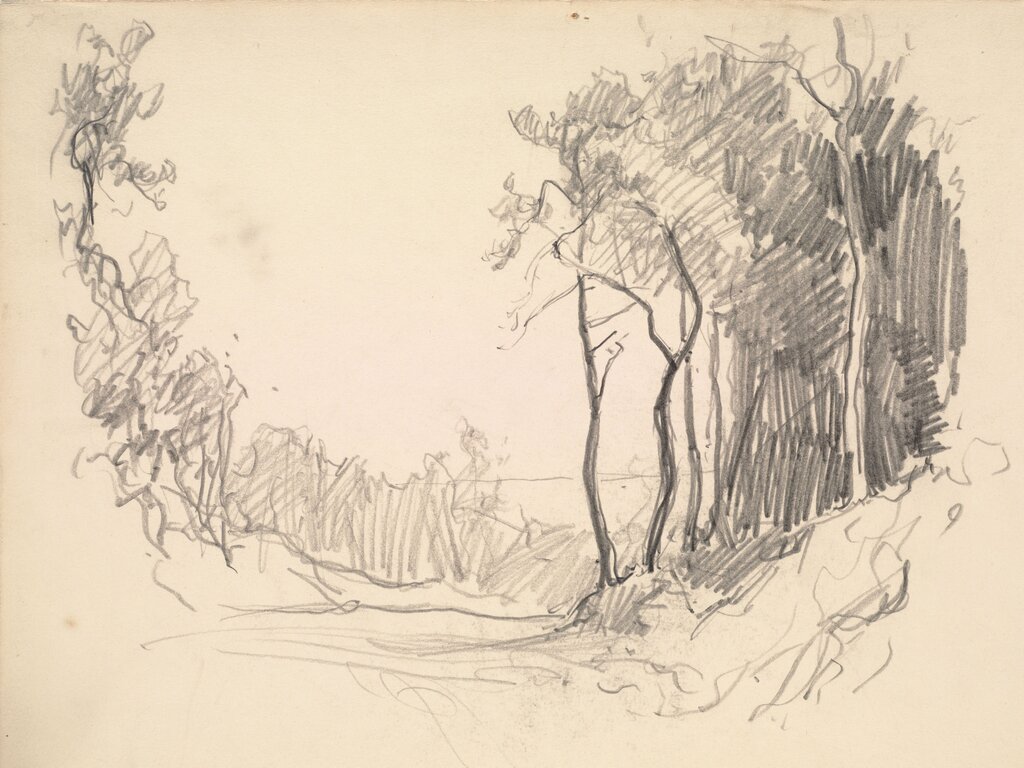
Beyond its shape, a line has character, often called line quality or line weight. This refers to how thick, thin, dark, or light a line is. By varying the pressure on your pencil, you can change a line from a faint whisper to a bold statement. A heavy, dark line might pull part of a drawing forward, while a thin, light line can suggest distance or a delicate texture.
Combining different line qualities in a single drawing is what makes it feel dynamic and alive. It adds visual interest and helps describe the form of an object more effectively than using a single, uniform line.
Training Your Hand
Drawing confident lines requires practice. It’s about building a connection between what your eyes see and what your hand does. The goal isn't perfection, but control and fluidity. The best way to improve is through simple, repetitive exercises that build muscle memory.
Fill a page with straight, parallel lines. Draw them horizontally, vertically, and diagonally. Don't use a ruler. Try to keep them evenly spaced, but don't worry if they aren't perfect. Focus on making each stroke smooth and confident.
Next, try drawing continuous curves. Fill another page with wavy lines, like ocean waves, or a series of connected loops, like a tangled phone cord. Try to make your movements fluid and consistent, drawing from your shoulder and elbow, not just your wrist. These drills aren't meant to create a finished piece of art; they are warm-ups that train your hand to be steady and your lines to be intentional.
Blind Contour Drawing
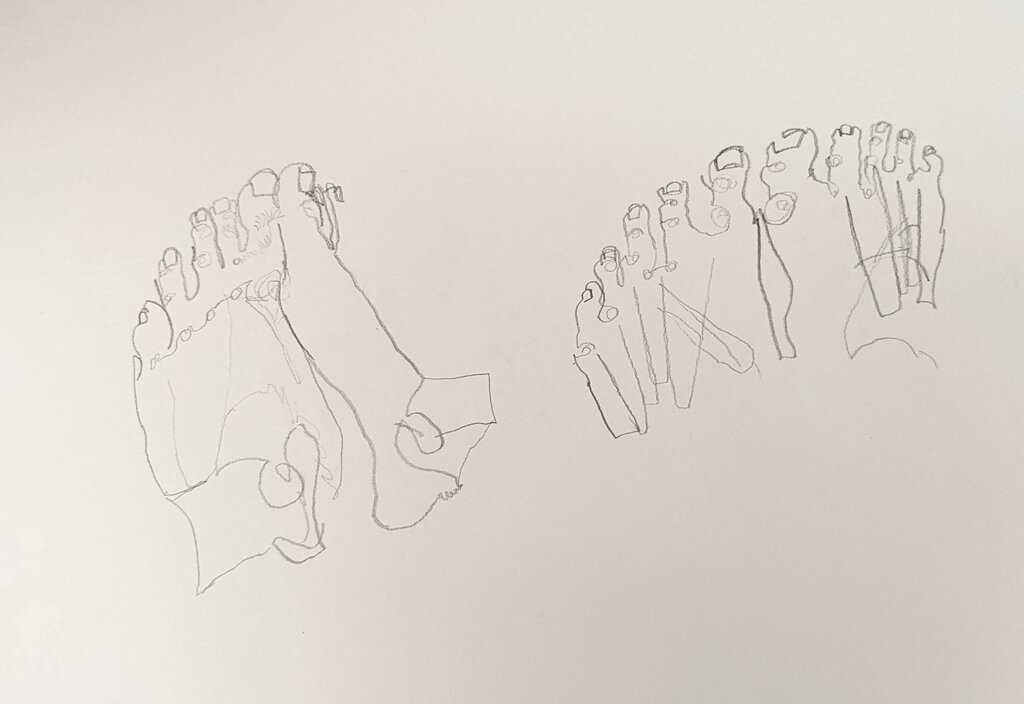
One of the best exercises for developing line control is blind contour drawing. The process is simple: pick an object, place your pencil on the paper, and draw its outline without ever looking down at your drawing. You can only look at the object you are drawing.
Your eyes should slowly trace the edges of the object, and your hand should move at the same speed, recording the journey. The goal is not to create a realistic drawing—in fact, the result will probably look strange and distorted. The purpose is to force you to really see what's in front of you and to strengthen the connection between your eyes and your hand. It teaches you to trust your sense of touch and movement, leading to more intuitive and expressive lines in all your work.
What is the most fundamental definition of a line in the context of drawing?
The term "line quality" or "line weight" refers primarily to what characteristic of a line?
By practicing with different lines and focusing on their quality, you are building the foundation for all your future drawings. Master the line, and you've taken the first major step to becoming an artist.