The Art of Cooking
Knife Skills
The Right Tool for the Job
Good cooking starts with good prep, and good prep starts with the right knife. While you can find countless specialty knives, most kitchen tasks can be handled with just three essentials. Think of them as your foundational toolkit.
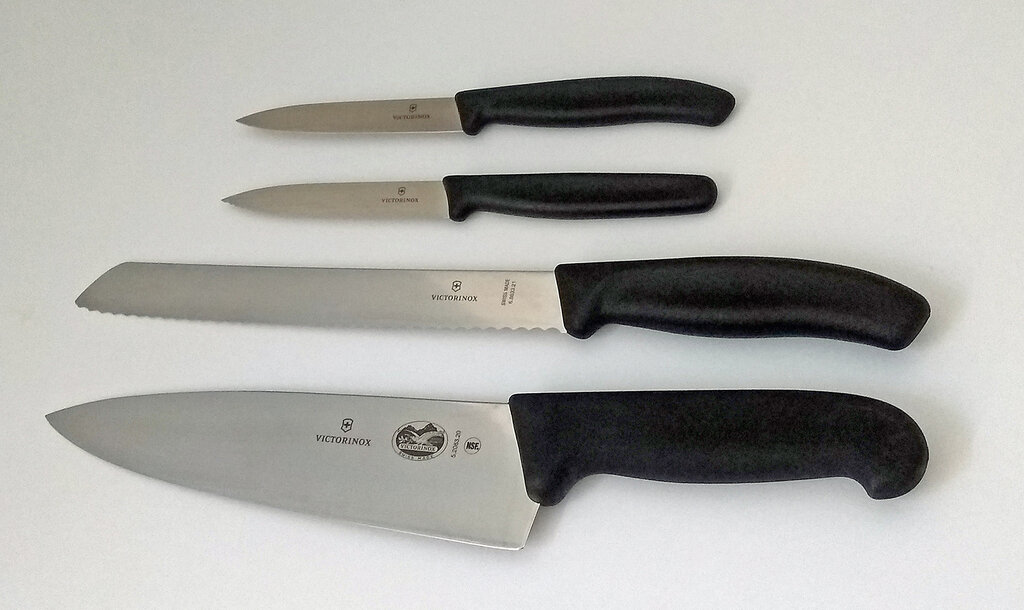
The chef's knife is your all-purpose workhorse. It's designed for a wide range of tasks, from chopping vegetables to slicing meat. Its blade is typically 8 to 10 inches long, with a gentle curve that allows you to rock it back and forth for efficient chopping.
The paring knife is small but mighty. With a blade just 2 to 4 inches long, it's perfect for detailed work that requires precision, like peeling an apple, deveining shrimp, or mincing a single clove of garlic.
The serrated knife, often called a bread knife, has a toothed edge that acts like a saw. This design is ideal for cutting through foods with a hard exterior and a soft interior, like a crusty loaf of bread or a ripe tomato, without squishing them.
| Knife Type | Best For | Blade Characteristics |
|---|---|---|
| Chef's Knife | General chopping, dicing, slicing | 8-10 inches, broad, curved |
| Paring Knife | Peeling, mincing, detailed tasks | 2-4 inches, small, pointed tip |
| Serrated Knife | Bread, tomatoes, delicate items | Long, with a toothed edge |
Handle with Care
A sharp knife is a safe knife. A dull one requires more pressure to cut, making it more likely to slip. But even with a sharp blade, proper handling is key to avoiding accidents.
The most important technique for your non-knife hand is the “claw grip.” Curl your fingertips under, like you're holding a ball, and rest your knuckles against the blade. This protects your fingertips and uses your knuckles as a guide for the knife.
For your knife hand, the best grip is the “pinch grip.” Hold the handle with your last three fingers, and pinch the base of the blade between your thumb and curled index finger. This gives you much more control and precision than just holding the handle.
Always cut on a stable surface, preferably a wood or plastic cutting board. Glass or stone boards will dull your knife instantly. And never, ever try to catch a falling knife.
Keep your cutting board secure. If it slides around, place a damp paper towel or a thin cloth underneath it for stability.
Master the Cuts
Consistent cuts aren't just for looks—they ensure your food cooks evenly. A dish with perfectly uniform vegetables will cook better and taste better. Here are the four basic cuts to master.
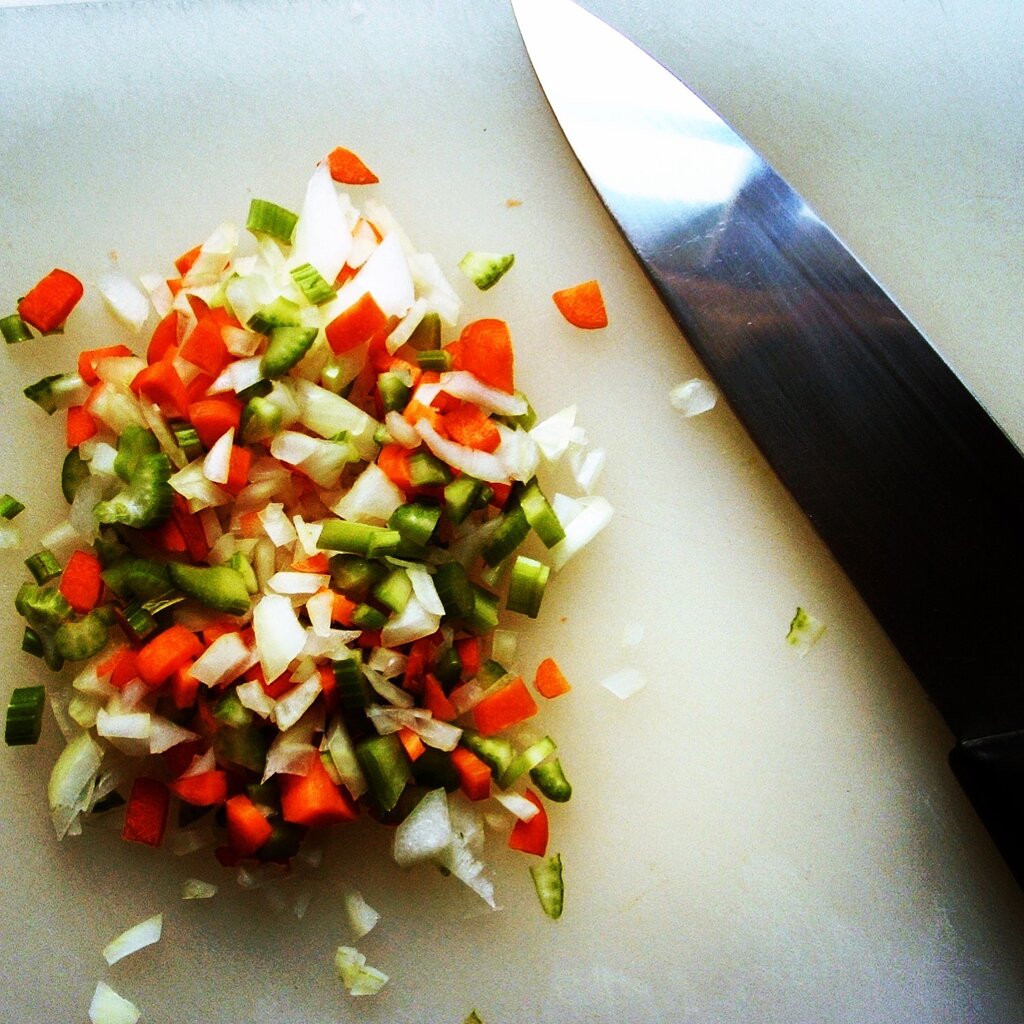
Chop
verb
To cut food into irregular pieces. The size can vary from small to large, but precision isn't the main goal.
A dice is a more precise version of a chop, creating small, uniform cubes. You'll often see recipes call for a small, medium, or large dice.
To mince is to chop food into the smallest possible pieces. This is often used for aromatics like garlic, ginger, and herbs to release their flavor.
A julienne cut creates long, thin strips, like little matchsticks. It's great for salads, slaws, and garnishes.
Keep Your Edge
A good knife is an investment, and proper maintenance keeps it working for you. This involves two key processes: honing and sharpening.
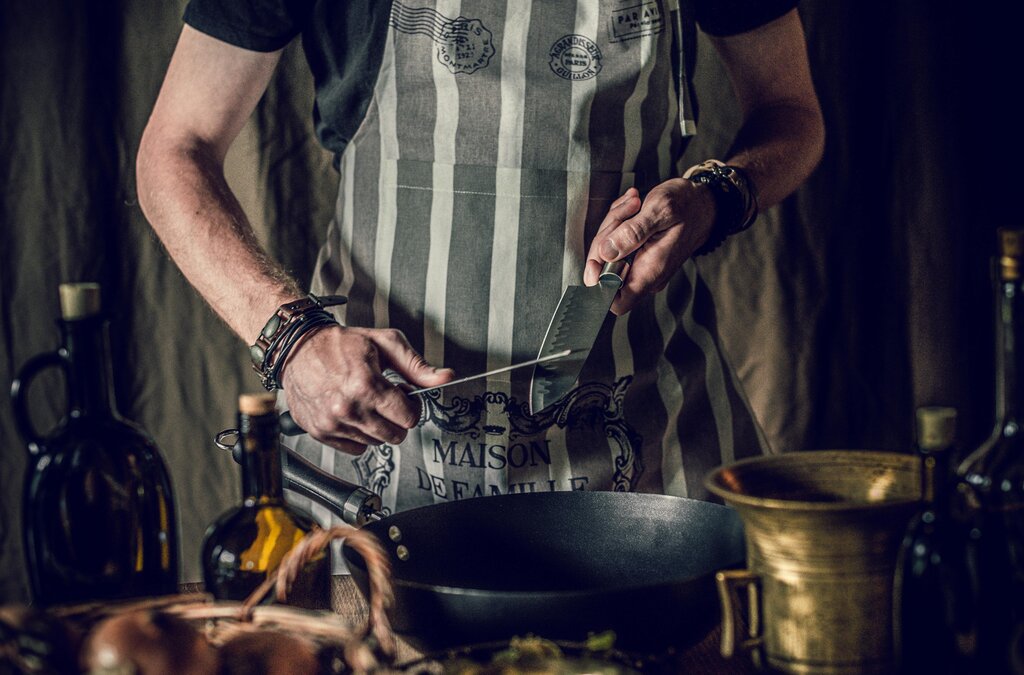
Honing doesn't actually sharpen the blade. Instead, it realigns the microscopic edge, which can get bent out of shape with regular use. You should hone your knife often, even every time you use it. A honing steel is the tool for this job.
Sharpening is different. It actually removes a tiny bit of steel to create a brand new, sharp edge. Most home cooks only need to do this once or twice a year. You can use a whetstone or an electric knife sharpener for this.
Finally, store your knives properly. Tossing them in a drawer can chip the blades and is a safety hazard. A magnetic strip on the wall, an in-drawer organizer, or a knife block are all excellent options for protecting your tools and your fingers.
Ready to test your knowledge? Let's see what you've learned about these foundational kitchen skills.
Which of the following are considered the three essential knives for most kitchen tasks?
The primary purpose of honing a knife with a honing steel is to remove a small amount of steel to create a brand new edge.
With the right tools and techniques, you can prep food safely, efficiently, and with confidence. Practice these cuts, and you'll build a strong foundation for all your future cooking.