The Art of Chocolate Making
Cacao Cultivation
Growing Chocolate
Chocolate's journey starts with the Theobroma cacao tree, a plant that's surprisingly particular about where it grows. It thrives only in a narrow band around the equator, roughly 20 degrees north and south. This region, often called the “cacao belt,” provides the hot, rainy, and humid climate the trees need.
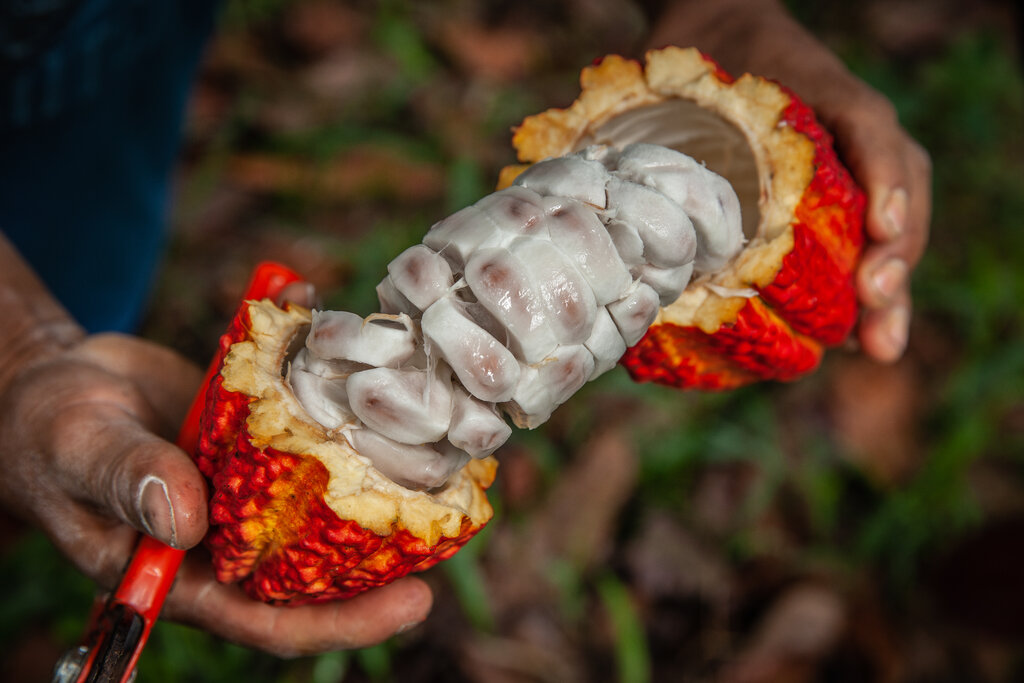
Cacao trees are understory plants, meaning they grow best under the shade of taller trees like banana or rubber. This canopy protects them from direct sun and wind. They produce large, pod-like fruits that, in a strange twist of botany, grow directly from the trunk and main branches, not from the ends of smaller twigs. Each pod contains 20 to 60 seeds, or beans, surrounded by a sweet, white pulp.
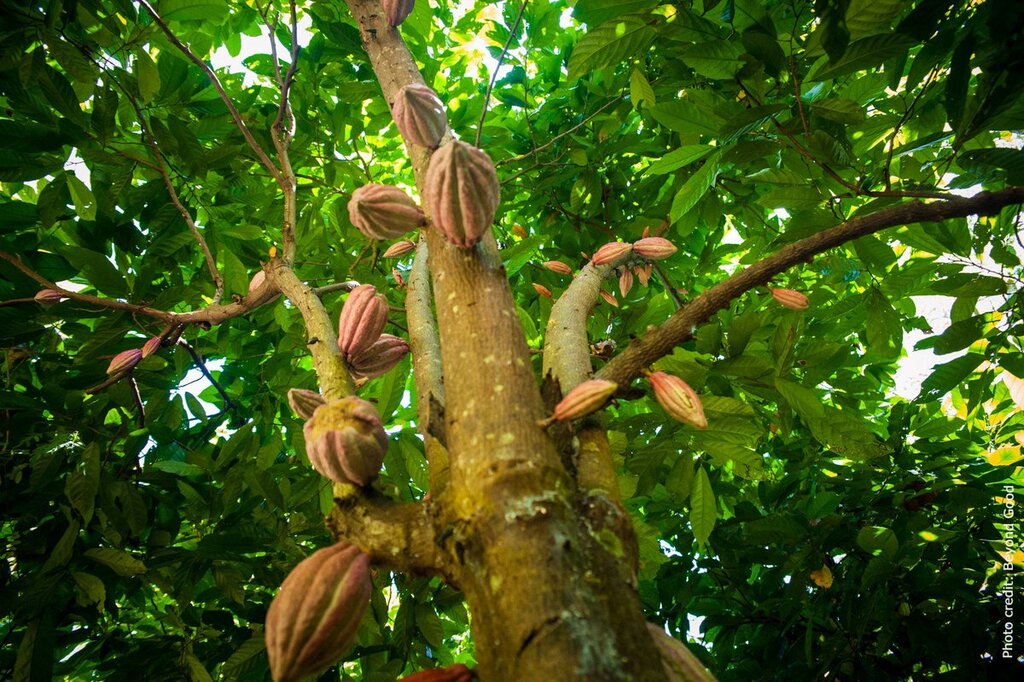
The Harvest
Unlike crops that ripen all at once, cacao pods mature at different times on the same tree. This means harvesting can't be done by machine. Instead, farmers carefully select and harvest ripe pods by hand, a labor-intensive process that happens throughout the year.
Workers use long poles with knives on the end to reach high pods or sharp machetes for those lower down. They must be careful not to damage the “flower cushions” on the trunk where new pods will grow. Once collected, the pods are opened, usually with a dull machete, to reveal the precious beans nestled inside the sticky, white pulp.
Where Flavor Begins
Opening the pod is just the beginning. The next step, fermentation, is where the magic truly starts. This is not about making alcohol, but about developing the complex flavor precursors that will eventually become the rich taste of chocolate.
Workers scoop the pulp-covered beans into large wooden boxes or pile them in heaps on the ground, covering them with banana leaves. For the next five to seven days, a natural two-stage process unfolds. First, yeasts in the environment feed on the sugary pulp, creating alcohol. Then, bacteria convert that alcohol into acetic acid. This process generates a lot of heat, reaching up to 50°C (122°F). The heat and acid kill the bean's germ, preventing it from sprouting, and begin to break down the bean's internal cell walls. This allows molecules to mix and react, creating the chemical compounds that give chocolate its characteristic flavor and aroma.
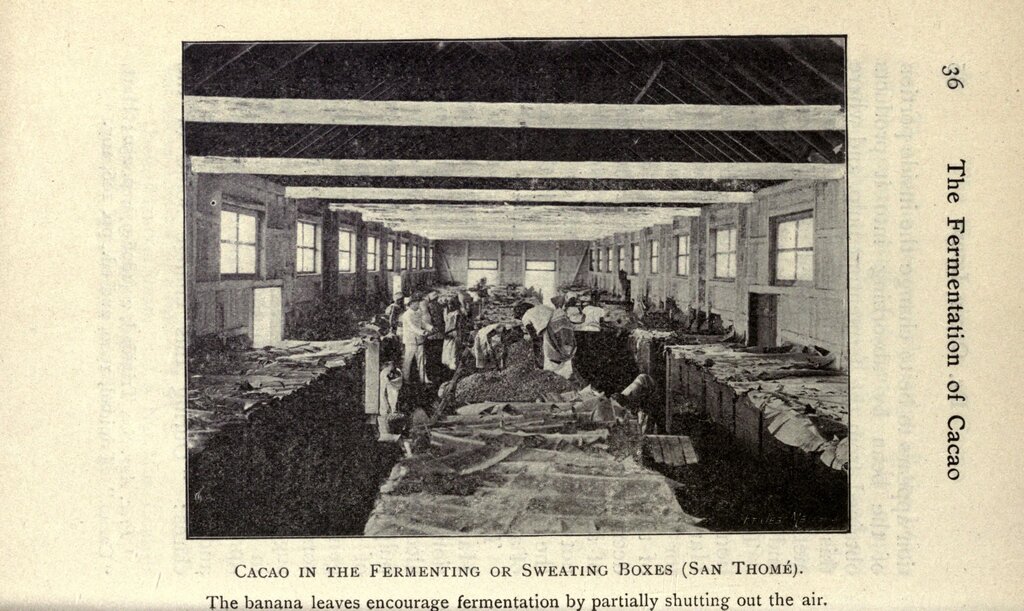
This is the first stage in developing the flavour of the chocolate, and part of the reason why a farmer can have a direct impact on the quality of the finished chocolate.
Drying
After fermentation, the beans are still very wet, with a moisture content of about 60%. To be stored and shipped without developing mold, they must be dried. The goal is to reduce their moisture content to around 7%.
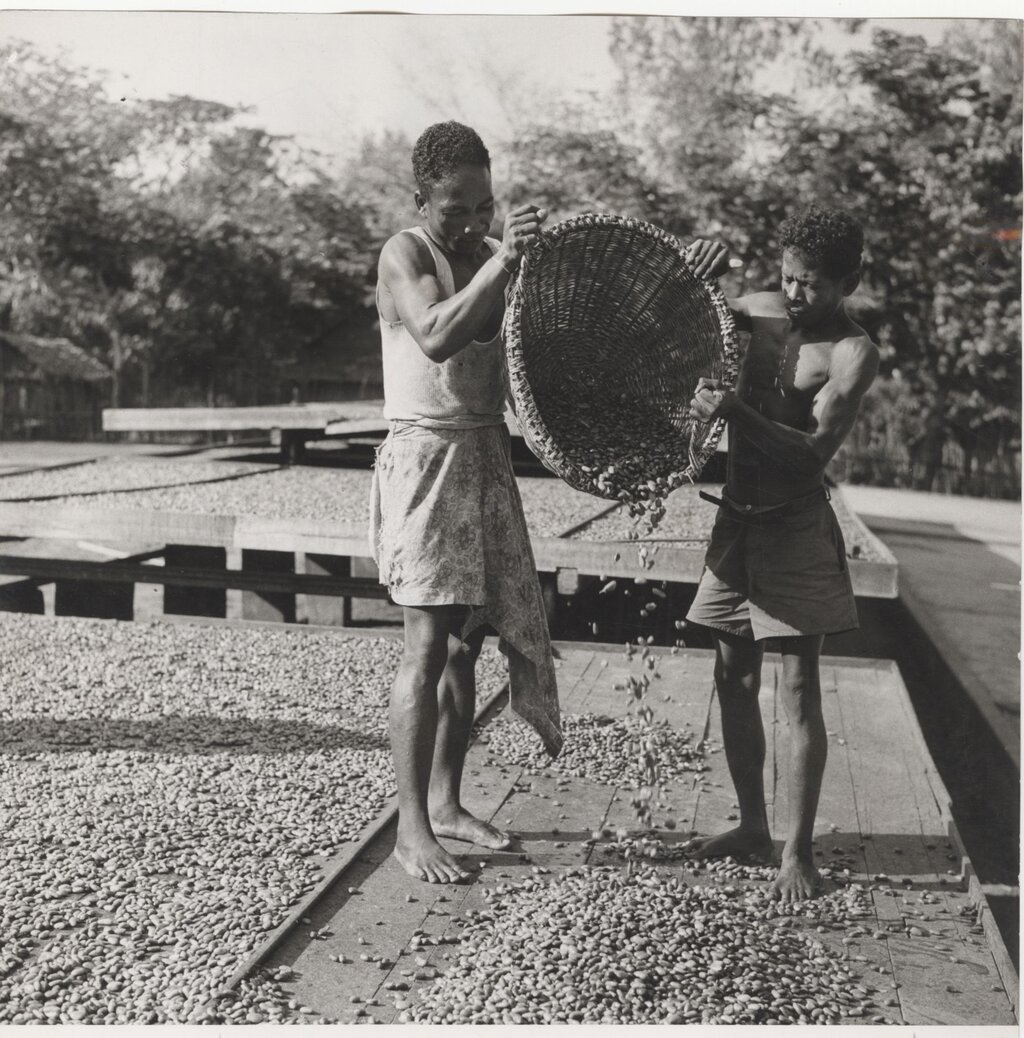
The most common method is sun-drying. The beans are spread out in a thin layer on large mats or concrete patios. To ensure they dry evenly, workers rake and turn them frequently over several days. This slow and steady process helps the flavors developed during fermentation to mellow and deepen, resulting in a higher quality bean ready for the next stage of its transformation into chocolate.
Now let's review the key steps of cacao cultivation.
Ready to test your knowledge?
What is the ideal environment for a Theobroma cacao tree to grow?
The primary purpose of fermenting cacao beans is to create alcohol for beverages.
From the specific climate needed for growth to the crucial steps of fermentation and drying, every stage of cultivation shapes the final taste of the chocolate we enjoy.