The Art and Science of Ceramics
Clay Body Composition
The Building Blocks of Clay
At its heart, clay isn't just special dirt. It's a specific group of minerals known as hydrous aluminum silicates. These minerals are composed of incredibly tiny, flat, plate-like particles. When mixed with water, these particles can slide past one another, giving clay its unique ability to be shaped and hold that form. This property is called plasticity.
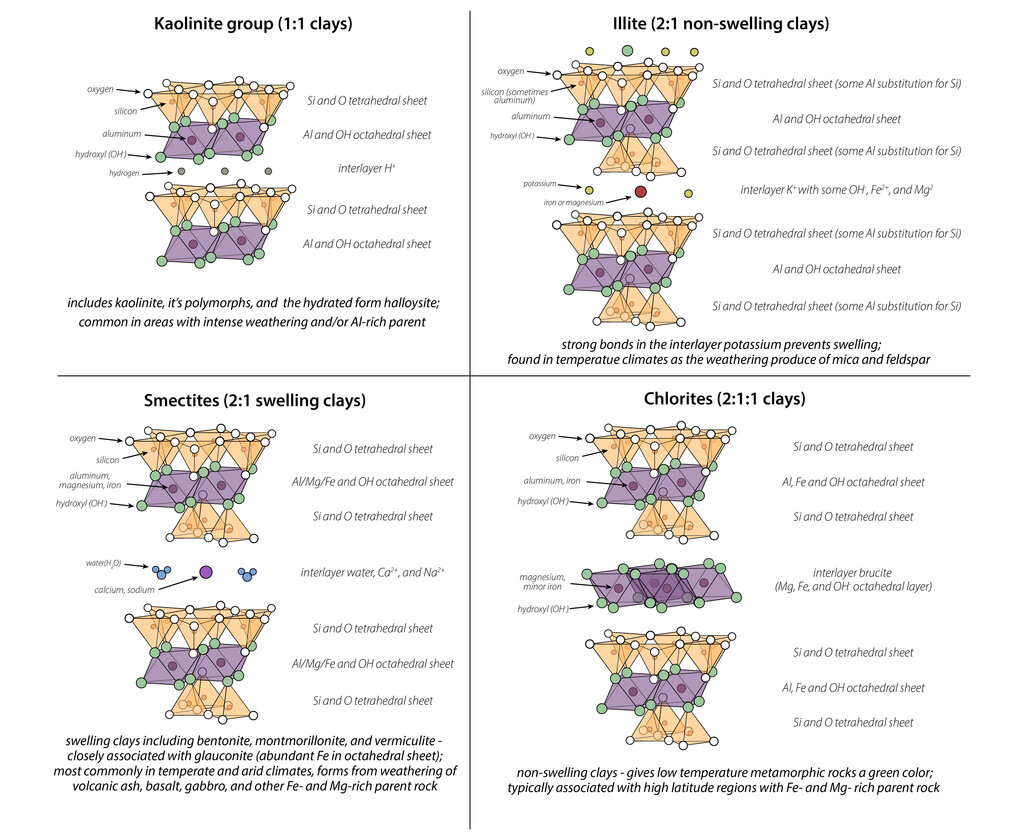
The way these atomic layers stack up determines everything about how a clay behaves. The most common mineral families in ceramics are kaolinite, illite, and smectite.
Meet the Clay Minerals
Each family of clay minerals brings a different personality to the potter's wheel. Understanding them is the first step in creating a custom clay body.
Kaolinite is the purest clay mineral. Its structure is a simple, repeating 1:1 stack of one silica sheet and one alumina sheet. These sheets are held together tightly, which means less water can get between them. As a result, kaolin clays are not very plastic and require very high temperatures to mature. They are prized for their whiteness and are the primary ingredient in porcelain.
Illite has a more complex 2:1 structure, with one alumina sheet sandwiched between two silica sheets. Potassium ions act as a glue between these layers. This structure makes illite a natural flux, meaning it helps the clay body melt at lower temperatures. It's a common component in stoneware and earthenware clays.
Montmorillonite, also part of the smectite group, shares the 2:1 structure of illite. However, the bonds holding its layers together are very weak. This allows a lot of water to slip between the layers, making it expand like an accordion. Clays rich in montmorillonite are extremely plastic but also shrink dramatically when they dry. Bentonite is a well-known example, often added in small amounts to other clays to boost plasticity.
| Mineral Family | Structure | Plasticity | Shrinkage | Common Use |
|---|---|---|---|---|
| Kaolinite | 1:1 Layers | Low | Low | Porcelain |
| Illite | 2:1 Layers | Medium | Medium | Earthenware, Stoneware |
| Montmorillonite | 2:1 Layers | Very High | Very High | Additive for plasticity |
Size and Stickiness
Plasticity is directly related to the size of the clay particles. The smaller the particles, the greater the total surface area in a given lump of clay. More surface area allows more water to lubricate the particles, letting them slide around more easily. Think of it like a stack of wet playing cards versus a stack of dinner plates. The cards slide effortlessly, while the plates have much less mobility.
Montmorillonite particles are the smallest, making clays like bentonite incredibly plastic. Kaolinite particles are much larger, which is why porcelain isn't as easy to work with on the wheel.
Plasticity
noun
The property of a material that allows it to be deformed by pressure and retain its new shape after the pressure is removed.
Customizing the Mix
Potters rarely use a single type of clay straight from the ground. Instead, they create clay bodies, which are recipes designed for specific purposes. By adding other materials, they can control plasticity, shrinkage, texture, and firing temperature. Two of the most common additives are grog and fluxes.
Grog is clay that has already been fired and then ground up into particles of various sizes, from fine powder to coarse sand. Adding grog to a clay body does a few important things. It creates a kind of internal skeleton within the clay, which reduces overall shrinkage and helps prevent cracking during drying and firing. It also adds a rough texture, known as "tooth," which can make larger hand-built forms more structurally sound.
Fluxes are minerals that lower the melting point of the clay body. Remember how illite contains potassium, which acts as a natural flux? Potters can add other fluxing agents, like feldspar or nepheline syenite, to make the clay vitrify (become dense and glass-like) at a lower temperature. This is essential for creating strong, non-porous stoneware and for controlling the final color and texture of the fired piece.
A good clay body is a balanced recipe. It has enough plastic minerals to be workable, enough grog or coarse particles to control shrinkage, and the right amount of flux to mature at the desired temperature.
Ready to test your knowledge on clay composition?
What is the fundamental property of clay that allows it to be shaped and hold that form when mixed with water?
A potter wants to create a brilliant white porcelain sculpture that requires a very high firing temperature. Which clay mineral is the best choice as the primary ingredient?
By understanding these fundamental components, a potter gains complete control over their primary material, able to craft a clay body perfectly suited for anything from a delicate teacup to a large-scale sculpture.