The Art and History of Oyster Crackers
Oyster Cracker Origins
The Cracker for the Coast
The familiar hardtack or ship's biscuit was a durable, bland staple of long sea voyages. But as 19th-century American coastal cities boomed, a new culinary scene emerged that demanded something more refined. The raw bars and oyster houses popping up from Boston to Baltimore needed a cracker that was small, sturdy, and purpose-built for seafood. This need sparked an innovation that would become a fixture of American cuisine.
In 1847, a baker in Trenton, New Jersey, created the cracker that would define the category. developed a small, puffy, slow-baked cracker he called the "Trenton Cracker." Its key feature was its low moisture content, which gave it a long shelf life and, more importantly, the ability to hold its shape in hot liquid. This made it the perfect companion for the oyster stews and chowders that were wildly popular at the time. The cracker was soon nicknamed the "oyster cracker" for its ideal pairing with the bivalve.
A New England Rival
While Exton was perfecting his cracker in the Mid-Atlantic, a similar development was underway in New England. The Westminster Cracker Company, founded in Westminster, Massachusetts, in 1828, also began producing a small, hard biscuit. They baked their crackers in a historic brick oven that is still used today.
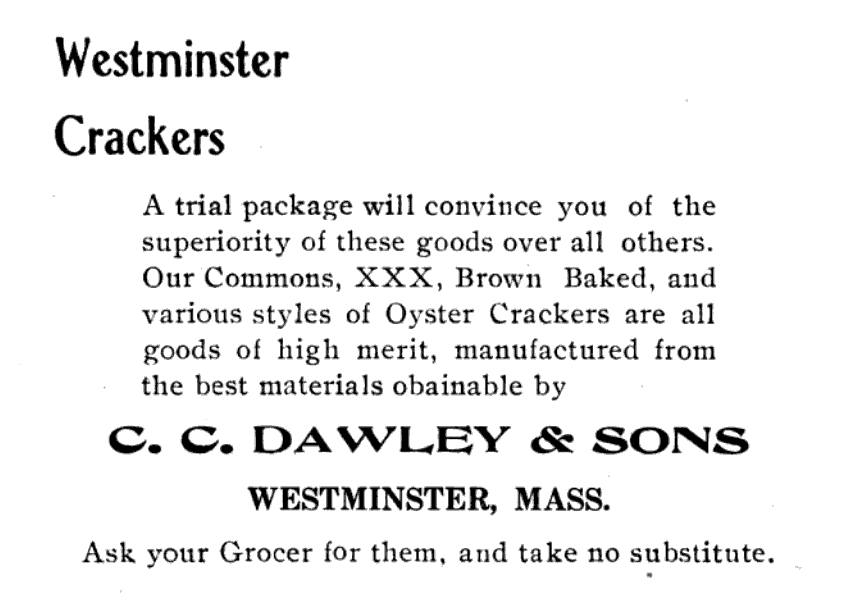
Though their origin stories are distinct, both Exton's and Westminster's crackers served the same burgeoning market. They were portable, durable, and perfectly suited for the seafood-centric diet of America's maritime communities. The Westminster version, often called a "common cracker," became the standard in New England clam chowders, while the Trenton cracker dominated the oyster houses further south.
The Oyster Cellar Scene
The rise of the oyster cracker is inseparable from the culture of the s. In the 19th century, these establishments were everywhere in coastal cities. They were democratic spaces, frequented by people from all social classes, from wealthy merchants to working-class laborers. Oysters were cheap, plentiful, and considered a food for everyone.
In these cellars, a bowl of crackers was always on the table, much like a bread basket today. They were a complimentary, functional part of the meal—used to thicken stews, as a base for raw oysters, or simply as a salty snack between bites.
The portability of these crackers also helped establish a new kind of American snacking tradition. They could be packed for lunches or journeys, providing a taste of the coast far from the shore. This simple, durable food item became an ambassador for a whole culinary culture, linking the country back to its maritime roots.
Ready to test your knowledge?
Who is credited with creating the "Trenton Cracker" in 1847?
What was the primary characteristic of the original oyster cracker that made it ideal for hot soups like oyster stew?
From ship's biscuit to chowder companion, the oyster cracker's journey reflects the changing tastes of a growing nation. It remains a simple but essential part of American seafood tradition.