The Arc of Power and Influence
Introduction to Power Structures
The Architecture of Influence
Every group, from a book club to a nation, has a power structure. It's the invisible framework that determines who makes decisions, who benefits, and who follows. At its core, power is simply the ability to influence or control the behavior of others.
Power
noun
The capacity or ability to direct or influence the behavior of others or the course of events.
This influence isn't one-size-fits-all. It comes in several flavors that often overlap and reinforce each other. Understanding these types is the first step to seeing how power structures work.
| Type of Power | Description |
|---|---|
| Political | The authority to make and enforce laws and decisions for a society. Think governments and legal systems. |
| Economic | Control over resources, such as money, property, and jobs. This power can shape individual choices and societal priorities. |
| Military | The use of organized force or the threat of it. This is the state's ultimate tool for control, both internally and externally. |
| Ideological | The ability to shape beliefs, values, and norms. This includes influence through media, religion, and education. |
Who's in Charge?
A key question in analyzing any power structure is: who actually holds the power? Is it distributed evenly, or concentrated at the top? Elite theory argues for the latter.
Elite theory suggests that in any complex society, a small, cohesive minority holds the real power, regardless of the formal system of government.
This elite group often shares a similar background, education, and set of interests. They might be corporate executives, top military leaders, or high-ranking politicians. According to this theory, they influence major decisions in ways that tend to benefit their own interests, creating a system where power is passed down within a select circle. This doesn't necessarily mean a conspiracy is at play. Instead, it suggests that the system is structured to favor those who are already in positions of influence.
Strength in Numbers
Power isn't always held by a permanent elite. Sometimes, it's seized by groups who band together. Alliance formation is the process of individuals or groups forming coalitions to increase their collective influence.
A single person might have little power, but a thousand people organized around a common goal can change the world. These alliances can be formal, like political parties or trade unions, or informal, like neighborhood associations or social movements. They work by pooling resources, coordinating actions, and amplifying their message.
But alliances can also reinforce inequality. When powerful groups form coalitions, they can effectively lock out others, protecting their own privileges and creating barriers for those outside their network. The dynamics of who allies with whom can reveal a lot about a society's fault lines and power struggles.
From Small Groups to States
For most of human history, people lived in small, relatively egalitarian bands. The complex power structures we see today are a recent development. The emergence of complex societies and, eventually, states, was driven by a handful of key factors that transformed how we live and organize ourselves.
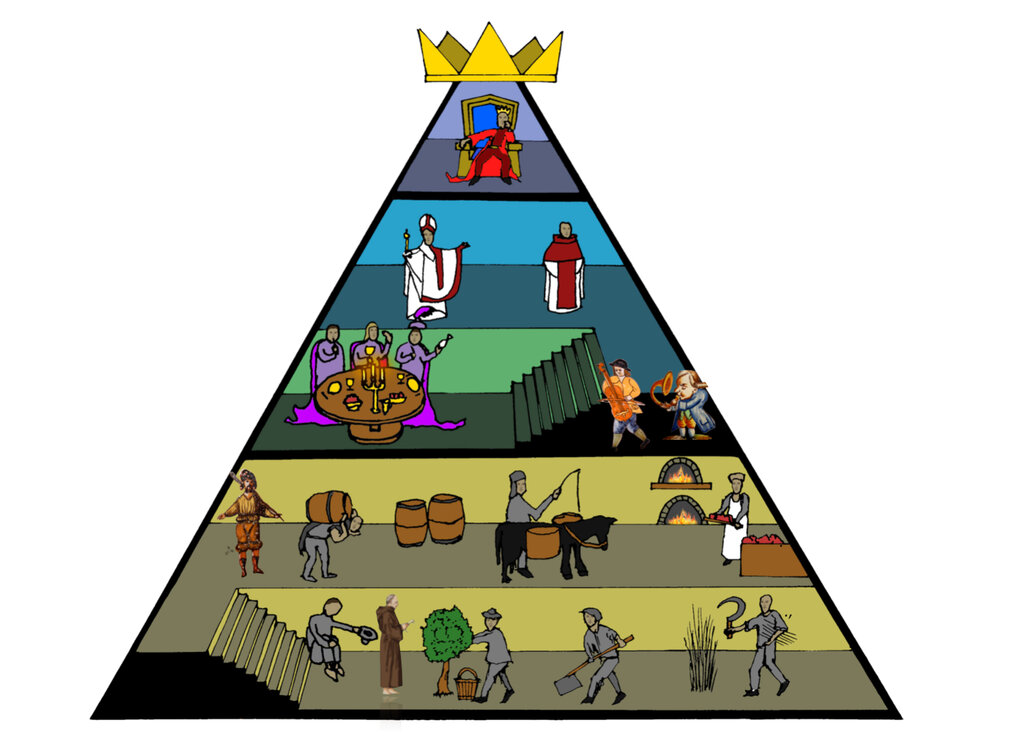
The invention of agriculture allowed for surplus food, which meant not everyone had to farm. This led to specialization, where people could become artisans, soldiers, or priests. As populations grew and became denser, new challenges arose, like managing resources, defending territory, and resolving disputes.
State formation was the solution. A state is a centralized political organization that exercises authority over a territory. It consolidates power, creating institutions like laws, courts, and bureaucracies to govern society. This process wasn't always peaceful; conflict over resources and territory often played a major role in forcing smaller groups to unify under a single, powerful authority.
States emerged as a way to manage the growing complexity of human society, centralizing power to maintain order and control resources.
Time to test your knowledge on these foundational concepts.
According to the text, what is the core definition of power?
Elite theory argues that a small, influential group of people with similar backgrounds and interests often influences major decisions to benefit themselves.
Understanding these basic building blocks—from the types of power to the formation of states—is crucial for analyzing the societies we live in today.