The American Accent Unveiled
Introduction to Phonetics
The Science of Speech Sounds
Why doesn't "read" rhyme with "read"? English spelling is notoriously tricky. The same letters can represent different sounds, and different letters can make the same sound. This is where phonetics comes in. It’s the study of speech sounds themselves, separate from how they're written.
Think of sounds as the basic ingredients of a language. Phonetics gives us a precise recipe for each one, so we can understand exactly how they are made and how they differ from one another. This is the first step to truly hearing and reproducing the sounds of any accent, including the American accent.
Phonetics cuts through the confusion of spelling to focus on what we actually hear and say.
A Universal Alphabet for Sounds
To describe sounds accurately, linguists created the International Phonetic Alphabet, or IPA. Unlike our regular alphabet, the IPA has a one-to-one relationship between symbol and sound. Each symbol represents exactly one sound, and each sound is always represented by the same symbol.
Consider the letters "ough." In "through," they make one sound. In "tough," another. In "bough," yet another. The IPA eliminates this ambiguity.
| Word | Spelling | IPA Transcription |
|---|---|---|
| through | thr-ough | /θru/ |
| tough | t-ough | /tʌf/ |
| bough | b-ough | /baʊ/ |
Learning a few IPA symbols helps you see the sounds of a word, not just its letters. It’s like having a universal key to unlock pronunciation.
How We Make Sounds
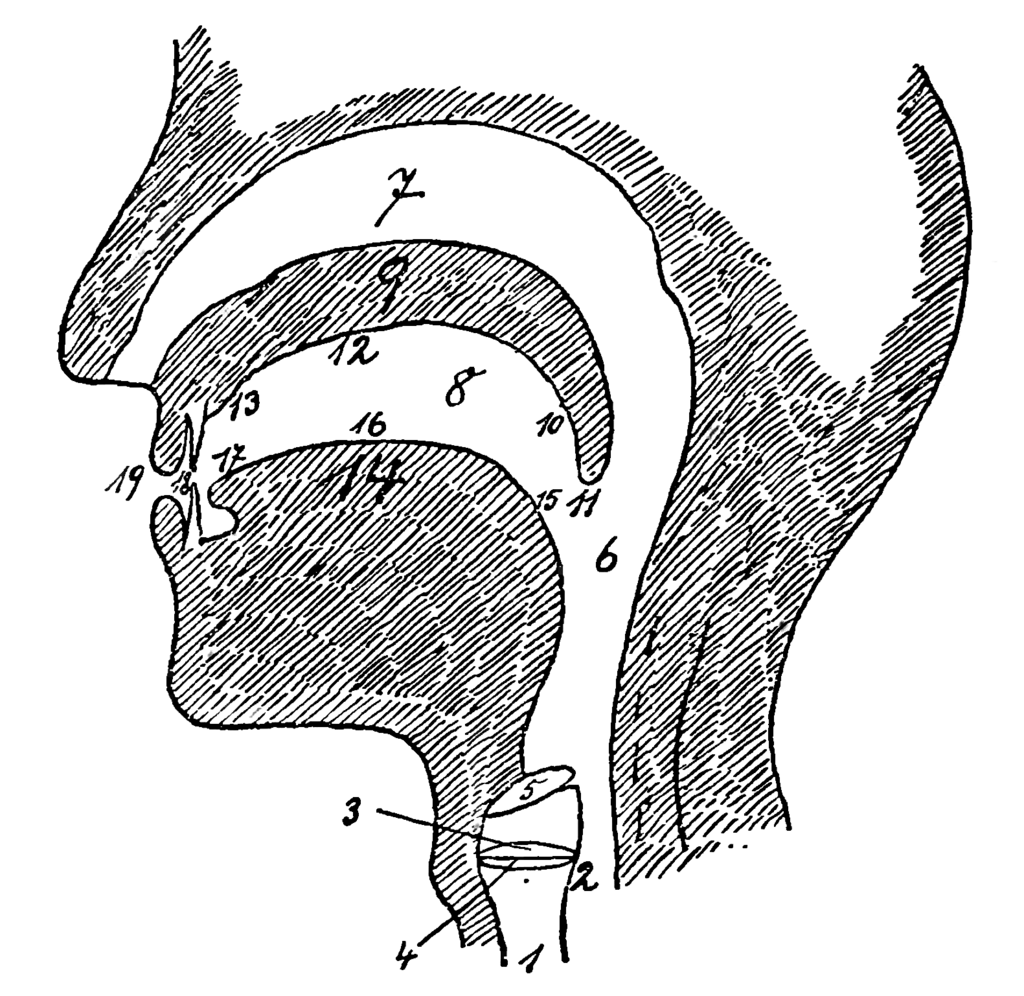
Every speech sound is the result of a physical action. We use our lungs, vocal cords, tongue, teeth, and lips to shape the air that flows from our lungs. This process is called articulation. Understanding articulation is key to learning how to produce new sounds.
Speech sounds fall into two main categories: vowels and consonants.
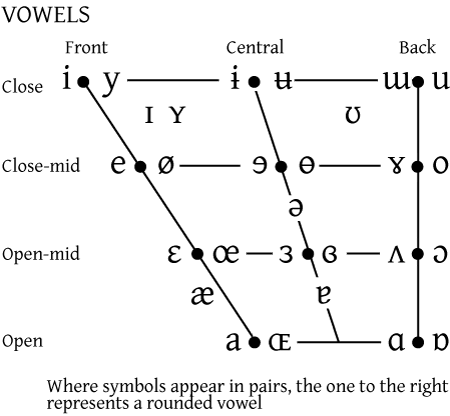
Vowels are produced with an open vocal tract. The sound is shaped mainly by the position of your tongue and lips. Is your tongue high or low in your mouth? Is it forward or back? Are your lips rounded or spread? For example, the vowel in "see" (/i/) is made with the tongue high and forward. The vowel in "sue" (/u/) is made with the tongue high and back, with rounded lips.
Consonants, on the other hand, are produced by obstructing the flow of air in some way. To describe a consonant, we need to know three things:
- Place of Articulation: Where is the airflow blocked? (e.g., at the lips, behind the teeth)
- Manner of Articulation: How is the airflow blocked? (e.g., stopped completely, forced through a narrow gap)
- Voicing: Are the vocal cords vibrating? (Voiced) Or not? (Voiceless)
Let’s look at the sounds /p/ and /b/. Both are made by stopping air with the lips (the place is bilabial, the manner is a stop). The only difference is voicing. Put your hand on your throat and say "pat." You shouldn't feel a vibration for the /p/. Now say "bat." You should feel a buzz for the /b/. That's voicing.
Sounds in Context
Sounds don't exist in isolation. They influence each other in predictable ways. These adjustments are called phonological processes. They're the shortcuts our mouths take to make speech faster and smoother.
Have you ever noticed how the 's' at the end of a word can sound different? In "cats," it sounds like an /s/. But in "dogs," it sounds like a /z/. Why? It's because of the sound that comes before it. The /t/ in "cats" is voiceless, so the 's' stays voiceless. The /g/ in "dogs" is voiced, so the 's' becomes voiced too, turning into a /z/.
This process, where a sound becomes more like a neighboring sound, is called assimilation. It's a fundamental concept that explains many features of connected speech in any accent.
assimilation
noun
A phonological process in which a speech sound becomes similar or identical to a neighboring sound.
Now that you have a basic toolkit for understanding speech sounds, you’re ready to look more closely at the specific vowels and consonants that make up the American accent.