The Amazing World of Toucans
Introduction to Toucans
What Is a Toucan?
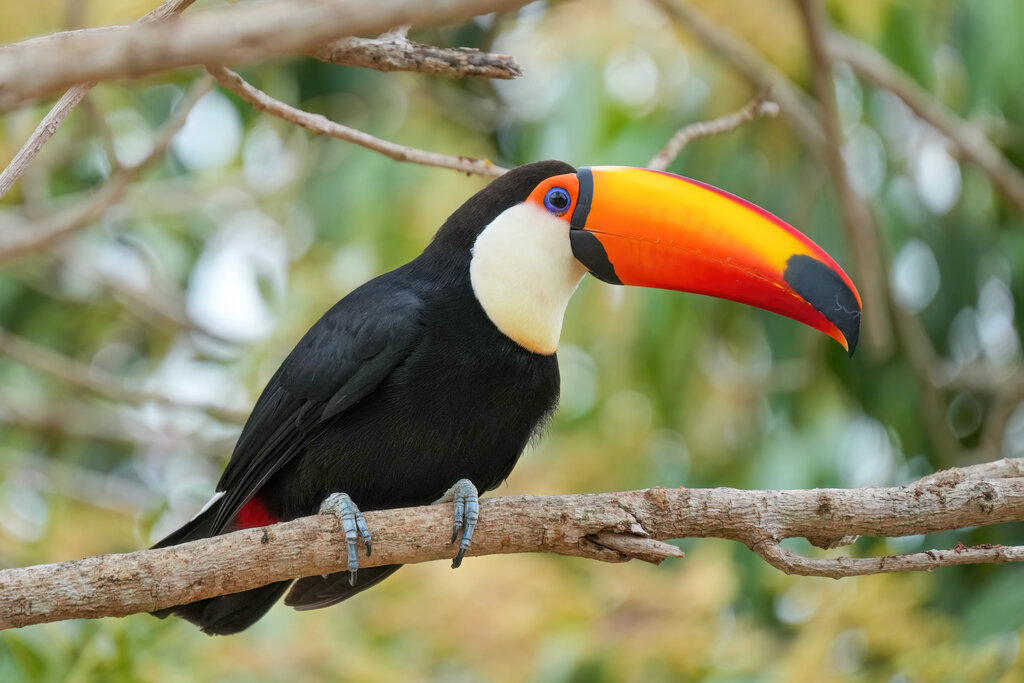
When you think of a toucan, you probably picture a black bird with a giant, rainbow-colored beak. That iconic image belongs to the Toco Toucan, but it's just one member of a large and diverse family. All toucans belong to the family Ramphastidae, which includes about 40 different species. They are native to the tropical forests of Central and South America.
Toucans are more than just their beaks. They are part of the order Piciformes, making them relatives of woodpeckers and barbets. This relationship hints at their tree-dwelling lifestyle, which is shared across the family.
Built for the Forest
The toucan's beak is its most famous feature. It can be up to a third of the bird's total body length, making it look heavy and clumsy. But the beak is surprisingly light. It's mostly hollow, supported by a network of bony struts that make it strong without adding much weight.
Beyond the beak, toucans have other distinct characteristics. Their plumage is often a bold mix of black with patches of bright yellow, orange, blue, or white. Their wings are short and rounded, suited for short flights through the dense forest canopy rather than long-distance travel.
Toucans also have unique feet adapted for life in the trees. Their feet are zygodactyl, meaning they have two toes pointing forward and two pointing backward. This arrangement provides an exceptionally strong grip for perching on branches.
A Diverse Family
The toucan family is split into several groups, each with its own look. The largest members are the true toucans, like the Toco. Then there are the smaller, more slender aracaris, which are known for their social behavior and often travel in flocks. The smallest members of the family are the toucanets, which usually have green plumage instead of the typical black.
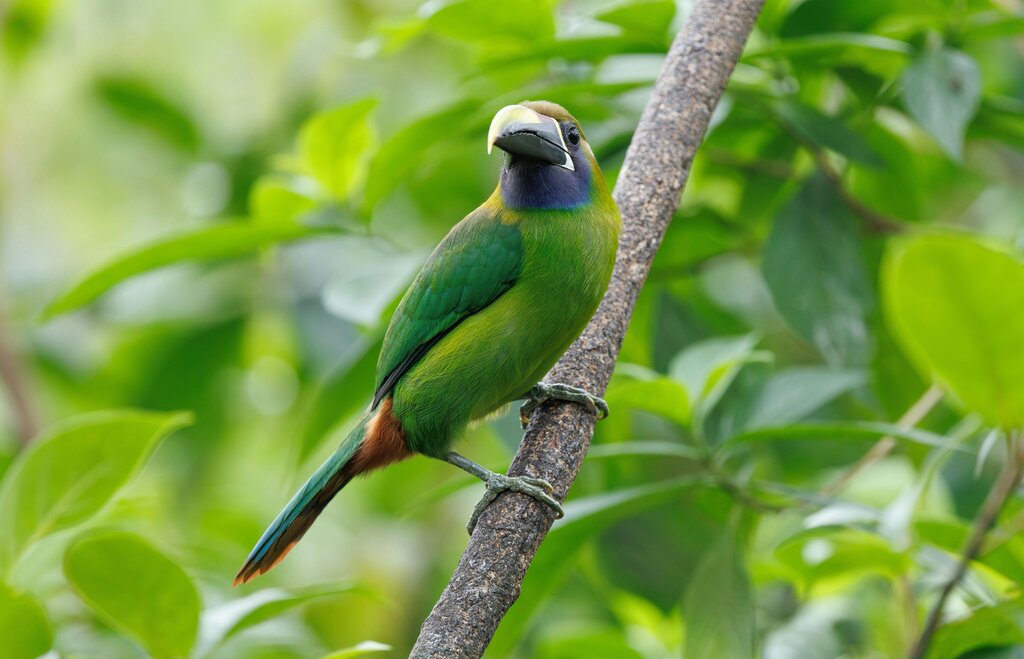
This diversity means that toucans come in a wide range of sizes, from the small Lettered Aracari at about 11 inches long to the Toco Toucan, which can reach over two feet in length. Despite their differences in size and color, all members of the family share the same basic body plan and, of course, a remarkably oversized beak.
Let's review some key terms before we test your knowledge.
Ready to see what you've learned? Give this quiz a try.
To which scientific order do toucans belong, making them relatives of woodpeckers?
What is the primary advantage of a toucan's zygodactyl feet?
From the large Toco Toucan to the small, green toucanets, the Ramphastidae family is full of fascinating and colorful birds uniquely adapted to their forest homes.