The Amazing Octopus
Octopus Anatomy
A Body Built for the Deep
Octopuses are mollusks, a group that also includes snails and clams. But over millions of years, most octopus species shed the protective shell of their ancestors. What remains is a creature of almost pure soft tissue, a muscular bag of organs with no bones to hold it in shape.
This boneless, soft-bodied structure is a key to their success. An octopus can pour its body through any opening larger than its beak, a hard, parrot-like mouth part that is its only rigid component. This allows them to escape predators and hunt in tight crevices where other animals can't follow.
Eight Limbs, Endless Possibilities
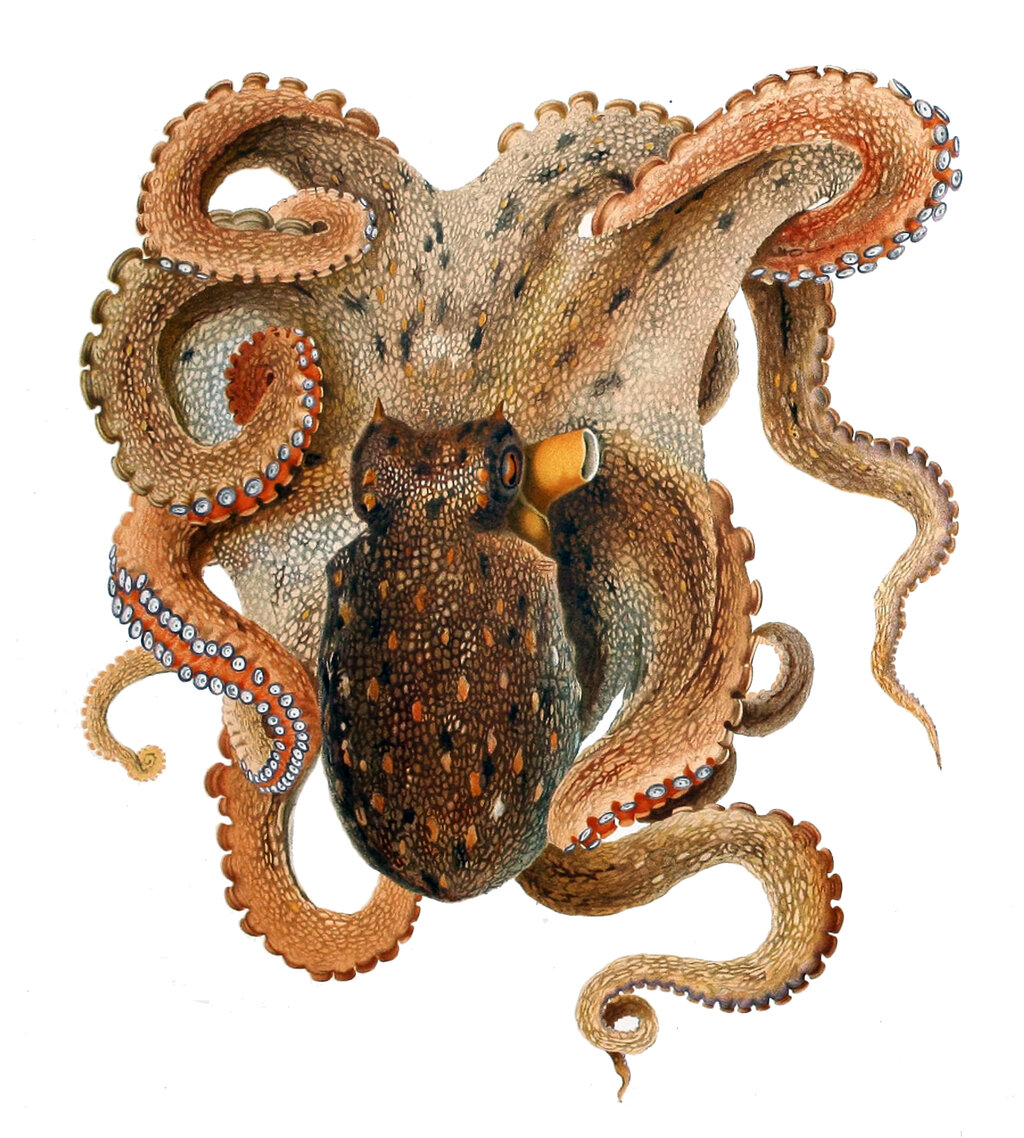
An octopus has eight limbs, but it's more accurate to call them arms, not tentacles. In cephalopods, tentacles are typically longer and have suckers only at their tips, like those on a squid. Octopus arms have suckers running along their entire length, giving them incredible grip and dexterity.
Each sucker is a marvel of engineering. It can be controlled individually, creating a powerful seal on almost any surface. The rims of the suckers are also packed with chemoreceptors, allowing the octopus to effectively taste and smell whatever it touches. This turns each arm into a sensory organ, exploring the world through touch and taste simultaneously.
Brainpower and Bizarre Blood
The octopus nervous system is famously complex and distributed. While they have a central brain in their head, roughly two-thirds of their neurons are located in their arms. This means each arm can act with a degree of independence, solving problems like opening a jar or navigating a maze on its own. It's less like a central command system and more like a network of cooperating intelligences.
This decentralized nervous system allows an octopus to perform multiple complex actions at once, like holding onto a rock with one arm, exploring a crevice with another, and fending off a rival with a third.
Their circulatory system is just as unusual. Octopuses have three hearts. One large, systemic heart pumps blood through the body, while two smaller branchial hearts pump blood through the gills. This efficient system is necessary to support an active, predatory lifestyle.
Instead of the iron-based hemoglobin that makes our blood red, octopuses use a copper-based protein called hemocyanin to transport oxygen. When oxygenated, hemocyanin turns their blood blue. This protein is more efficient at transporting oxygen in cold, low-oxygen water, which is ideal for life in the deep ocean.
Advanced Vision
Octopuses have camera-type eyes, structurally similar to our own, with an iris, pupil, lens, and retina. They have excellent vision and can control the amount of light entering their eyes by changing the shape of their pupils, which are often horizontal slits. Their large, complex eyes are a primary tool for spotting both prey and predators in their environment.
Despite having advanced eyes, octopuses are thought to be colorblind. They distinguish objects through brightness, polarization, and texture, perceiving the world in a way very different from ours.
This unique combination of a flexible body, intelligent arms, a multi-hearted circulatory system, and sharp vision makes the octopus one of the most fascinating and well-adapted animals in the sea.
Now, let's test your understanding of these incredible creatures.
What is the only rigid, hard part of an octopus's body?
The majority of an octopus's neurons are located in its central brain.