The AI Bible Unveiled From Basics to AGI
Introduction to Artificial Intelligence
What Is Artificial Intelligence?
Artificial intelligence, or AI, is the science of making machines that can think like humans. The goal is to create systems that can perform tasks that normally require human intelligence, such as learning, reasoning, problem-solving, and understanding language.
AI as a scientific discipline can trace its roots back to the Dartmouth Summer Research Project on Artificial Intelligence, held at Dartmouth College in 1956.
This workshop is widely considered the birthplace of AI as a field. A small group of scientists gathered to explore the idea that every aspect of learning or any other feature of intelligence could be so precisely described that a machine could be made to simulate it. It was here that the term "artificial intelligence" was officially coined.
The Three Types of AI
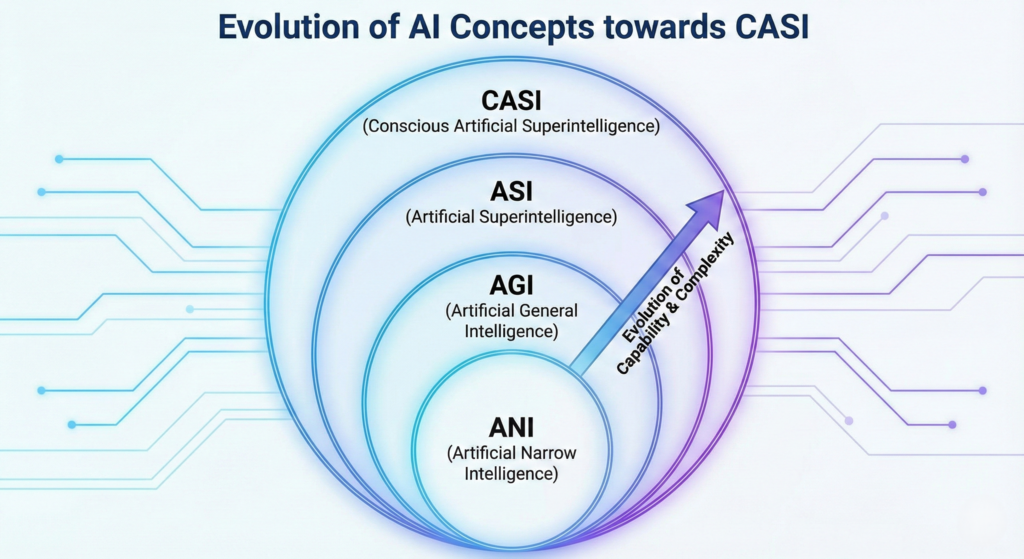
AI is often categorized into three types based on its capabilities. Understanding these distinctions helps clarify what AI can do today and what it might do in the future.
Artificial Narrow Intelligence
noun
Also known as Weak AI, this is a type of AI designed to perform a specific, narrow task. This is the only form of AI that exists today.
Every AI you interact with—from recommendation algorithms on streaming services to self-driving cars—is a form of ANI. It might seem incredibly intelligent within its specific domain, but it can't operate outside of it.
Think of it this way: An AI that's a world champion at chess can't use its intelligence to make a cup of coffee. It’s a specialist, not a generalist.
The next two types are still hypothetical.
Artificial General Intelligence
noun
Also known as Strong AI, this is a theoretical form of AI that would have human-level intelligence. It could understand, learn, and apply its knowledge to solve any problem a human being can.
AGI is the kind of AI often depicted in science fiction, like the intelligent robots in movies that can reason, plan for the future, and interact with the world with the same flexibility as a person. We are not yet close to achieving AGI.
Artificial Superintelligence
noun
ASI is a hypothetical AI that would possess intelligence far surpassing that of the brightest human minds in virtually every field, including scientific creativity, general wisdom, and social skills.
A Brief History of AI
The journey of AI has been one of high hopes, setbacks, and incredible breakthroughs. After the initial excitement of the 1950s and 60s, progress slowed, leading to periods known as "AI winters" when funding and interest dried up.
However, the 21st century has seen a massive resurgence. This boom is fueled by two key factors: the availability of huge amounts of data and the development of much more powerful computers. These have allowed complex AI models to be trained on a scale that was previously unimaginable.
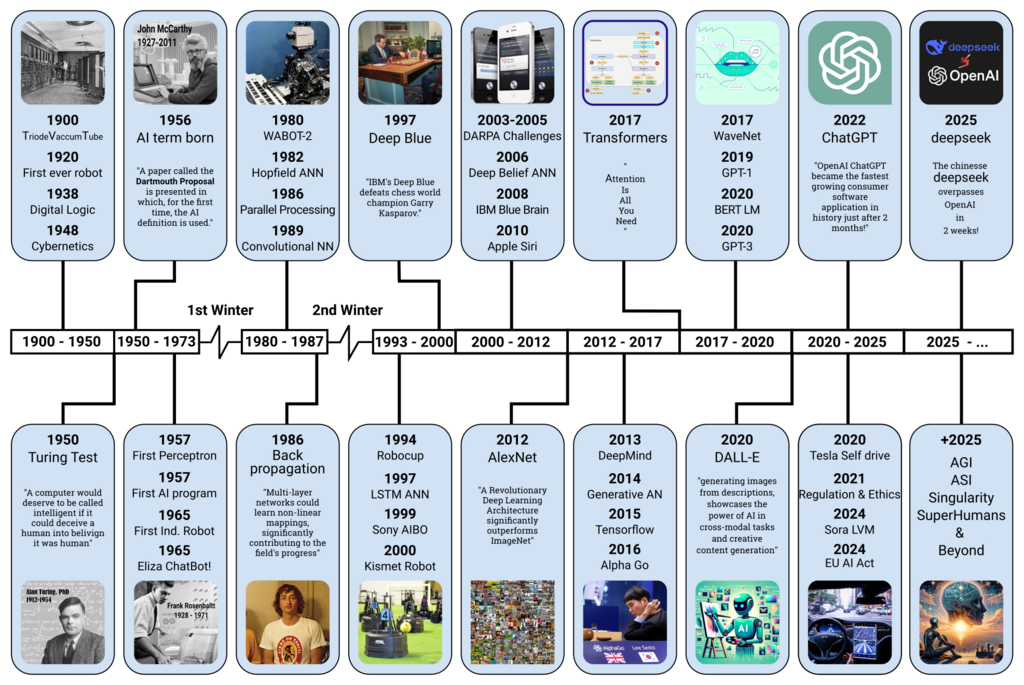
Key milestones include the development of early expert systems, the defeat of a world chess champion by IBM's Deep Blue in 1997, and the recent rise of large language models like ChatGPT.
Impacts and Ethics
As AI becomes more integrated into our lives, it raises important questions about its impact on society. On one hand, AI has the potential to solve some of our biggest challenges, from curing diseases to combating climate change. It's already transforming industries like healthcare, finance, and transportation.
On the other hand, it also presents significant ethical challenges. These are not just future problems; they are issues we are grappling with today.
| Ethical Consideration | Description |
|---|---|
| Bias | AI systems learn from data. If that data reflects existing societal biases (related to race, gender, or other factors), the AI can perpetuate or even amplify them. |
| Privacy | AI often requires vast amounts of data to function, raising concerns about how personal information is collected, used, and protected. |
| Accountability | When an AI system makes a mistake, who is responsible? The developer, the user, or the owner? Establishing clear lines of accountability is a complex challenge. |
| Job Displacement | As AI automates tasks previously done by humans, there are concerns about its impact on employment and the economy. |
Navigating these issues requires careful thought and regulation. Ensuring that AI is developed and used responsibly is one of the most critical tasks of our time. It involves creating systems that are fair, transparent, and aligned with human values.

This introduction lays the groundwork for understanding AI. We've covered its definition, history, types, and the crucial ethical questions it poses. These core concepts are the foundation for exploring the more specific ways AI is changing our world.
What is the primary goal of artificial intelligence as a scientific field?
The term "artificial intelligence" was officially coined at which significant event?