The Aging Brain and Its Stages
Brain Aging Overview
Your Brain Over Time
Just like the rest of your body, your brain changes as you get older. This process, known as brain aging, is a natural part of life. It’s not a disease, but rather a series of subtle shifts in the brain's structure and function that happen over decades.
Everyone’s brain ages differently. For some, the changes are barely noticeable, while for others they can be more pronounced. Think of it like physical aging. Some people are running marathons in their seventies, while others find their joints ache a bit more. The same variability applies to our brains.
What Changes Inside?
Over time, the brain undergoes physical changes. One of the most common is a slight decrease in overall volume, a process called cerebral atrophy. Certain areas, like the prefrontal cortex (involved in planning and personality) and the hippocampus (crucial for forming new memories), may shrink more than others.
At a microscopic level, the connections between brain cells, or neurons, also change. These connections are constantly remodeling themselves in a process called synaptic plasticity, which is the foundation of learning and memory. With age, this plasticity can decrease, making it a bit harder to learn new things or form new memories. Neurons themselves can also show signs of wear and tear, and the protective myelin sheath that helps signals travel quickly can degrade.
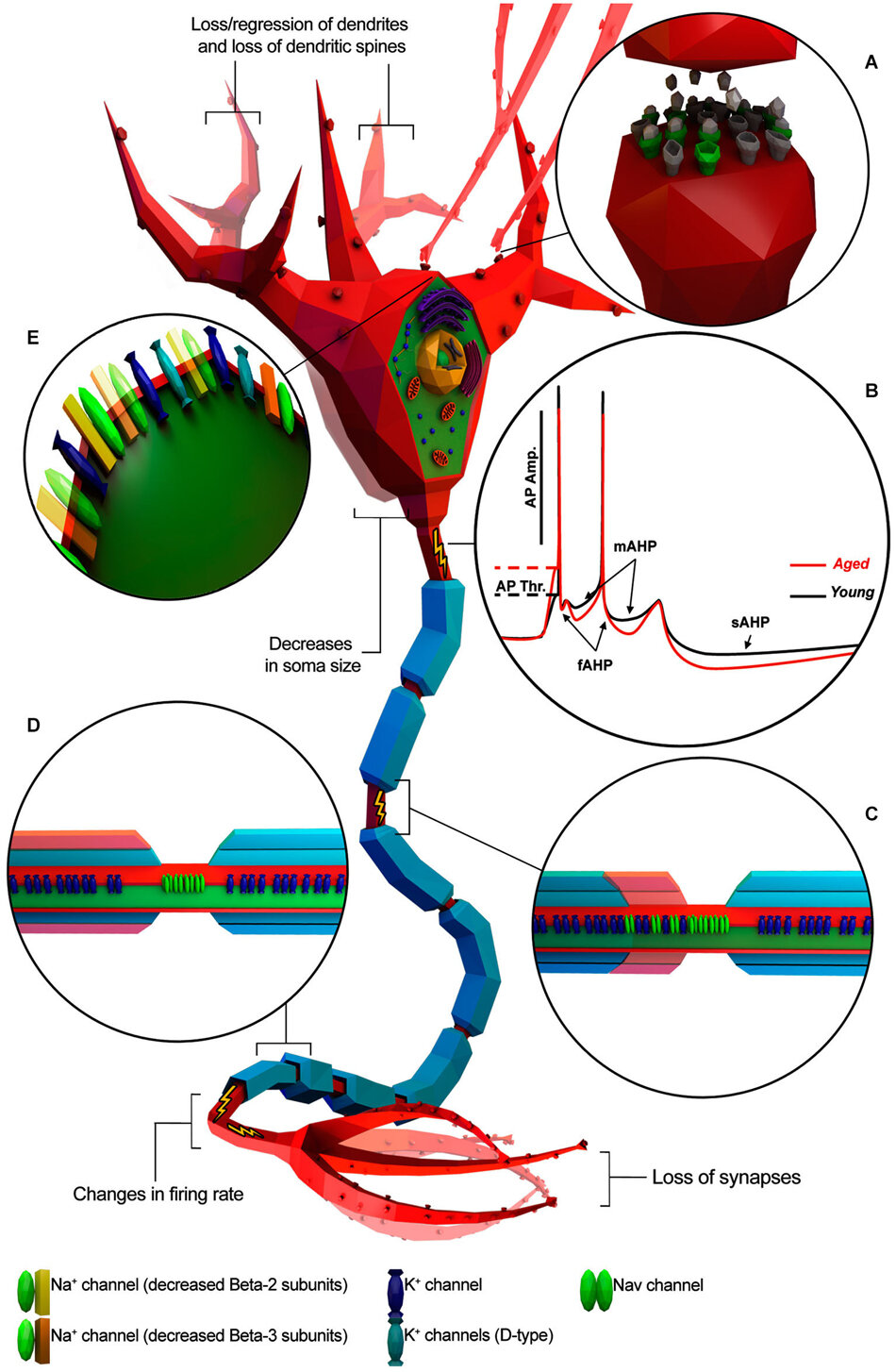
Another factor is the accumulation of cellular damage. Our cells are constantly working, and this activity produces byproducts. Over a lifetime, damage from things like oxidative stress and inflammation can build up. The brain’s repair mechanisms also become less efficient with age, so this damage can accumulate and interfere with how well neurons function.
Shifts in Thinking
These structural changes can lead to noticeable shifts in cognitive abilities. It's common to experience some memory decline, especially with names or finding the right word. This is often called a 'tip-of-the-tongue' moment.
Processing speed, or how quickly you can take in information and respond to it, may also slow down. It might take longer to solve a puzzle or react while driving. Attention can be affected too. It might become more challenging to multitask or filter out distractions in a busy environment.
It’s important to remember that not all mental abilities decline. Vocabulary, wisdom, and knowledge gained from life experience often remain stable or even improve with age.
Shaping Your Brain's Future
Why do some brains age more gracefully than others? The answer lies in a mix of factors we can and can't control.
Genetics: Our genes play a significant role. Some people are genetically predisposed to have more resilient brains, while others might be more vulnerable to age-related changes.
Lifestyle: This is where you have the most power. Choices about diet, exercise, and sleep have a huge impact. Regular physical activity increases blood flow to the brain, while a healthy diet provides essential nutrients. Getting enough quality sleep is critical for clearing out toxins that build up during the day.
Environment: Your surroundings and experiences also matter. Lifelong learning, social engagement, and managing stress can help build what’s called 'cognitive reserve'. This is like a mental savings account that helps your brain better withstand the changes that come with age.
Now, let's test what you've learned about the aging brain.
Which of the following best describes the process of brain aging?
The text states that with age, synaptic plasticity can decrease. What is synaptic plasticity?
Brain aging is a complex but natural process influenced by a combination of our biology and our choices. Understanding these changes is the first step in supporting our brain health throughout our lives.