The 30-Second Idea Sell
Understanding Elevator Pitches
What's an Elevator Pitch?
Imagine you step into an elevator and find yourself next to a key investor you've been trying to meet for months. You have until their floor to make an impression. What do you say? That brief, powerful summary of your idea is an elevator pitch.
It's a short, persuasive speech that explains a concept in a way that any listener can understand in a short period of time. Think of it as a movie trailer for your idea, business, or even for yourself. The goal isn't to close a deal or cover every detail. It's to spark interest and start a conversation.
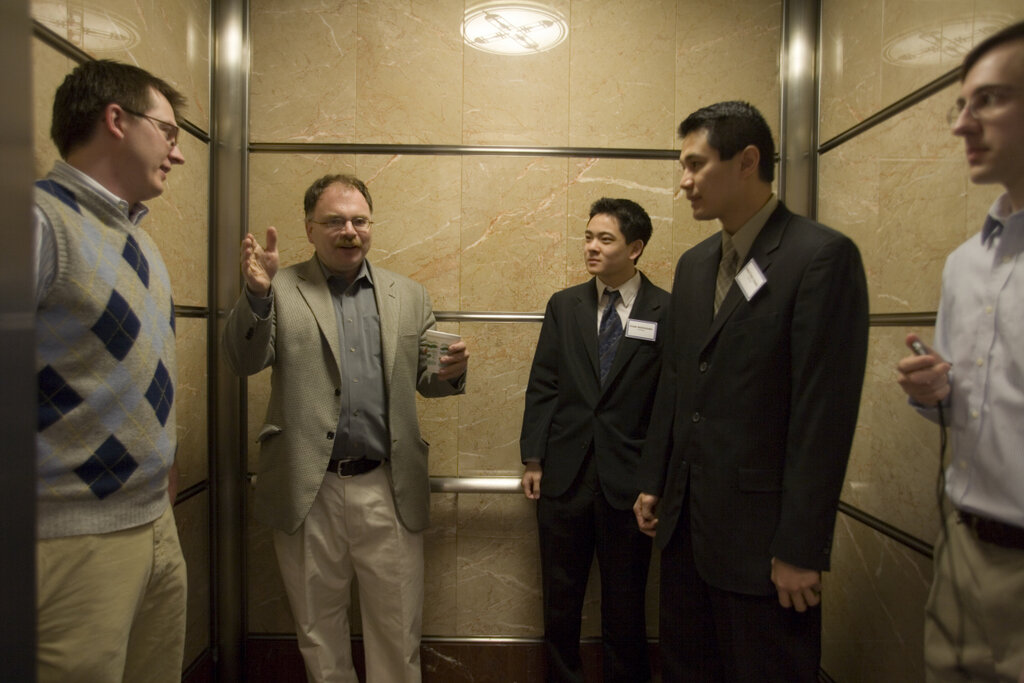
An effective elevator pitch opens doors — it’s your introduction to professional acquaintances, colleagues, and potential employers.
The ideal length is just 30 to 60 seconds. This constraint forces you to be clear and focus only on what's most important. You might use an elevator pitch at networking events, career fairs, conferences, or in any unexpected encounter where you have a brief window to make a big impact.
The Core Components
A great pitch isn't just a random collection of facts. It follows a simple, logical structure designed to hook the listener and leave them wanting more. Every compelling elevator pitch includes a few key ingredients.
Let's break these down:
-
The Problem: Start by identifying a clear, relatable problem or need that exists in the world. This grabs the listener's attention and provides context for what comes next.
-
Your Solution: Briefly introduce your product, service, or idea as the solution to that problem. How does it work? Keep it high-level.
-
Value Proposition: This is the most critical part. What makes your solution unique or better than others? Highlight the key benefit. Is it faster, cheaper, more efficient, or entirely new?
-
The Ask: End with a clear call to action. This could be asking for a follow-up meeting, an introduction, or simply to exchange contact information. It tells the listener what you want from them and proposes a next step.
The goal is clarity, not complexity. If you can't explain your idea in 60 seconds, you haven't simplified it enough.
By mastering these core components, you create a powerful tool for communicating your vision quickly and effectively. It's a foundational skill for anyone looking to bring an idea to life.