The 30-Second Idea Sell
Understanding Elevator Pitches
The 30-Second Introduction
Imagine you step into an elevator. Just before the doors close, the CEO of your dream company walks in. You have the length of a short ride, maybe 30 to 60 seconds, to make an impression. What do you say?
This scenario is the origin of the “elevator pitch.” It’s a brief, persuasive speech that you can use to spark interest in who you are and what you do. Think of it as a quick commercial for yourself or your idea.
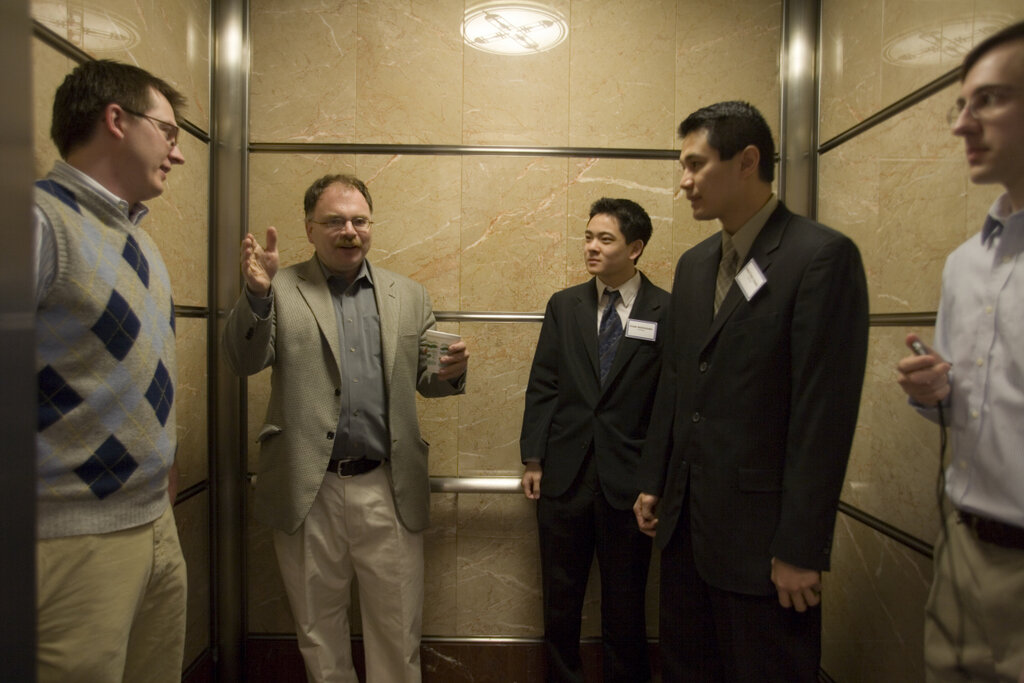
While it's unlikely you'll actually pitch a CEO between floors, you'll face similar situations all the time at networking events, job fairs, or even casual social gatherings. A great elevator pitch is a powerful tool that prepares you for these moments. It’s your chance to make a memorable introduction that could open the door to a new job, a collaboration, or a valuable professional connection.
An effective elevator pitch opens doors — it’s your introduction to professional acquaintances, colleagues, and potential employers.
The goal isn't to close a deal or land a job on the spot. The purpose is much simpler: to make a connection and start a conversation. A successful pitch makes the other person curious and want to learn more.
The Core Ingredients
A powerful elevator pitch isn't just a random collection of facts about yourself. It's a carefully constructed narrative that quickly communicates your value. While every pitch should be tailored to the situation, the most effective ones share a fundamental structure.
Let's break these down.
- Who You Are: This is your introduction. It’s more than just your name. It includes your title, your area of expertise, or what you're passionate about. For example, “I’m a software developer who specializes in mobile user experience.”
- What You Do: This is the core of your pitch. What problem do you solve? What value do you create? Avoid jargon. Instead of saying you “leverage synergies,” say you “help marketing and sales teams work together more efficiently.”
- What You Want: A pitch should end with a clear, simple call to action. This isn't a demand; it's an invitation. It could be a question to continue the conversation, like “I’d love to learn more about how your company is approaching mobile design,” or a suggestion for a next step, such as, “Perhaps we could connect on LinkedIn?” This signals what you hope to get out of the interaction.
Essentially, an elevator pitch answers three questions: Who are you? What do you do? And what’s next?
Remember, the key is to be concise. You're not telling your life story. You are providing just enough information to pique curiosity and begin a meaningful dialogue. Mastering this skill ensures you're always ready to seize an opportunity.