The 13 Original Colonies Explained
Introduction to the Thirteen Colonies
The First English Footholds
Before the United States existed, there were thirteen colonies stretched along the Atlantic coast of North America. These were English settlements, founded over a span of 125 years, each with its own unique identity and story. They weren't a single, unified country from the start. Instead, they were separate projects, each established under a charter from the English monarch.
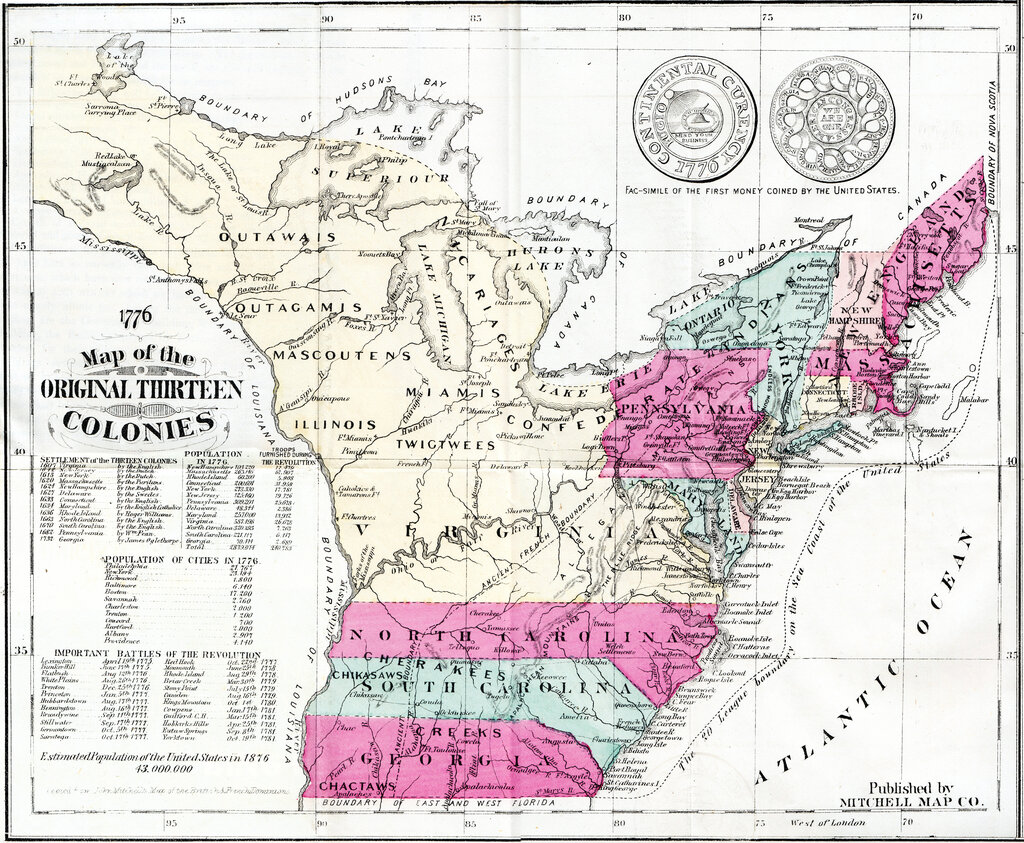
These colonies represented England's attempt to build an empire in the New World. They were outposts of trade, agriculture, and English culture, thousands of miles from home. Understanding how and why each one was founded is the first step to understanding how they eventually came together to form a new nation.
A Century of Settlement
The story begins in 1607 with the founding of Jamestown in Virginia. It was a rough start, but it marked the beginning of a permanent English presence. The final piece of the puzzle, Georgia, wasn't established until 1732. This long timeline means that the colonies were founded in very different historical contexts, for very different reasons. A colonist in 17th-century Massachusetts had a completely different world view than a settler in 18th-century Georgia.
| Colony | Year Founded |
|---|---|
| Virginia | 1607 |
| Massachusetts | 1620 |
| New Hampshire | 1623 |
| Maryland | 1632 |
| Connecticut | 1636 |
| Rhode Island | 1636 |
| Delaware | 1638 |
| North Carolina | 1653 |
| South Carolina | 1663 |
| New York | 1664 |
| New Jersey | 1664 |
| Pennsylvania | 1682 |
| Georgia | 1732 |
Why Cross the Ocean?
People didn't risk a dangerous ocean voyage for just one reason. The motivations for founding these colonies were as diverse as the settlers themselves. Broadly, they fall into a few key categories.
Some sought wealth. Colonies like Virginia were founded by joint-stock companies, similar to modern corporations, with investors hoping to profit from resources like tobacco or timber. New York, originally a Dutch trading post, was prized for its strategic harbor.
Others sought religious freedom. The Pilgrims in Massachusetts and the Quakers in Pennsylvania were escaping persecution in England. They wanted to build societies based on their own religious beliefs, free from the Church of England. Maryland was established as a haven for Catholics.
A few colonies served strategic or social purposes. Georgia, the last of the thirteen, was created as a buffer zone to protect the other colonies from Spanish Florida. It was also envisioned as a place where England's poor could get a fresh start.
These varied beginnings created a diverse landscape of cultures, economies, and governments along the coast. While they all shared a common English heritage, a colonist from Puritan Boston and a tobacco farmer from Virginia were worlds apart. These differences would shape the colonies' development and their eventual path toward revolution.