Text Diffusion Models Explained
Introduction to Diffusion Processes
The Heart of Diffusion
Imagine dropping a bit of food coloring into a glass of water. At first, it's a concentrated blob. But slowly, it spreads out, the color bleeding into the clear water until the entire glass is tinted. That spreading-out process is diffusion in a nutshell. It’s the movement of particles from an area of high concentration to one of lower concentration.
This isn't just about ink. Diffusion describes how heat spreads through a metal rod, how smells travel across a room, and even how information can spread through a network. At its core, diffusion is about things evening out over time, driven by random motion.
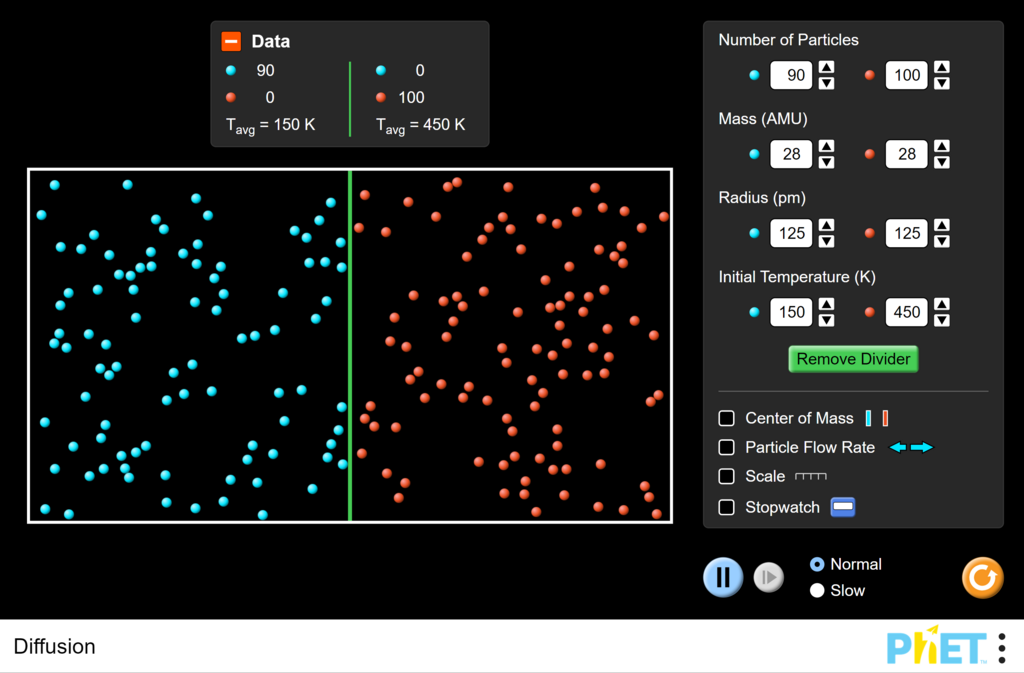
To understand this mathematically, we need to get comfortable with randomness. The path of a single particle of ink isn't predictable. It gets jostled and bumped around by water molecules in a chaotic dance. This seemingly unpredictable journey is the key to the very predictable outcome of the water turning a uniform color.
A Drunkard's Walk
Statisticians have a famous analogy for this kind of random journey: the “random walk.” Picture a person who has had a bit too much to drink. They take a step, but the direction is completely random. Maybe one step forward, one to the left, one back, another to the left. Their path is erratic and impossible to predict step-by-step.
However, if you watched thousands of such random walks, you'd start to see a pattern. On average, the walkers spread out from their starting point in a way that is mathematically predictable. This concept is fundamental to understanding diffusion.
The physical version of a continuous random walk is called Brownian motion. It was first described by botanist Robert Brown in 1827, who noticed pollen grains suspended in water jiggling about for no apparent reason. He wasn't seeing life, but rather the pollen being knocked around by countless, invisible water molecules. Each tiny knock is a random step in the particle's walk.
The Math of Randomness
How do we describe a process that is part predictable and part random? We use a special kind of equation.
First, think of a regular differential equation. It describes how something changes. For example, tells us that the rate of change of velocity () over time () is acceleration (). It's deterministic; if you know the starting conditions, you know the future.
But for a pollen grain, the movement isn't just determined by simple forces like gravity. It's also pushed around randomly. To capture this, we add a random term to the differential equation, turning it into a stochastic differential equation (SDE).
A stochastic process is simply one that involves randomness. SDEs are the language we use to model these processes.
A general SDE has two main parts:
Let's break that down:
-
The Drift Term (): This is the predictable part. It's like a gentle current pulling the particle in a specific direction. It defines the average, deterministic behavior of the system.
-
The Diffusion Term (): This is the random part, representing the unpredictable jiggling of Brownian motion. The term is a mathematical representation of a tiny, random step. The function controls the size of this random jiggling.
Together, these two parts allow us to model systems that have both a general trend and an element of randomness, just like our ink droplet that spreads out (the random diffusion part) while also possibly being stirred by a slow current (the drift part).
From Particles to Heat
The same mathematical framework that describes a jiggling pollen grain can also describe how heat spreads through a solid object. This is called heat diffusion.
Imagine a long metal bar that's hot at one end and cold at the other. Heat energy doesn't just jump from the hot end to the cold end. Instead, the vibrating atoms at the hot end bump into their neighbors, which then bump into their neighbors, and so on. Each bump transfers a bit of energy.
This chain reaction of random atomic collisions causes heat energy to diffuse from the hot region to the cold one until the whole bar reaches a uniform temperature. The process is governed by an equation called the heat equation, which is a deterministic cousin of the stochastic equations we just saw. It describes the collective, average behavior of all those tiny, random energy transfers.
Understanding these foundational concepts—random walks, Brownian motion, and the SDEs that describe them—is the first step toward understanding how diffusion works not just for particles and heat, but for more abstract things as well.
What is the fundamental principle driving the process of diffusion?
The botanist Robert Brown observed pollen grains jiggling randomly in water. What was causing this motion?