Tesla Autopilot Deep Dive
Introduction to Autonomous Driving
The Brains and Senses of a Self-Driving Car
An autonomous vehicle operates much like a human driver. It senses the surrounding environment, processes that information to understand the situation, decides on a course of action, and then executes that action. This entire process happens in a continuous loop, thousands of times per second. Let's break down each of these fundamental stages.
Sensing the World
Before a car can drive itself, it needs to be aware of its surroundings. Human drivers use their eyes and ears, but autonomous vehicles rely on a sophisticated suite of sensors to build a comprehensive, 360-degree view of the world. No single sensor is perfect, so cars use a combination to overcome individual weaknesses.
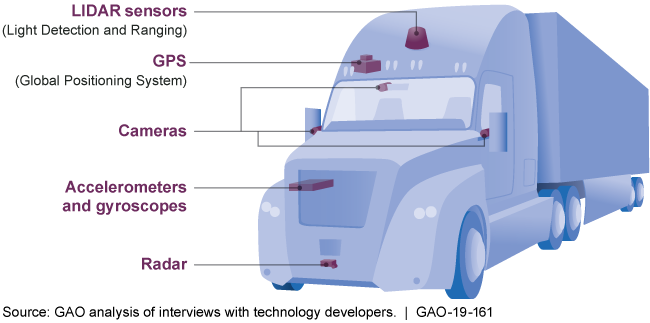
The most common sensors are cameras, radar, and LiDAR.
-
Cameras are the eyes of the car. They provide rich, high-resolution color video, which is excellent for reading traffic signs, detecting lane lines, and identifying the color of a traffic light. However, their performance can degrade in low light, fog, or heavy rain.
-
Radar (Radio Detection and Ranging) works by emitting radio waves. These waves bounce off objects and return to the sensor, allowing the system to calculate an object's range, velocity, and direction. Radar works well in poor weather and darkness but provides a much less detailed picture of the world than a camera.
-
LiDAR (Light Detection and Ranging) is similar to radar but uses pulses of laser light instead of radio waves. It creates a precise, three-dimensional point cloud map of the environment. This is extremely useful for detecting the exact shape and position of objects, but LiDAR can be expensive and its performance can be affected by weather conditions like snow or fog.
By combining the data from all these sources, the car creates a single, robust model of the world. This process, known as sensor fusion, allows the system to be more confident in its perception than it would be by relying on any single sensor.
Sensor fusion is the critical process of merging data from multiple sensors to produce more accurate and reliable information than could be obtained from any single sensor.
Perception and Planning
Once the car has a stream of fused data, the next step is perception. This is where the car's onboard computer, its "brain," interprets the data to understand what's happening around it. The system identifies and classifies objects: is that a car, a pedestrian, a cyclist, or a traffic cone? It also tracks these objects, predicting where they are going and how fast they are moving. This creates a dynamic map of the immediate surroundings.
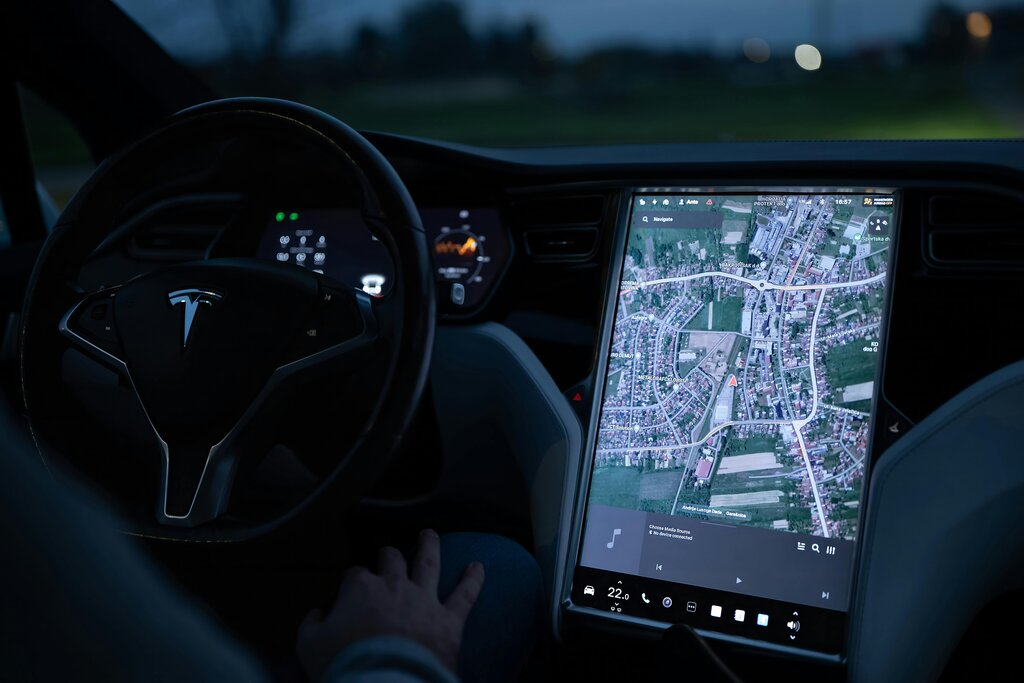
With a clear understanding of the environment, the car's decision-making algorithms get to work. This is the planning stage, which is typically broken into three levels:
-
Route Planning: This is the high-level plan, like using a GPS to navigate from your home to your office.
-
Behavioral Planning: This involves making immediate tactical decisions based on traffic rules and the behavior of other road users. Should I change lanes? Should I yield to the pedestrian? Is it safe to proceed through this intersection?
-
Motion Planning: This is the lowest level, calculating the precise path, or trajectory, the car must follow to execute the behavioral plan. This includes the exact steering angle, acceleration, and braking needed from moment to moment.
Control
The final step is control. Once the motion planning system has determined the exact trajectory, it sends commands to the car's actuators. These are the physical components that control the vehicle's movement.
The main actuators are:
- Steering: To control the car's direction.
- Throttle (acceleration): To control the car's speed.
- Brakes: To slow the car down or bring it to a stop.
A control system continuously monitors the vehicle's actual movement against the planned trajectory and makes constant, tiny adjustments to the steering, acceleration, and braking to ensure the car follows the path precisely. This sense-perceive-plan-act loop forms the foundation of how any autonomous vehicle, regardless of its manufacturer, navigates the road.
What is the primary purpose of 'sensor fusion' in an autonomous vehicle?
An autonomous car determining the fastest route from home to the office is performing which level of planning?