Tensor Processing Units Explained
Introduction to TPUs
The Need for Speed
Training a machine learning model is like teaching a student a new language. It requires showing them millions of examples, testing them, correcting their mistakes, and repeating the process over and over. This repetition takes an enormous amount of computational power. For a long time, the go-to tool for this job was the Central Processing Unit, or CPU.
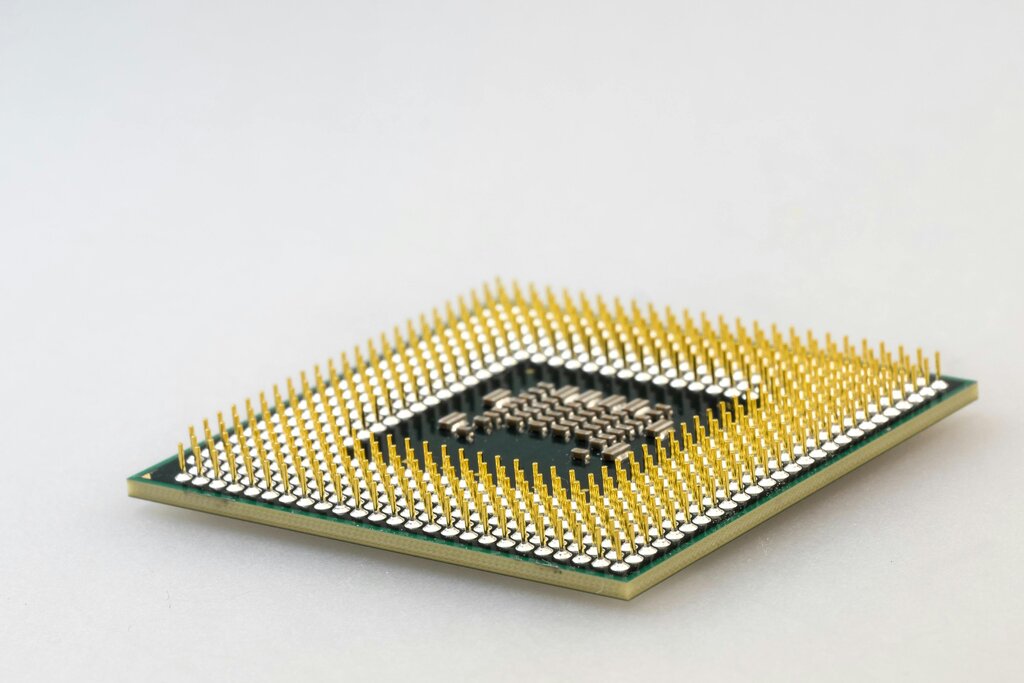
CPUs are masters of versatility. They can run your operating system, browser, and spreadsheet software all at once by tackling different tasks sequentially at high speed. But for machine learning, this one-thing-at-a-time approach creates a bottleneck. A better solution was found in Graphics Processing Units, or GPUs.
Unlike the design of traditional central processing units (CPUs, see “GPU vs CPU” discussion below), GPU design involves a massive number of smaller processing units (cores) that can handle tasks in parallel—tasks that can be divided into many smaller subtasks to be processed simultaneously.
Originally designed to render graphics for video games, GPUs are built for parallelism. They have thousands of smaller cores that can perform many simple calculations at the same time. This structure is perfect for the repetitive math of machine learning. The switch from CPUs to GPUs was a major leap forward, but even GPUs were general-purpose tools being adapted for a new job.
A Custom-Built Engine
As Google's AI ambitions grew, it became clear that they needed something even better. They needed a chip designed from the ground up for one thing: machine learning. The result was the Tensor Processing Unit, or TPU.
TPU
noun
A Tensor Processing Unit is an application-specific integrated circuit (ASIC) custom-built by Google to accelerate machine learning workloads.
Think of it this way. A CPU is like an adjustable wrench. It can handle many different nuts and bolts, but it's not the fastest for any single one. A GPU is like a socket wrench set, much faster for specific jobs because it can apply force more efficiently. A TPU, however, is like a custom-made power tool built by a factory to tighten one specific bolt, thousands of times a minute. It's less flexible, but unbelievably fast and efficient at its designated task.
While Nvidia's GPUs are versatile general-purpose processors, TPUs act like specialized scalpels optimized for AI workloads.
This specialization is the TPU's superpower. By focusing only on the mathematical operations needed for neural networks, particularly large matrix multiplications, TPUs can perform them much faster and with less power than a GPU. Google integrates these custom chips throughout its data centers, using them to train the massive models that power services like Google Search, Translate, and Photos.
The TPU Family
Google has released several versions of TPUs, each more powerful than the last. The first generation, introduced in 2016, was focused on inference—the process of using an already trained model to make predictions. You might use it to identify a cat in a photo, but you wouldn't use it to teach the model what a cat looks like in the first place.
The first generation TPU was only able to handle inference.
Later versions, starting with TPU v2, added the ability to handle both training and inference. These newer chips are much more powerful and can be linked together into massive supercomputers called "pods." These pods allow researchers to train incredibly complex models in a fraction of the time it would take with other hardware.
| Version | Primary Use | Key Feature |
|---|---|---|
| TPU v1 | Inference | First-generation ML accelerator |
| TPU v2 | Training/Inference | Liquid-cooled, can be connected into Pods |
| TPU v3 | Training/Inference | Higher performance and memory than v2 |
| TPU v4 | Training/Inference | Major performance leap, improved Pod networking |
| TPU v5e | Efficiency | Optimized for cost-effective performance |
Each new version offers significant improvements in speed and efficiency, enabling the development of larger and more capable AI models. This constant evolution of specialized hardware is a key driver of the rapid progress we see in artificial intelligence today.
Time to check your understanding.
According to the provided analogy, which processor is best described as a "custom-made power tool built for one specific job"?
What is the primary architectural advantage of a GPU over a CPU for machine learning tasks?
By moving from general-purpose CPUs to parallel-processing GPUs and finally to specialized TPUs, the field of AI has gained the computational power needed to build the powerful models we use every day.