Technology Economic Development Evaluation
Introduction to Technology and Economic Development
The Engine of Progress
What is technology? It’s a word we use all the time, usually to talk about the latest smartphone or gadget. But its meaning is much broader. At its core, technology is the application of knowledge to create tools and processes that solve problems and extend human capabilities.
Technology
noun
The application of scientific knowledge for practical purposes, especially in industry.
A sharpened flint used by an early human was technology. The printing press was technology. The internet is technology. It’s all about finding better, more efficient ways of doing things.
When technology advances, it often fuels economic development. This isn't just about a country getting richer. Economic development refers to the sustained improvement in the economic and social well-being of a population. It means more jobs, higher incomes, better healthcare, and more educational opportunities. It's about growth that improves people's quality of life.
A Look Back in Time
The link between technology and economic change is not new. For most of human history, economic growth was incredibly slow. Then, in the late 18th century, the Industrial Revolution began. New technologies like the steam engine and the power loom completely reshaped society.
Factories replaced small workshops. People moved from farms to cities. Production exploded, economies grew at an unprecedented rate, and standards of living for many began to rise. This was followed by subsequent waves of innovation, each building on the last, from electricity and the automobile to computers and the internet. Each wave brought profound economic transformation.
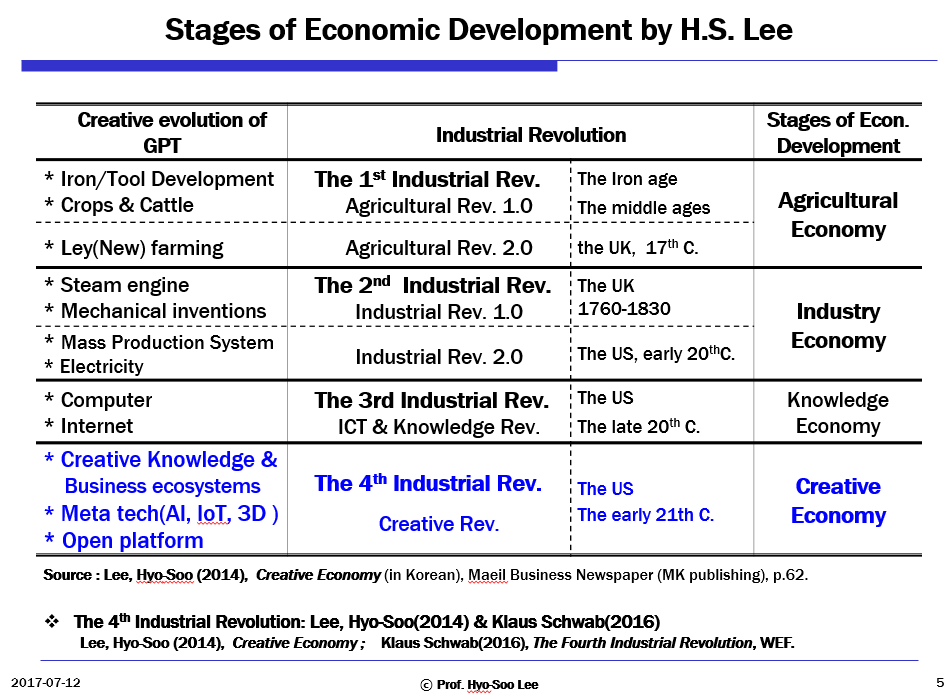
The Information Age, powered by the microprocessor and the internet, is the most recent example. It created entirely new industries while transforming old ones. Think about how we shop, work, and communicate. These changes are all rooted in technological advances that created new economic value and opportunities.
How Technology Drives Growth
How does a new invention actually make an economy grow? The key concept is productivity. Productivity is a measure of efficiency; it's the amount of output produced per unit of input (like an hour of labor). Technology allows us to get more output from the same inputs.
A farmer with a tractor can cultivate far more land than a farmer with a hand plow. A writer using a word processor can produce and edit text much faster than with a typewriter. In both cases, technology boosted their productivity. When this happens across an entire economy, the total amount of goods and services produced—the Gross Domestic Product (GDP)—increases.
Economists model this with something called a Production Possibility Frontier (PPF), which shows the maximum combination of two goods an economy can produce. Technological advancement pushes this frontier outward, meaning the economy can produce more of everything. This outward shift is economic growth.
In the 1950s, economist Robert Solow developed a model showing that simply adding more capital (machines) and labor (workers) couldn't account for all of the economic growth observed. The missing piece, which he called the "Solow residual," was technological progress. His work showed that innovation is the primary engine of long-term economic growth.
Innovation is the process of turning an idea or invention into a good or service that creates value.
Innovation can be a brand new product, like the first iPhone. It can also be a new process that makes production cheaper or more efficient, like the assembly line. Or it can be a new business model, like subscription services for software. All these forms of innovation drive the economic transformation that improves our lives.
Let's check your understanding of these foundational ideas.
According to the text, what is the most accurate definition of technology?
What is the key mechanism through which technology fuels economic growth?
Understanding this connection between technology, innovation, and economic development is the first step toward analyzing the potential of new ideas and how they might shape our future.