Technical Product Management Mastery
Systems Thinking for TPMs
Beyond Features, Towards Systems
As a Technical Product Manager, your scope extends beyond the user interface and feature set. You must adopt a systems thinking approach. This means understanding the entire ecosystem that delivers value to the user, not just the part they click on. Every product decision, from a new API endpoint to a change in data storage, has ripple effects across the entire technical landscape.
This perspective is crucial for ensuring reliability, scalability, and performance. Instead of asking, "What does this feature do?", a TPM asks, "How does this feature impact the health and efficiency of the system?". It's a shift from managing user stories to managing information flow, dependencies, and potential points of failure.
The Anatomy of a System
Most modern applications are not monolithic blocks of code. They are complex systems composed of specialised components working in concert. Think of it like a bustling restaurant.
The client is the customer. It's the web browser or mobile app the user interacts with to place an order. The application server is the kitchen, where requests are processed and the actual work gets done. The database is the pantry, where all the essential data—user profiles, product inventories, past orders—is stored and retrieved.
But what happens when the restaurant gets busy? You can't just send every customer to one overwhelmed chef. You need a load balancer—the host at the front door who directs incoming customers to different chefs or kitchen stations, ensuring no single part of the system is overloaded. This distribution of traffic is fundamental to keeping the service responsive under pressure.
Reading the Blueprint
These systems are visualised using architecture diagrams. Think of them as the blueprint for your digital product. They show not just the individual components, but how they are connected and how data flows between them. Understanding these diagrams is a non-negotiable skill for a TPM.
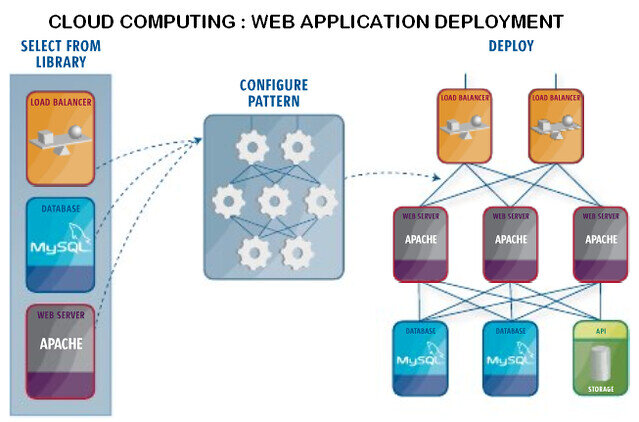
In a diagram, boxes or symbols represent components like servers, databases, or services. The lines connecting them represent the paths of communication, such as API calls or data queries. By tracing these lines, you can follow the journey of a user request from the initial click all the way to the database and back. This allows you to see the entire system at a glance.
Spotting the Weak Links
The real value of an architecture diagram for a TPM is not just understanding the current state, but identifying potential risks. You are looking for weak links that could compromise the user experience, especially as the product scales. Two primary concerns are single points of failure and performance bottlenecks.
A Single Point of Failure (SPOF) is any part of a system that, if it fails, will stop the entire system from working. In our restaurant analogy, if there is only one head chef, and they call in sick, the whole kitchen shuts down. In a system diagram, you might spot a critical service that has no backup or redundancy. What happens if that single database server goes offline? If the answer is "everything stops", you've found a SPOF.
A performance bottleneck is a component that limits the throughput of the entire system. It’s the slowest part of the assembly line. Perhaps your application servers are fast, but they all rely on an old, slow database. Under heavy load, requests will pile up waiting for the database to respond, making the whole application feel sluggish. Your job is to ask the right questions: Where will the strain appear if we double our user base? What part of this system is least prepared for that growth?
By analysing these blueprints, you can advocate for technical initiatives—like adding server redundancy or upgrading a database—that don't add new features but are critical for the long-term health and success of the product.
What is the primary focus of a Technical Product Manager (TPM) who employs a systems thinking approach?
In the provided restaurant analogy, what system component is compared to the 'pantry' where all essential data is stored?