Technical Fluency for People Leaders
Software Development Lifecycle
From Blueprints to Live Code
In traditional manufacturing, you wouldn't start building a car without a complete, finalized blueprint. For decades, software was built the same way. This method, called Waterfall, is a sequential process. You finish one phase completely, like gathering all requirements, before moving to the next, like design. It’s predictable and structured, but incredibly rigid. If you discover a flaw in the design halfway through construction, you have to go all the way back to the drawing board, costing significant time and money.
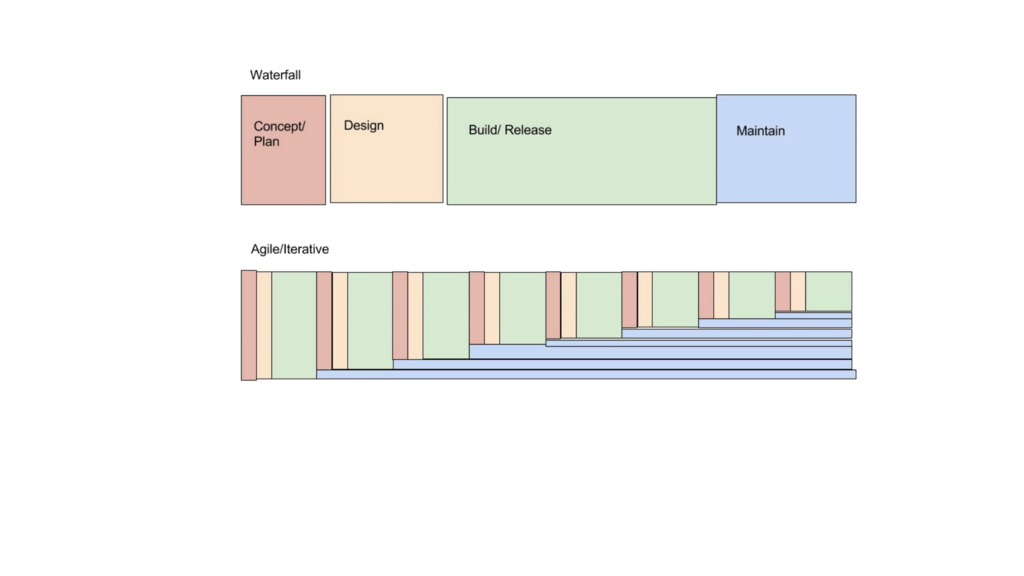
Modern engineering teams realized that building software is more like sculpting than assembling a car. You need to react, adapt, and refine as you go. This insight led to Agile, a philosophy that prioritizes flexibility and speed. Instead of one massive project, work is broken into small, manageable chunks called “sprints.” At the end of each sprint, the team delivers a working piece of the product. This iterative cycle allows for constant feedback and course correction, ensuring the final product actually meets user needs.
Agile, DevOps, and the Assembly Line
Agile fixed the planning problem, but it didn't solve the whole puzzle. There was still a wall between the developers writing the code (Dev) and the operations team responsible for keeping it running smoothly in the real world (Ops). Developers would finish a feature and metaphorically toss it over the wall to Ops, who then had to figure out how to deploy and maintain it. This often created friction, delays, and a blame game when things went wrong.
DevOps emerged to tear down that wall. It's a cultural philosophy that combines development and operations into a single, unified team. The goal is to automate and streamline the entire software delivery process, from a developer’s first line of code to its deployment for customers. While Agile focuses on iterating the what (the product features), DevOps focuses on improving the how (the delivery pipeline). They aren't mutually exclusive; most high-performing teams practice Agile within a DevOps culture.
Think of it this way: Agile is the innovative car design studio, constantly creating new prototypes. DevOps is the hyper-efficient, automated factory that can take any design and get it on the road safely and instantly.
The engine of this factory is the CI/CD pipeline, which stands for Continuous Integration and Continuous Deployment. It’s an automated workflow that acts as a digital assembly line. When a developer submits new code, the CI/CD pipeline automatically builds it, runs a battery of tests to check for errors, and, if everything passes, deploys it to users. This removes manual steps, drastically reduces human error, and allows teams to release updates multiple times a day instead of once every few months.
Shifting Left and Measuring What Matters
In a traditional Waterfall process, testing and security checks happen at the very end, right before launch. Finding a major bug at this stage is a crisis. It's expensive, stressful, and can derail the entire project. The DevOps world introduced the concept of "shift left". This simply means moving testing, quality assurance (QA), and security checks to the earliest possible point in the development cycle, or "shifting them left" on the project timeline.
Automated tools scan code for vulnerabilities the moment it's written, not weeks later. Quality checks are built into the CI/CD pipeline, not handled by a separate team at the end. This approach transforms QA from a gatekeeper into a partner. Instead of just finding bugs, a modern QA engineer helps developers build automated tests, ensuring quality is baked in from the start. This has significant hiring implications. You're no longer looking for manual testers; you're looking for engineers who can build and maintain these automated quality systems.
So how do you know if your engineering organization is performing well? The industry standard is a set of four key metrics known as DORA metrics, developed through years of research by Google's DevOps Research and Assessment team. They measure both speed and stability, giving you a balanced view of team performance.
| Metric | What It Measures | Why It Matters for a CPO |
|---|---|---|
| Deployment Frequency | How often you successfully release to production. | Elite teams deploy on-demand, multiple times a day. This indicates high agility and a mature CI/CD pipeline. |
| Lead Time for Changes | How long it takes to get committed code into production. | This reflects the efficiency of your entire development process, from idea to delivery. |
| Change Failure Rate | The percentage of deployments that cause a failure in production. | A low rate signals high quality and effective automated testing. It builds trust. |
| Time to Restore Service | How long it takes to recover from a failure in production. | This measures resilience. Low recovery times mean your team can fix issues without major disruption to customers. |
As a CPO, you don't need to understand the code, but understanding the workflow is crucial. A team struggling with a high change failure rate might need more engineers skilled in automated testing. A slow lead time could indicate bottlenecks that aren't about individual performance but process flaws. These metrics provide a common language to discuss engineering effectiveness with your CTO and identify the skills your organization needs to hire or develop.
Time to check what you've learned.
What is the primary difference between the Waterfall and Agile methodologies?
What problem did the DevOps philosophy primarily emerge to solve?
By understanding these workflows, you can better align your people strategy with the technical needs of the business, ensuring you hire for the right skills and foster a culture of continuous improvement.