Teaching Systems to Children
Simplification Frameworks
From Big Ideas to Building Blocks
Teaching systems thinking to an eight-year-old sounds daunting. How do you explain complex, interconnected ideas like feedback loops or emergent behaviour to a child? The key isn't to simplify the concepts into oblivion, but to change how you present them. Instead of starting with abstract definitions, you start with the concrete, tangible world they already know.
The goal is to move learners from the concrete to the abstract, not the other way around. We build understanding from the ground up.
This approach is about managing cognitive load. A child's brain isn't equipped to handle a flood of abstract terminology. By grounding ideas in physical objects and direct experiences, you create a solid foundation. Think of it as a ladder. You can't jump to the top rung; you have to climb, step by step. This is the essence of the Ladder of Abstraction, adapted for young learners. You start at the bottom with a real, touchable object—a single Lego brick, a plant in the classroom, a pet.
Only after exploring the concrete do you move up a rung. What does the plant need? Water, sun, soil. Now it's a simple system. What interacts with that system? A bee for pollination, a gardener who waters it. Suddenly, you're discussing interacting systems. The word 'ecosystem' only comes in at the very end, once the child has a mental model built from tangible parts.
The Spiral of Understanding
This step-by-step approach pairs perfectly with the idea of a spiral curriculum, famously championed by psychologist Jerome Bruner. The core principle is simple: complex ideas can be introduced in a simplified form early on, and then revisited at increasing levels of complexity over time.

Applying this to systems thinking, you might first introduce the concept of a 'team' using a group of children building a tower. The system is the group, the goal is the tower. Later, you revisit the 'team' concept in the context of a sports game, introducing roles (offence, defence) and strategies. Much later, you can discuss how a company's departments work as a team. Each visit adds depth and complexity, but the core concept remains familiar.
This method respects a child's developmental stage. It doesn't expect mastery from day one. Instead, it builds knowledge in layers, allowing for a deeper and more durable understanding to form.
One of ideas put forward by Bruner (2009) was around a spiral curriculum, which starts with elementary concepts and moves to more complex ideas as learners become more adept.
For an eight-year-old, the first loop of the spiral should always be an activity. Don't tell them about interconnectedness; let them experience it. Have them build a simple circuit with a battery, wires, and a bulb. They'll see that if one part is disconnected, the whole system fails. That tangible experience is the first and most crucial step.
Making Connections Visible
The final piece of the puzzle is to help children 'see' the connections. After a concrete activity, use simple diagrams. A flow chart showing how watering a plant leads to growth, or a mind map connecting all the people who help get food to their lunch table (farmer, driver, cook). These visualisations are a middle step between the concrete experience and the abstract vocabulary of systems thinking.
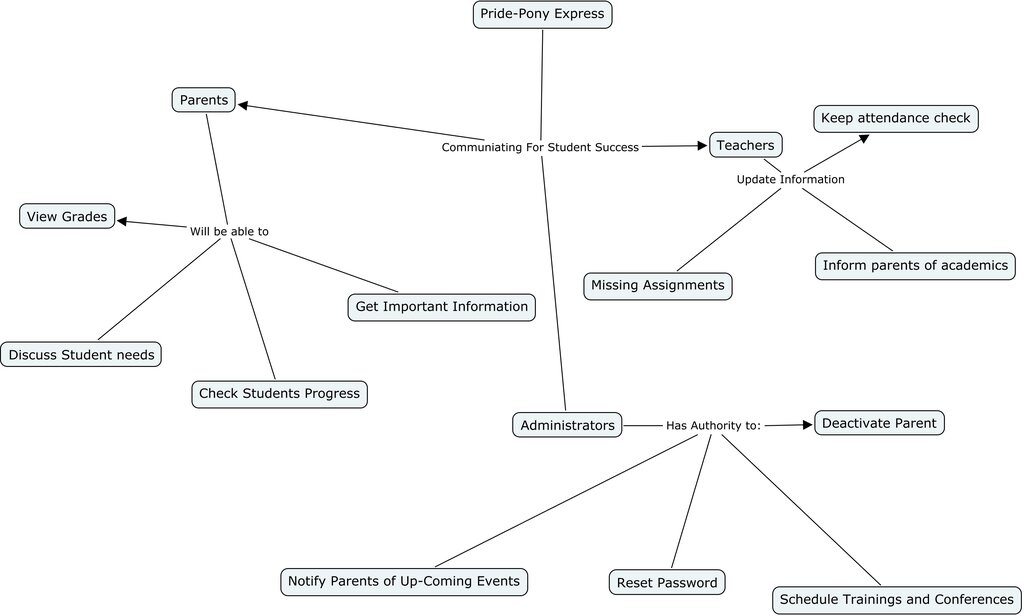
By combining these frameworks—climbing the ladder of abstraction, revisiting ideas in a spiral, and using visual aids to bridge the gap—you can make the foundational principles of systems thinking accessible and intuitive. You're not just teaching facts; you're building a new way of seeing the world.
When teaching systems thinking to an eight-year-old, what is the most effective first step?
The idea of introducing a concept in a simple form and then revisiting it with increasing complexity over time is known as a ________ curriculum.
These frameworks provide a powerful toolkit for designing effective learning experiences that honour the cognitive development of young children.